So little time, so much to do

Now that I’ve published Misfits from the Beehive State, I’m ready to get going on other projects. So I took a peek at everything I’ve left undone over the last seven years. I have stories that got published in magazines but really would like to live in a book, stories that I finished and set aside because I wasn’t sure if they were good, and stories I sent away, again and again, and never got published anywhere. I also have new stories, which I submitted to my writing group and incorporated feedback, but not yet sent off for publication. And I have unfinished stories, waiting for me to get to them.

All told, I’ve got 12+ stories that fit into one or another of those categories. And every time I look at them, I get anxious. Fiction is like that for me. I write nonfiction easily and (obviously) send it out shamelessly to the world in my blog. But fiction scares me. I’m scared to write it, send it for critique, look at the critiques, incorporate the critiques, and send it off. Now that this collection is done, I’m scared to ask people for reviews, to ask bookstores to buy my books, and to ask about setting up readings.

I do it all anyway, because, well, I’m brave. But now that I’ve got my list in front of me, I’m feeling especially queasy. And I have a new problem:  Where do I start???

So much to do, so little time.

Tunnels of Time

By fdecomite (Tunnels of Time) [CC-BY-2.0 (http://creativecommons.org/licenses/by/2.0)%5D, via Wikimedia Commons

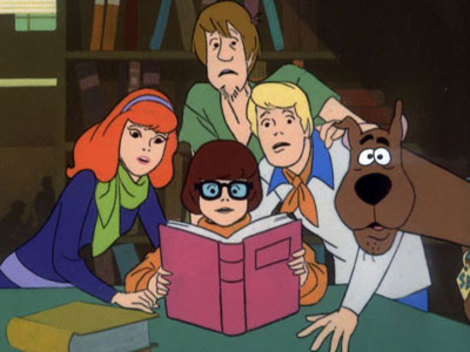
Literary puzzler for Scooby-Doo fans

There exists a book series, published before Scooby-Doo, that features:

  • Two girls,
  • Two boys,
  • A dog with a voracious appetite,
  • Villains that often fake supernatural goings-on to scare people off, and
  • Traps that the kids use to defeat the villains.

What is that series?

– Kristin

Image

“Jeepers, Kristin, we don’t know! I’d better get reading.”

What do small publishers and indy bookstores have in common?

Q: What do small publishers and indy bookstores have in common?

A: They’re making hardly any money. It’s a labor of love.

I knew that intellectually before, but now I really know it. Having finally self-published my book, I now understand all the time and effort that goes into it. You have to sell a lot of copies to recoup the cost. And how do you sell those copies? By spending even more money to promote the book. And time. Lots and lots of time. It’s definitely deepened my respect for small publishers.

Small bookstores are struggling too. I miss A Woman’s Place bookstore in Salt Lake City and Red and Black Books in Seattle. A Woman’s place hosted my first reading, and Red and Black Books hosted a reading AND introduced me to Octavia Butler, an author I would not have found on my own. I remember that when I went in to give the reading, I saw a paperback book of hers sitting on a spinner, looking shiny and new and fun.

The small bookstores that survive, like Ravenna Third Place Books near my home, have to sell both used and new books because the profit margins on new books are so small. Third Place also had to add a restaurant and pub. Don’t get me wrong: I love going to the restaurant and pub. I’m just saying that’s what it takes to break even as an independent bookstore.

Enter the writers struggling to break into publishing. We don’t just have to write excellent and desirable books; we also have to convince a publisher that they won’t be taking a loss by putting out our books. We must also somehow convince a publisher we’re worth the risk. That’s the part I didn’t understand all the time I kept trying (and failing) to sell my book to a publisher.

What’s a writer to do?

You don’t need me to answer that question. Everybody and their dog is going to answer that question for you: there’s that one story about the guy who made a million bucks selling books out of the back of his car. (Of course, that’s not going to be the reality for most writers, but never mind that.)

Let me ask a different question:

What can writers do in order to make the publishing and bookselling world more hospitable to authors? I’m talking big picture, can we forget about our piece of pie for a second and find out how to make that pie bigger for everybody?

Yes indeed! We need to band together and support the small presses and independent bookstores we eventually hope will support us. So without further ado, here are a couple publishers and independent bookstores that make my five-star list.

Small Presses

Calyx – for supporting women’s writing

Aqueduct Press – for supporting speculative fiction and women’s writing

Book View Cafe – awesome midlist authors who banded together to sell ebooks

Bookstores

Ravenna Third Place Books – my neighborhood bookstore and new-mom refuge

Elliott Bay Books – Seattle’s best-known

Powells Books – I seriously take trips to Portland specifically to spend all day (or days) at this “City of Books”

Got a small press or independent bookstore you’re crazy about? Add a comment.

– Kristin

On leaving Utah (three times)

The first time I moved away from Utah, I was in preschool, so I doubt I cared. My family moved to Olympia and Seattle, where I spent those formative years up through eighth grade. We went back to Utah most summers for a visit, and I got to see my grandma and my cousins. I used to dream that I could teleport between Salt Lake City and Seattle so that I could see my grandma whenever I wanted. But I grew to love Seattle. I was in the generation where parents still let their kids out to roam the neighborhood, and so I owned my neighborhood, from the Fremont library all the way up to the Woodland Park Zoo, from the blackberry bushes west of Phinney to the little grocery store on Fremont.

At the beginning of eighth grade, we moved back to Utah. I missed Seattle — a lot. But I made friends, and roamed the neighborhood — the park, the library, the mall, the junior high, and the high school. Once I started driving, I drove all over the city — the library, Beans and Brews, Trolley Square, everything. It was my city. I belonged to it, and it belonged to me. I got jobs I liked. I made close friends, hopefully lifelong ones. It was my home, and I loved it.

But I never did stop missing Seattle. All my happy memories of Seattle got mixed up with the childhood nostalgia we always feel. And I never did quite belong in Utah. And I had to go to graduate school.

So the second time I moved to Seattle, I went to the University of Washington for an MFA in creative writing, going straight from my mom’s house to my own apartment. Two heady years of learning and writing and traveling and making friends! But I missed Utah, and I missed my job, and I missed my family, and I missed my boyfriend. It was cheap to fly back home, and so I did it a lot. It was always disconcerting. I had been one person in Salt Lake City, but now I was a different person in Seattle, and when I visited, the two people didn’t know how to fit back into one. And I got homesick all over again. It was also hard because my parents had recently divorced, and so I had to face not only the loss of a home (Salt Lake City) but also the loss of a united family and the stress that I felt whenever I saw both parents at once, and whenever I had to choose between visiting with one or the other. It was also hard because I had recently joined, and then left, the Mormon Church, and so all that baggage was always waiting for me. 

After graduate school was finished, I had a hard time choosing where to live. I loved both cities, in their own way. In Salt Lake I had roots, and in Seattle I had dreams. Seattle is the place for Kristin-the-writer. In either city, I would be with my boyfriend. I made one decision and then another. I wanted the independence, and I was afraid of it too. My boyfriend and I went looking for apartments. We found a good one and met with the landlord and started writing the check — and I chickened out. Moved back to Utah.

My boyfriend got us an apartment in a complex called the Villa Franche. (Pronounce it Franch-ie.) I went back to my old job. We had good times! But going back to Salt Lake City made me realize I belonged in Seattle. Our mothers both freaked out, for different reasons, and so we got engaged. It was a five-year engagement, because we were nowhere near ready to get married, but we did want to leave Salt Lake with some semblance of propriety and some feeling that we were family to each other.  

And so I left Salt Lake City for the third, and probably the last, time. Of course, I keep going back. My family is still there, and so are my friends. Every time I go back, I get homesick for everyone all over again. But the city itself is like a place from a past life.

My home is Seattle.

But I’m visiting Salt Lake City soon! And this time will be different than all the other times. I’ve finally, after quite a long time achieved my dream of publishing a book. In keeping with my dual-heritage history, this book was written almost entirely in Seattle . . . but it’s about Utah.

Go figure.

Image

Ancient Sumer and the Stars

I’m researching Sumer for my next writing project, and I just came across a fascinating and highly problematic book, The Shiny Herd: Ancient Secrets Hidden in the Sky by Charles M. Houck. Here’s my Goodreads review:

I gave this book a low rating because it shamelessly mixes religion, history, and science, which makes it impossible to tell fact from belief. But I’m going to recommend it for three audiences: 1) people who are into the concept that “Each individual point of consciousness — the self — destines itself to repeat its pilgrimage through this plane of matter until that lesson is learned” and are less concerned about provable facts; 2) people who are interested in ancient astrology and don’t mind doing their own fact-checking; 3) Sci fi authors looking for a story idea. For all that, it’s pretty interesting.

For all its problems, though, this book is totally worth a mention, because it opened my eyes to something that would be completely obvious to anybody who lived in a world without light pollution. Here’s the first part of the cover text:

Long before the Roman Empire, the Egyptians, and even the ancient Akkadians, there existed a society in southern Mesopatamia known as “The Watchers.” Perhaps the greatest legacy left to the world by the Watchers was a teaching tool that drew its lessons from the stars. The Sumerians called this gift from the ancients ‘The Shiny Herd’; in modern times, we refer to it as the Zodiac.

The way the author talks, these Watchers are apparently beings from some higher plane that brought us refinements of civilization and higher truths, etc. etc. If these Watchers existed, though (it’s hard to tell from this book), they could just have been people whose job it was to watch the stars and tell everybody what they meant. Whatever further spiritual meaning there might have been or not been, I would not be qualified to say.

Either way, here’s my realization: the ancient Mesopotamians could go to the movies every night, for free. Without light pollution, stars are much grander and more imposing. And they move, even though it’s slow. Comets and astrological events must have had quite an impact. Furthermore, because it is human nature to assign meaning to what we see, it’s likely they incorporated what they saw into their world view, which means their understanding of the gods.

So I’m off to find out more about astronomy and the zodiac.

Meanwhile, I do hope somebody will write a scifi book about space aliens who bring civilization to Mesopotamia. I would be all over it.

Image

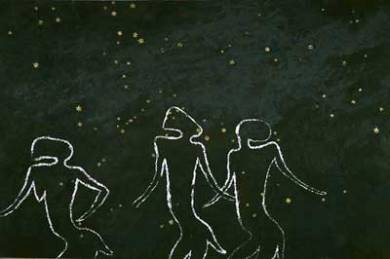
From the online collection African Cosmos: Steller Arts at the African Art Museum

The way I read books

Right now I’m reading Tea with the Black Dragon by R.A. MacAvoy. I last read this book twenty-some years ago, and it marked a turning point in my understanding of the way I read books.

I devour books. I understood that part already. I charge straight through and often miss key plot points or character points. I rarely know what a character looks like.

It takes me a minute to get into them. Often, I read the first couple pages two or even three times before I understand the character and setting.

If I get excited about what’s happening, I skip ahead on the page.

A successful reading experience, then, usually involves repeated efforts to refocus my attention at first. That’s one of the things I like about reading: it puts me in a good frame of mind. Once I’ve settled in, I’m in the world, one hundred percent.

But here’s what’s interesting: I don’t see the world visually. I don’t make a mental picture of the characters or the setting. I see it in some other way I can’t explain.

And that’s where Tea with the Black Dragon changed my understanding of myself as a reader. As I got into the book, I heard the characters, plain as day.

Does anybody else have this experience?


On being asked to share genomes

I got my DNA tested through 23andme. I thought long and hard about privacy and how giving someone else access to knowledge about my genome, but in the end I was just too darn curious. That’s the bane and the gift of humanity, isn’t it? I just crossed my fingers that they would abide by their privacy statement, paid the money, spit into a test tube, and mailed it off.

One of the things you get is a list of genetic cousins, along with whatever information they want to share. They don’t have to share anything, even their name, but they can optionally share family surnames and places their ancestors have lived. They can send you contact requests, which is cool. I’m interested in sharing genealogy information. But all the requests start off with something like:

“Would you please share genomes with me?”

Now, these people may be my relatives, but they’re often pretty distant ones. We might share a great-great-great-great-great grandparent, for instance. So the question comes off to me like a stranger coming up to me and very politely asking,

“Would you please show me your underpants?”

So my reply is:

“I’m not comfortable sharing my genome with you right now.”

Mentally ill people are not broken

Mentally ill people are not broken.

And mental illness is not . . .

  • a moral failing
  • contagious
  • best treated through medication only
  • best treated through jail
  • a problem of the individual
  • impossible to treat
  • somebody else’s problem

Rather, mentally ill people are just people, like you and me, who have a medically diagnosable illness. Like cancer. Only we’re not as kind to them as we are to people with cancer.

Mental illness is . . .

  • a mismatch between the abilities of a person to cope and the demands of a society that is becoming increasingly hostile to basic human needs
  • an illness that probably affects you, a family member, or a close friend
  • and therefore, a problem that affects whole families and communities, not just the person with the illness
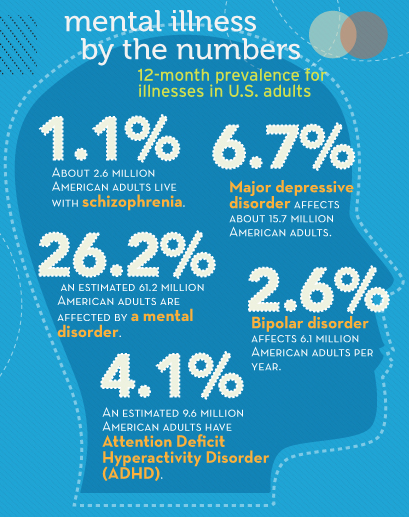
  • super common! About in four adults in the U.S. suffers from it in any given year
  • worsened by overwork, poor sleep habits, and inadequate diet
  • treatable through a combination of medication and counseling
  • an opportunity for growth

This is stuff everybody should know. I wish we taught it in high school. Because early intervention can make a huge difference! Here are a couple of links to helpful pages on the American Psychiatric Association web site.

Warning Signs of Mental Illness

Healthy Minds, Healthy Lives

Another cool site is the National Alliance on Mental Illness.

Image

– Kristin

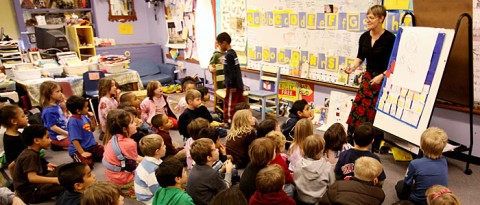
Washington parents, take a minute for teachers!

Washington parents, teachers need our help right now. With luck, you’ve been following the controversy over whether student test scores should be used in teacher evaluations. The Washington State Legislature is considering it now. I think they should NOT, and here is the reason I gave when I signed a petition to my legislators.

Because it’s ridiculous. No reputable study has said that student test scores measure good teaching. My kids’ underfunded teachers work hard in their overcrowded classrooms, but bureaucratic interference like this just makes their lives more stressful, which interferes with my kids’ ability to learn. Meet the constitutional mandate for fully funding education instead.

Should teachers be evaluated? Yes, absolutely! But they should be (and are currently being) evaluated fairly. If their evaluations are based on student test scores, they’re going to have to “teach to the test” — that is, the Common Core test — even more so than they already are. Critical thinking and creativity will get shorter shrift, because there just won’t be time for it.

The state PTA is probably out to lunch on this issue, but here is a petition from the Washington State Education Association. Sign it. Now. Please.

http://action.washingtonea.org/p/dia/action3/common/public/?action_KEY=9370


The creative writing workshop from hell

A writing workshop is a must for aspiring writers. At least, I’ve always thought so. Once upon a time, they didn’t exist, and people still wrote books.

Anyway, writing workshops have been helpful to me. They go like this, generally speaking: you write a story, you make a number of copies, you take them into a workshop with a bunch of other aspiring writers and one published author. The writers all talk about what worked and didn’t, in a friendly and respectful way, and then the published author sums up their thoughts and opinions. You are advised to take all advice with a grain of salt. You go home, look at the comments, and do your best to incorporate them without throwing up from anxiety.

Over time, you learn not only from other people’s comments but also from your own comments what works and what doesn’t.

And over time, you graduate into a writing group, where all participants have an more equal voice. If you’re lucky, it’s a respectful group of writers who appreciate your writing aesthetic.

By and large, that’s what writing workshops have been for me. However, they’re not always like that. My friend Ian had a horrific experience, in which the writing workshop devolved into race-based personal attacks.

As it turns out, there’s a historical context for that kind of writing workshop. It begins with Paul Engle, the highly influential director of Iowa Writers Workshop from 1941 to 1966. You could call him the Founding Father of writing workshops, because although he didn’t start the writing workshop as we know it now, he brought it to national prominence in the U.S.  through his amazing ability to solicit fellowships from corporations, the wealthy, and the government. I found out about him through an article about CIA funding for creative writing, which I discuss here and here and here.

Wanting to know more, I checked out the book The Program Era: Postwar Fiction and The Rise of Creative Writing by Mark McGurl.

Engle was the boss. He had ultimate authority over which workshop students got funded, and by how much. McGurl writes:

“. . . Iowa Workshop students were required to report to . . . Engel every fall, lining up outside his office door. Entering one by one to make their plea for fellowship money, they would talk about their needs, their goals, and Engel, unhampered by codifications or committees, would announce the figure that seemed to him just.” (p 174)

Engle also set the tone for the general teaching practice in the writing workshop. As he explained in 1961, the goal was to discourage the author’s outpouring of spontaneous feeling and to use the social pressure of the workshop to intimidate or even terrify students into controlling their own work. (pp 130-131)

McGurl explains that Engel had a recurring nightmare that was immediately familiar to his students as a metaphor for his writing workshops. In his nightmare, Engle was in a concentration camp surrounded by a stone wall, among guards and prisoners. The guards forced him to walk along the wall in an extremely humiliating fashion. He complied, and found he was so good at it that all the guards and prisoners looked up at him in amazement and admiration. (172-173)

McGurl goes on to point out that in this model, the wall is still there. There are still guards and prisoners. The lucky writer is still a prisoner, and doesn’t escape the prison, but only rises above it.

So that’s the creative writing workshop from hell. You, as writer, are a prisoner in a concentration camp, terrorized into banishing spontaneous feeling from your work, and your only hope is to do such a good job that you rise above it all. But you can never escape.

Perversely, because of the influence of Engle and his money and prestige, this became the Platonic Ideal of writing workshops, the model that teachers of creative writing would emulate for years to come. The workshop leader (with all their biases surrounding race, class, gender, politics, etc) is dictator. And their influence, like Engle’s, extended beyond the workshop to affect which authors could be published.

Later, there was a shakeup, and a more progressive form of the workshop emerged, with more respect for writers and their works, and more understanding of the ways that race, gender, class, and other biases affect workshop participants.

But the ghost of Engle remains. Authoritarianism is part of the heritage of the writing workshop.

Is there something useful to be done with this new information about the history of the writing workshop, I wonder? Should we question the entire format of the writing workshop as based in authoritarianism and war? Or should we shrug our shoulders and say, “Oh well, the progressive shakeup took care of all that” and move on with our lives? I don’t know.

But I do know one thing. Writers who have been traumatized by a Ghost-of-Engle Writing Workshop should take heart and be validated. And pick up your pens.

pencil and notebook2