Are you racist?

Are you racist? That’s quite a loaded question. And an important one. I’m sure you have an answer of one kind or another. But never mind that for a minute. Think about how it feels to be asked that question.

I’ll tell you how I feel: instantly defensive. I’m guessing it’s a pretty typical white person response. Here’s what I think about white people. I think we all know, deep down, no matter how hard we not to, that we have racist thoughts and feelings and reactions. And if we’re thoughtful and conscientious people, we’re ashamed of them. We know we shouldn’t be racist. So we don’t want to be thought of as racist. The unspoken thought process goes like this: racism is bad. Racists are bad people. I must be a bad person if I’m racist. I don’t want to think about this any more.

This defensive reaction isn’t going to help us fight racism. It makes us shut down whenever conversation turns to questions of race. How to get around it?

There are a thousand answers to this question. Here’s just one. The word “racism” is a big, knotty, knarly, tangled ball of yarn. It means too many different things at once. For some, being racist means that you outwardly and unashamedly diss people for the color of their skin. That’s explicit racism. There’s also implicit racism — the bundle of prejudices we all carry, even if we don’t want to. And there’s institutional racism, which is the social, economic, and political systems that combine to oppress people based on skin color. And that’s just the tip of the iceberg.

One answer to the question “Are you racist?” is that we are all swimming in racism. That’s what “institutional racism” means. How could it not get in us? So each and every one of us could answer “Yes” and not be wrong.

And white people, we kind of need to get used to answering “Yes” and admitting that we do at times have racist thoughts, feelings, and reactions. And we make mistakes. We need to desensitize ourselves to the question and get over this defensive reaction so that we can have thoughtful conversations about race. So that we can change.

On the other hand, we’d better be careful what we tell our brains. Do we really want to be telling our brains that we’re racist? Maybe we need a different question. Or multiple different questions. Or a thoughtful answer that isn’t a yes/no answer.

This is the part of the blog post where I am supposed to say something insightful. But today I don’t feel like I have good answers. Plus, other people have already done it better than me. So here are a couple links to some thoughtful articles.

Image

Cartoon Anthony’s Student Growth Percentile

In my last post I looked at student growth percentiles, a new kind of data that the Washington State Office of Superintendent of Public Instruction. This post follows up by going into more detail about how SGPs are calculated. Back to the simple video with cartoon Anthony!

Cartoon Anthony got an MSP reading score of 344 in 3rd grade and a score of 381 in 4th grade. His score grew in that time. To get his SGP, they took the amount of growth and compared it to a group of 3rd grade students who began with that same score. His score of 381 was higher than 80% of the students in his comparison group, so he gets an SGP of 80. That shows “high growth.”

I’m going to set aside for the moment a couple of really large questions. First, exactly what does the MSP reading score measure? Second, what would have happened to the SGP if Cartoon Anthony was instead compared to a different set of students?

I’m just going to pretend those other questions don’t exist and ask, “How accurate is the SGP?” There are different ways to look at the answer to this question, but I’ll just give the easiest one here. Hang on to your hats, because I’m going to use just an eentsy weentsy bit of algebra. I’m going to use the variable x to indicate the absolute measurement error of a single MSP score. I’d use the real number, but I don’t know it and I couldn’t find it online anywhere. 

The change in Anthony’s MSP scores is 381-344, or 37.

The absolute measurement error for each test is x.

Using the simple method (that doesn’t rely on calculating standard deviations), the absolute measurement error for the change in scores is 2x.

So let’s suppose x is 10. That would make the absolute error 20, which means the change in scores could be anything from 17 to 47. Pretty big difference there!

If the measurement error is high enough, it makes Anthony’s SGP meaningless.

Is it meaningless? I don’t know. But the question needs asking.

Student Growth is WHAT?

In early December, the Washington State Office of Superintendent of Public Instruction (OSPI) announced that it would be making student growth percentiles available to school districts. Parents will be able to see the student growth percentile for their individual children.

What’s a student growth percentile? Good question. My answer is:  magic fairy dust. The OSPI’s answer is:

A student growth percentile (SGP) describes a student’s growth compared to other students with similar prior test scores (their academic peers)

What are they talking about? Height? Weight? No. “Academic growth.”

Well, then you have to ask, “What kind of academic growth? Measured how? And how accurately?”

You’ll find answers to the first two questions, but not the third.

They’re defining “academic growth” as a change in test scores on the state tests. They’re measuring it by a rather complex, involved process. It’s worth looking under the hood here. Maybe we need to go find a mechanic to ask whether it’s a working machine or a convoluted Rube Goldberg device with a fault in the middle? Maybe we need a crash course in statistics. Or a friend who understands this stuff.

Rather than trying to explain their Rube Goldberg device, the OSPI gives us a video with a fairly simple explanation. Too simple, really. They take a cute cartoon kid, Anthony, and show us that last year his 3rd grade MSP reading assessment score was 344, and that this year his 4th grade score 381. But is that amount of growth more, less, or the same as his peers? To answer that question, they take a bunch of kids who had the same 3rd grade score and compare the growth. Turns out that although Anthony is still behind, he had more academic growth than his peers.

Fairy dust. Did he really have more academic growth? Or did he maybe forget to eat breakfast in the third grade, making that score unusually low? That would compare him with a whole different set of academic peers. The problem here is that the OSPI is pretending that those two scores are accurate measures of how well Anthony can read. But they’re not. They’re both estimates.

Student Growth Percentiles are made by mashing up two estimates in really complicated ways. What is that, twice the inaccuracy? Or worse?

Let’s dig into the details here by looking at “A Technical Overview of the Student Growth Percentile Methodology: Student Growth Percentiles and Percentile Growth Projections/Trajectories.” I’m sorry. I really am. Math can be scary. But it’s like reading the fine print in a contract: you have to do it if you want to know what you’re getting. At the very least, head on over to page 16, under “Student Growth Percentile Estimation.” It says:

“Calculation of a student’s growth percentile is based upon the estimation of the conditional density associated with a student’s score at time t using the student’s prior scores at times 1, 2, . . . , t-1 as the conditioning variables.”

It is an estimate. How come the OSPI doesn’t say that on its website? Do they think we’re too stupid to understand? Or do they not understand?

Either way, it’s a bad sign. Because they’re going to be using the SGPs to evaluate teachers. Without looking under the hood. Teachers’ jobs will be on the line, so somebody has to look under the hood! Which means we have to learn some statistics. Oh dear!
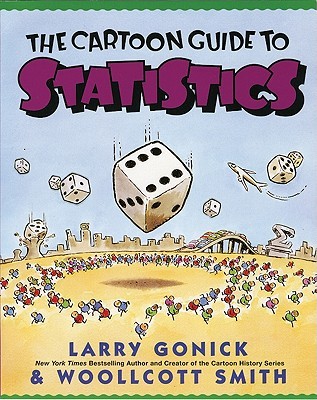
Luckily, they have comic books for that nowadays. Here we go:

Image

The Cartoon Guide to Statistics


My reaction to the Doctor Who Christmas special

The first Doctor Who regeneration I ever saw came as a huge shock. I was watching the Patrick Troughton episodes on Saturday night reruns with my family, and as far as I knew, there was one, and only one, Doctor. I loved him and his panicky nature and his musical voice and his companions Zoe and Jamie. He was like no hero I’d ever seen before, defeating the bad guys with his brain instead of his guns, holding power while still sharing it with his companions, and keeping a delicate balance between authority and childishness. And then the Time Lords got hold of him and changed him into this whole new face and body. He was going to change back, right? Wasn’t he?

I held out hope, and the next week, when the show was on, I grabbed on to the TV for dear life. (I mean literally. It was the only TV in our house, and my dad wanted to watch something on a different channel, and I physically blocked him from doing it. He brought in my mom for backup, and she suggested I videotape it to watch later. So I set up the VCR to record and then kept watching, just in case.) I watched the first twenty minutes of the Jon Pertwee Doctor for hints that he might just change back. And no, he never did.

Unfortunately for me, this was the very first time I had ever videotaped Doctor Who. You know what that meant? I didn’t have any copies of the Patrick Troughton Doctor Who to watch. And no, they didn’t have any DVDs or videotapes or youtube videos. This was the olden times, remember. The kind of times where we had to walk to school uphill both ways. I had to wait until our local PBS station played through all the Doctors and then rolled back through the beginning. I waited patiently but with longing for my first Doctor — the one who, for me, epitomized the character. And yes, absence makes the heart grow stronger.

Unfortunately for me, after the time the PBS station got through its run, it skipped the first two Doctors and went straight back to Jon Pertwee. What was a girl to do? I took extreme measures. To make a long story short, in order to get my hands on those episodes, I had to become the president of the local Doctor Who club for a while. And that led to storing a full-size replica of the TARDIS in our family shed.

So that was my first experience with a Doctor Who regeneration. Traumatic.

I’ve coped well with all the regenerations since then, to the point that I was nearly shouting at the screen for David Tennant to stop crying, for heaven’s sake, and just get on with it! But this Matt Smith regeneration hit me hard. He’s the closest to Patrick Troughton so far, even more than Sylvester McCoy. Also, and some people are going to look at me quite strangely for this, I find him the sexiest. I’ve been mourning him for months. So, knowing that the Christmas special was going to be the regeneration one as well, I knew I wasn’t going to be happy with it.

But when the regeneration actually came around, I was touched. The Doctor got to live his “happily ever after” life and grow old. He took out a Dalek fleet with one part regeneration energy and one part pure, unadulterated joy. And then he went, without fear or sorrow, like the last fizz of sparkly champagne or the last spoonful of a delicious custard. A good send-off for him.

It’s sad, but I am a grown-up now. (Technically.) I can handle it. I have the Verity podcast episode, which I have a feeling I will be listening to more than once. Most importantly, I have the DVDs. Matt Smith is not leaving my house.

Forward to the next Doctor, Peter Capaldi! I was really apprehensive about this one. In the back of my mind, I’m always worried that somebody will come along and destroy the Who-ishness of Doctor Who, as defined by me, with Patrick Troughton as the touchstone. I like my Doctor to save us from the monsters without omnipotence. I like him to panic and get into trouble he doesn’t know how to get out of, and then, despite all the odds, to win. Using jelly babies and jammy dodgers, and with the help of Daleks who make souffles out of imaginary milk and eggs.

Why do I like that so much? Because we’re all in quite a bit of trouble we don’t know how to get out of. Global warming, nuclear meltdowns, austerity, endless war, you name it. I like to imagine someone crashing down from the sky, as confused as we are, to save us from our own monstrosities.

Luckily, the Christmas special got it right. Matt Smith regenerates, Peter Capaldi appears, gives Clara a long intense look that could mean anything (aggression, fascination, confusion, nearsightedness), makes a comment about not liking the color of his kidneys (eww, gross!), and then says,

“Do you happen to know how to fly this thing?”

Sigh of relief! It’s my Doctor, all right.

But what are we changing into?

Yesterday I talked about coming to grips with the rapid pace of technological change. But today I’ll take a step back and ask: what are we changing into? What are we gaining? What are we losing?

Our brains are changing. Scientific American recently published an article, “How Google is Changing Your Brain,” pointing out that quick access to the cloud is changing the way we think. We use the Internet to get information we used to get by asking friends and family — essentially, as an external hard drive. Yes, indeed. I bought a Kindle Fire because my kids keep asking me questions, and although I don’t know the answer, I can get it in just a few seconds. Yesterday my daughter asked me what a Rube Goldberg device was. It was right at bedtime, so I gave her the accelerated version with hand gestures: “Ping, ping, roll, crash, clatter clatter pop — ding!” But then, once their teeth were brushed, I googled it, read Rube Goldberg’s biography, and showed them two youtube videos of Rube Goldberg devices.

Whoops! That violated our house rule of “no screen time just before bedtime.” And sure enough, bedtime was late and everyone woke up groggy. Screens are so very tempting.

The kids use computers way more than I’d like them to. Sure, I set limits, but they’re higher than mine were when I was a kid, and it’s easy to slide. Even easier if I’m on the computer when I didn’t mean to be. The temptation’s higher, too. When I was a kid, “screen time” wasn’t a word. It was “TV.” And it was broadcast TV, which meant that it had a predictable beginning and end. When the Muppet Show was over, we turned the TV off.

On the flip side, what the kids are doing with their screen time is a bit mindblowing. They’re playing Minecraft, a game that’s a lot more than a game. At its core, Minecraft is a 3D building program. They make buildings, trains, you-name-it. Their spatial skills probably already exceed mine. And very likely, they’re learning stuff they’ll need in tomorrow’s world. They’re also programming in Scratch, a language designed especially for kids.

But what’s being lost? Easy. Exercise and reading. Exercise was already in trouble, because most kids don’t roam the neighborhood freely. Too many cars and too many parents afraid of child molesters. But screen time is so tempting, they get even less. As for reading, my kids read, yes, but not as much as I did.

In fact, I don’t read books as much as I used to. I read blog posts, Facebook entries, and links from the Facebook entries. This gives me less opportunity to just cuddle down with a book and lose an hour in pleasant concentration. In fact, when I do have that opportunity, my mind races a bit. It’s used to speedy browsing. I have to always remind myself to slow down, unplug, enjoy the life right in front of me. And teach my kids to do it too.

There’s some kind of balance to be struck here, but I don’t know what it is. How can I? Our world, and the people in it, are changing. Into what?

I don’t have an answer. Do you?

On entering the 21st century

I’ll admit it: I’m having some trouble coping with the proliferation of doodads in the twenty-first century. Smartphone, Iphones, Ipods, Ipads, bluetooth, PS3s, Xbox 1s, Kinect, cams, blueray, thumb drives, kindles, Android, chargers of every make and model, cigarette chargers for the ipod, battery packs for phones, charging, running out of batteries, charging, losing your phone, cameras locking up, ipods locking up, miskeying phone numbers, screens going black unexpectedly, GPS vertigo. You know? I’m the sort of person who hangs on to old technologies (paper and pencil, for instance) with my fingernails, while the future grabs me by the waist and pulls me forward. I still own the old cell phone I bought eleven years ago, under protest.

It wasn’t always like this. I was one of the very first people to use computers, back in the olden days. My dad, a computer programmer, used to bring me into work to play Adventure on his company’s mainframes. Big, big, enormous things! They had to have their own room and their own air conditioners. And I was one of the first people to use a modem. My dad brought it home, cradled our telephone on it, and we listened as it squeaked and squawked and blipped into the line, speaking to the mainframe on the other end. We used it to play Pong. I loved it all. And I loved my first scientific calculator. I read the instruction manual front to back and learned all about exponents, sines, and cosines. And I loved my first VCR. Again, I learned it front to back. (Is it any wonder I became a technical writer?) In college I learned how to do all sorts of things on UNIX (precursor to Linux).

The new technologies were fascinating, exciting, and took a lot of brains. But compared to the devices that are coming out now, they were downright straightforward. I miss that. Everything is happening so fast, and the graphical interfaces keep changing, and I’m thinking that in five years we’ll need to be rocket scientists just to keep track of which charger goes with which device.

However . . . the times, they are a-changing. And so must I! I’m married to a programmer and have two children who are increasingly tech-savvy. I can grouse all I want, but I’m going to have to learn to type on a cell phone keyboard even though it looks patently impossible for my huge finger to accurately tap the tiny keys.

I got an Ipod Nano for my birthday, and I’ve been gradually poking around with Itunes, figuring out how to do this and that. Over the weekend, I figured out how to check out a digital audiobook from the library and put it on the Ipod. Score! And yesterday, I very nearly figured out how to subscribe to a podcast. I clicked the “Subscribe” button, and it said I was subscribed, but it downloaded nothing. Off to do some google searching, I guess. I finally managed to download one episode and listen to it. It was fabulous! I picked Verity Podcast, a Doctor Who podcast in which six women from around the world natter on about Doctor Who. I am now listening to Episode 32 – “Doctor Stew is Required.” All six are having a blast dissecting the Christmas Special, “Time of the Doctor.” Everyone has different viewpoints and insights. Just lovely.

Future, here I come.

The Roman Mysteries

As a child, I read voraciously and ate almost anything put in front of me. But my kids are picky. Not sure why. Is it genes? Or did I make some fundamental parenting error? Will they grow out of it?

Anyway, a children’s librarian pointed us toward a series called The Roman Mysteries by Caroline Lawrence. We ended up reading it as a bedtime book, and we’re all the way through book three. It’s good stuff. The main character, Flavia Gemina, solves mysteries in first-century Rome with her friends Jonathan, Nubia, and Lupus. Flavia is a polytheistic Roman from a well-off family, Jonathan is a Christian Jew, Nubia is a slave whose family was killed in the slave raid, and Lupus is a beggar boy who has had his tongue cut out.

As you might imagine, this series does not shy away from the harsh realities of Roman life. In the second book, people die terribly in the Mount Vesuvius eruption. In the third book, which we just finished, children (including our heroes) get kidnapped to be sold into slavery. All the same, it’s not too scary for our eight-year-old. How does Lawrence manage that? I do not know.

I had some reservations during the first two books. Flavia’s dad helped her buy Nubia, to save her from an unspecified worse fate. But the third book was pure win. My daughter and I had some conversations about whether or not Nubia really was a slave, since Flavia was nice to her and didn’t order her around, and whether it would be right for Nubia to run away, if given the chance. Without giving too much of the plot away, it’s fair to say that everybody learned a lesson by the end of the book. And Nubia was freed.

Anyway, definitely worth a look!

Year’s Roundup: 2010

For the past several years, I’ve been contributing to the series Pleasures of Reading, Viewing, and Listening at the Aqueduct Press blog. What’s that? Well, it’s a bunch of blog posts written by Aqueduct Press authors showcasing shows, music, and what-have-you that we enjoyed. Want some fine recommendations from geeky, smart, creative, well-read feminists? Check it out. In the next few days, I’ll be reposting my essays on this blog.

The Pleasures of Reading, Viewing, and Listening in 2010

(originally posted here)

This year, I absorbed a lot of works that upset my understanding of the world around me. If I ever thought my identity – or anything else, for that matter – stood on solid ground, I was mistaken. On what does it rest, then? An abyss, the roll of a die, or a cantering horse? I’m really not sure.

 The Short Wondrous Life of Oscar Wao

by Junot Diaz

http://www.powells.com/biblio/9781594489587

Okay, so the author made up fukú – the deadly curse wrought by the dictator of the Dominican Republic, Rafael Trujillo, after the interference of Europe and America in the country’s affairs. It doesn’t matter if it’s made up, doesn’t matter if you believe in it. It’ll get you just the same.

But on the other hand, there’s also a counterspell: zafa. And Oscar Wao is zafa. He exists in the intersection of oppressions, at home nowhere. He is a Dominican immigrant / refugee in the U.S. and also a nerd and overweight. The Dominicans in his community won’t acknowledge him as their own because he is a nerd. The nerds are embarrassed because he’s overweight. And yet . . . he’s wondrous. In a small but important way, and with geeky panache, he resists a dictatorship.

Oscar Wao suffers. He suffers a lot. But when he takes damage, he takes it Dungeons and Dragons-style, with hit points from the funny-shaped dice. Roll that die. Ooh – maximum hit points.

I can relate.

The Hearts of Horses

by Molly Gloss

http://www.mollygloss.com/hearts.html

Meet Martha Lessen. She’s the Western hero that you’ll never see in a Louis L’Amour novel or a spaghetti Western – she’s unassuming and she doesn’t shoot people. Instead, she rides into town and gets a job “breaking” horses. She’s learned horsebreaking from a “horse whisperer,” winning a horse’s trust rather than forcing it into submission through violence and fear. She fits neither the stereotype of horsebreaker or woman, but she gradually finds a place in the community through her quiet competence and love of horses and people alike.

I read this book after hearing Molly Gloss give a profoundly thought-provoking talk on the myth of “Shane,” the gunslinger who rides into town, saves the townfolk by shooting the bad guys, and rides right out again. That’s our great the Western myth that has done incalculable damage to the world. But, as Gloss argues, it’s a total lie. The true story of the West was about ordinary people homesteading and ranching, making home and community.

Her essay on Shane, “Desperado,” appears in Serving House Journal. (http://servinghousejournal.com/GlossDesperado.aspx)

The Tao Te Ching

by Ursula Le Guin

http://www.ursulakleguin.com/Index-LaoTzu.html

Le Guin spent hours on end reading her father’s copy of the Tao Te Ching, and is grateful to have discovered it so young so she could live with it for her whole life. Most versions are written to emphasize masculinity and authority, but she makes this one “accessible to a present-day, unwise, and perhaps unmale reader . . . listening for a voice that speaks to the soul.” It’s practical and funny, and it will teach you to be like water. I get the biggest kick out of her commentary on Chapter 53, “Insight” – “So much for capitalism.”

Cheek by Jowl

by Ursula Le Guin

http://www.ursulakleguin.com/Index-CheekByJowl.html

This book surveys children’s chapter books with animals as characters. But not the kind of animals who are really humans prowling around in a lion suit – animals who genuinely act and feel like animals. It’s a reminder of what humans have lost as we’ve set ourselves apart from the rest of the natural world. After I put the book down, I couldn’t feel superior any more.

The Man Who Lost His Shadow and Nine Other German Fairy Tales

by Gertrude C. Schwebell

http://openlibrary.org/books/OL5069919M/The_man_who_lost_his_shadow_and_nine_other_German_fairy_tales

There’s nothing like going into a used bookstore and finding a great collection of fairy tales. What happens to a man who sells his shadow? Does a boy with no morals ever get a second chance? These are rich, meaty, and imaginative, and the characters all get their just desserts.

Pippi Longstocking

by Astrid Lindgren

http://www.powells.com/biblio/9780670062768

If my young daughter walks into my neighborhood independent bookstore and heads toward the children’s section, she’ll come across a couple of book spinners. They’ll be irresistible. Who cares that there are other books just a few steps away? Because these spinners have great books for girls, just the kind she craves, the kind you find at the school bookfairs and the Scholastic catalogs, the kind you even get as a prize for completing the library’s summer reading program. Yeah. Disney princesses and Barbie.

But soon . . . maybe one more year . . . she’ll be ready for Pippi. Strong, quick-witted, and owner of a large chest of pirate gold, Pippi could beat Walt Disney with one arm tied behind her back.

And then go back home, gobble up a bag of candy, and fall asleep with her head under a blanket and her feet on the pillow.

Logicomix

by Apostolos Doxiadis, Christos Papadimitriou, and Annie Di Donna

http://www.logicomix.com/en/

This graphic novel tells the story of the search for truth in the foundations of pure logic, intertwining the lives of famous mathematicians with the mathematical quests and political turmoil of the early- to mid-twentieth century.

Logicomix centers on the story of mathematician and philosopher Bertrand Russell. Russell had madness in his genes and parents nobody would talk about. Lacking stable foundations for his identity, he sought them in mathematics. Euclid’s geometry gave him “the promise of certainty in total rationality” and a “dream of a perfect cosmos.”

It was a lovely dream, the Enlightenment belief that mathematics pointed the way to a final and absolute truth.

Only thing was . . . Euclid’s geometry was based on axioms, which were unprovable. Russell set about trying to rectify it, spending ten years trying to prove the obvious, that 1 + 1 = 2.

He failed. And to the shock and horror of not only Russell but also mathematicians everywhere, his failure led to an even crazier mathematician, Goedel, mathematically proving that truth is not provable and that every system based on arithmetic is incomplete.

Who cares? What did this quest do to Russell? His wife? His son? And what does it have to do with World War II, the rise of Hitler, and anti-Semitism?

Usually, after you finish a book, you know more than when you began it. But if you dare to crack open this most remarkable book, you’ll know less.

Catching the Moon

by Myla Goldberg, illustrated by Chris Sheban.

http://www.carolhurst.com/titles/catchingthemoon.html

When an old fisherwoman casts her net all night long, the Man in the Moon is intrigued and decides to pay her a visit. But he accidentally lets in the tides and upsets her tea set.

“My heavens,” cried her guest. “I’m afraid I’ve caused a mess.”

This picture book is short, sweet, and lovely.

One Book that I Didn’t Read Because It Didn’t Exist

by nobody

Wouldn’t it be great if somebody wrote a book about Lily Potter? After all, it was her magic that defeated Voldemort – twice! Were they just magically bestowed on her because she is a Woman and a Mother, or did she get busy sneaking around in the invisibility cloak with her gang, reading ancient magical history, having conversations with Dumbledore about how to keep this Snape guy in line? Yeah. Somebody write that.

The Polymath, Or The Life And Opinions Of Samuel R. Delany, Gentleman

directed by Fred Barney Taylor

http://www.imdb.com/title/tt1014771/

This documentary grabbed my attention off the video shelf with the most basic of hooks – sex. Rent me, it said, and you’ll find out how novelist Samuel Delany managed to have 5,000 partners in his lifetime. Exciting? Extraordinary? No, to listen to him talk, that’s just what life was like for him in the seventies. “You felt like you were having a very ‑ a fairly interesting life,” he says matter‑of‑factly. And just as matter‑of‑factly, he shows us the world we live in, a world we think we know but don’t.

Here’s an excerpt:

“Were the porn theaters romantic? Not at all. But because of the people who used them, they were humane and functional, fulfilling needs that most of our society does not yet know how to acknowledge.

The easy argument already in place to catch up these anecdotes is that social institutions such as the porn movies take up, then, a certain social excess, are even perhaps socially beneficial to some small part of it, a margin outside the margin. But that is the same argument that allows them to be dismissed and physically smashed and flattened. They are relevant only to that margin; no one else cares.

Well, in a democracy, that is not an acceptable argument. People are not excess. It is the same argument that dismisses the needs of blacks, Jews, hispanics, asians, women, gays, the homeless, the poor, the worker, and all other margins, that, taken together ‑ people like you, people like me – are the country’s overwhelming majority ‑ those who, socioeconomically, are simply less powerful.”

I could listen to him for hours on end.

Doctor Who, Seasons 4 and 5

The tenth Doctor, a rather Shane-like figure, blows it toward the end of Season 5, turning into an anti-hero. (I loved this moment so much I wrote an essay on it for Strange Horizons: “The Fall of the Superhero: Doctor Who and the Waters of Mars” at http://strangehorizons.com/2010/20100301/king-a.shtml)

Fortunately, the Doctor can regenerate into a new body and personality – sort of reincarnating without having to go through childhood again. But at the beginning of Season 5, the eleventh Doctor takes a Tigger-ish moment to relive childhood. He turns up at the house of seven-year old Amelia Pond demands an apple, takes a bite, and spits it out. Yogurt, beans, bread and butter all go the same way – thrown or spat. Finally, just as Tigger finds his favorite food in Kanga’s Strengthening Medicine, the Doctor finds fish fingers dipped in custard. Perfect.

The eleventh Doctor’s companion, grown up Amy Pond, is the epitome of what the media requires out of girls and women in twenty-first century. She models empowerment by looking sexy, dressing in miniskirts, and having a voracious sexual appetite. Something about this is worse than, for example, the Wonder Woman who fought bad guys while satisfying the urges of the male gaze. I think it’s because Amy Pond has internalized her stereotype.

Still, Amy Pond has her moments, and my favorite is at the end of “The Beast Below” when she thwarts the Doctor, and forces the Queen of Starship Britain to abdicate.

And a Weekend of Revelations

In February I attended the Fishtrap Winter Gathering in Oregon, with a weekend of talks, readings, and workshops by Molly Gloss, Ursula Le Guin, and Tony Vogt. I wrote a little about it on the Aqueduct Press blog (http://aqueductpress.blogspot.com/2010/02/fishtrap‑winter‑gathering.html) but there’s a lot more to say and think about. I’ve been absorbing what I heard all year long. Just a few takeaways:

  • White people are largely unaware of the ways that white privilege shapes everyone’s day-to-day life. Go to the store and get a box of flesh-covered band-aids. You’ll see.
  • We need to dismantle the myth of Shane.
  • Human beings are animals who use technology. (Does this make my computer part of the natural world?)
  • Technology makes us human, and capitalism makes technology destructive by forcing it to be always bigger and better. (I have to wonder, though: isn’t capitalism just one of our technologies? And what does that mean?)
  • The words that we use matter. It’s time to ditch the war metaphors.

pencil and notebook3


Stranger, you missed something important

Some of the biggest privacy news in Seattle broke last week . . . just in time for everyone to be completely distracted by the Christmas holidays. To recap, our local radio station KUOW reported that our state’s education department had offered to give our local newspaper an enormous slew of confidential student data. Like this:

Any personally identifiable student or staff-related information, including, but not limited to (a) student names, (b) the name of a staff/student’s parent or other family members, (c) staff/student addresses, (d) the address of a staff/student’s family, (e) personal identifiers such as a social security number or student number or staff/certification number, (f) personal characteristics that would make a staff/student’s identity easily traceable, (g) any combination of information that would make a staff/student’s identity easily traceable, (h) test results for schools and districts which test fewer than ten students in a grade level, and (i) any other personally identifiable information, or portrayal of staff/student related information in a personally identifiable manner.

There was a later clarification from KUOW that the data would in fact be de-identified. That is, the state would remove names, dates of birth, and Social Security numbers before giving the data to the Times. Anyhow, that’s what the state told us after the news broke.

Curiously, our local newspaper didn’t cover the story. Hmm, I wonder why? Fortunately, the Stranger, our independent weekly, did cover it. Unfortunately, it missed a few crucial points.

First, it reported that de-identified data would be shared, without mentioning that the agreement had originally been for the whole kit and caboodle. The agreement that’s linked to the KUOW article, and it says:

The purpose of this Agreement is to authorize the release of student and teacher information . . .

The Seattle Times may request access to and limited use of information contained in student assessment as well as other confidential data for the purposes stated in this Agreement.

Second, it didn’t mention the flaw with de-identified data: it is very, very easy for that data to be re-identified.

How come? My guess is that the Stranger’s reporters were just as confused as the rest of us. As I mentioned in my post on the Aqueduct Press blog, the kinds of privacy violations that are happening today are confusing. There is a big, big need for lots of people to become informed, and fast. Once data is released, that’s it. The cow’s out of the barn. (That’s kind of true. It depends on who is getting the data, how likely they are to share it with others both legally and illegally, and who they might be sharing it with.)

Where to start, where to start? Well, read the federal privacy law. Not a summary, but the actual law. Set aside some time for this, OK? In my opinion, it’s deliberately misleading. On top of that, sadly, trusted groups like the PTA are distributing privacy information that omits key facts. If you just have a minute for now, look at the parts that say “non-consensual.”

Also, stay up to date by reading the blogs Save Seattle Schools and Seattle Education. They have excellent analysis on all this stuff.

Stay tuned, folks! This isn’t the first privacy violations our students are facing, and it won’t be the last.

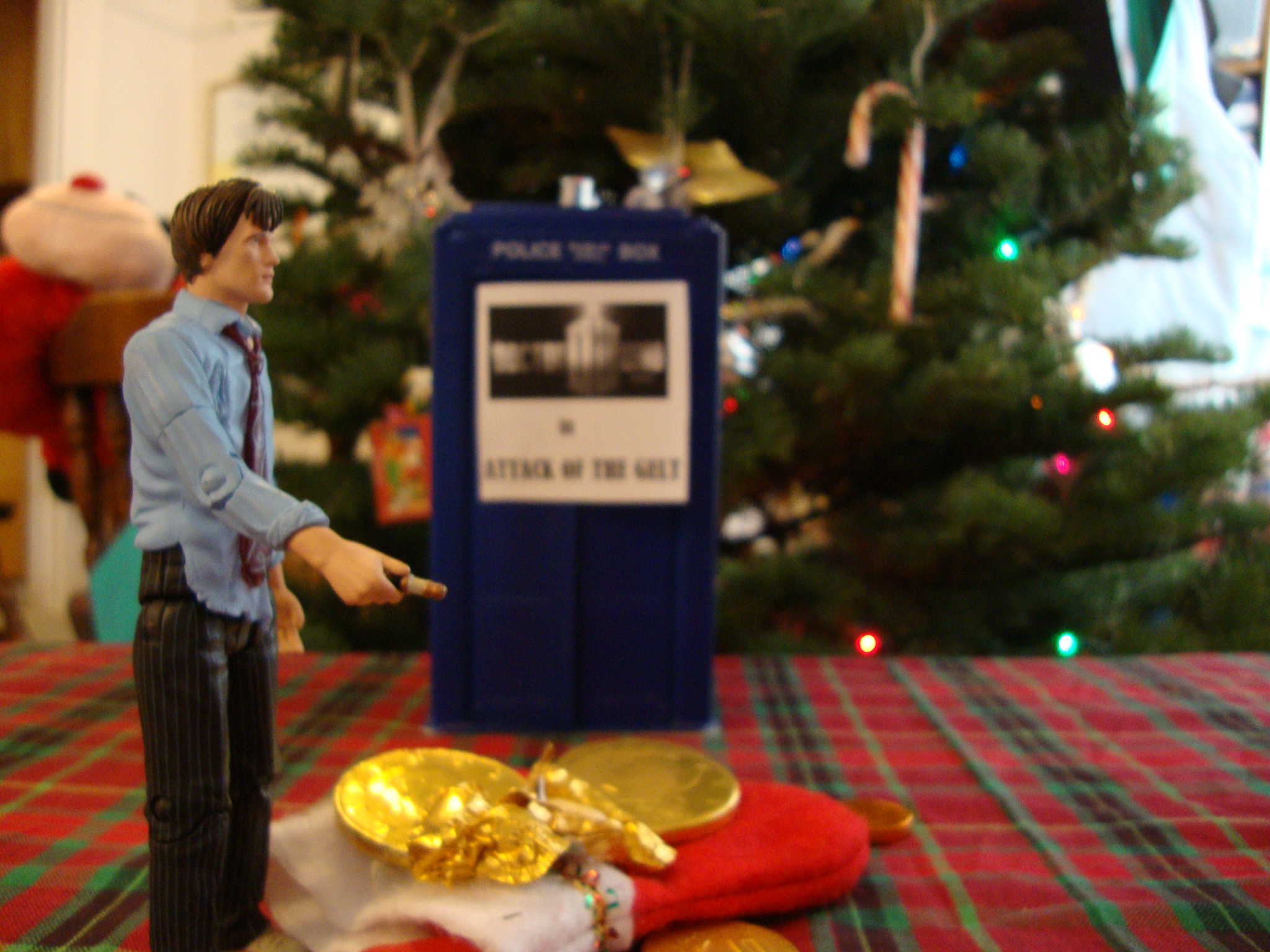
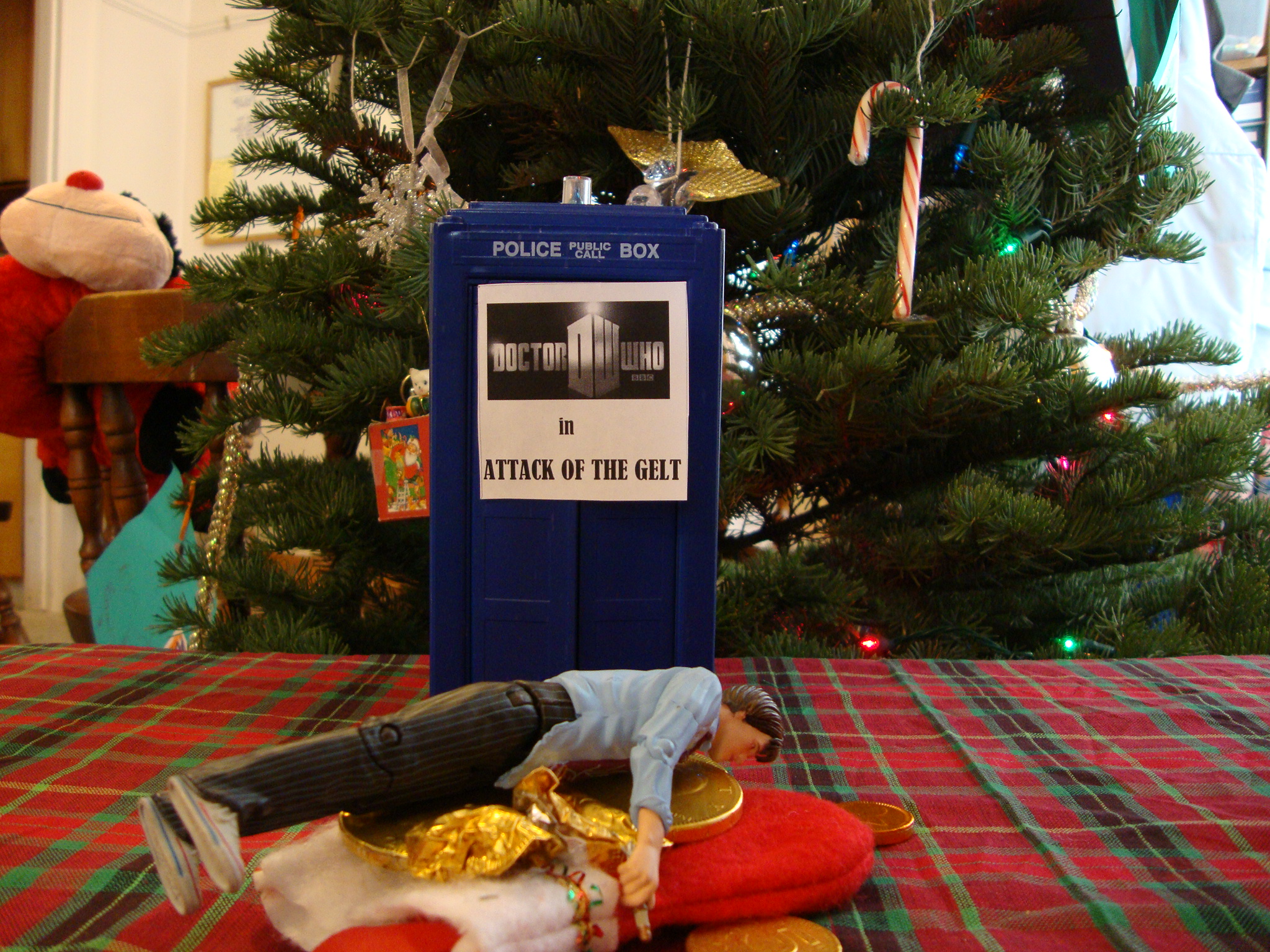
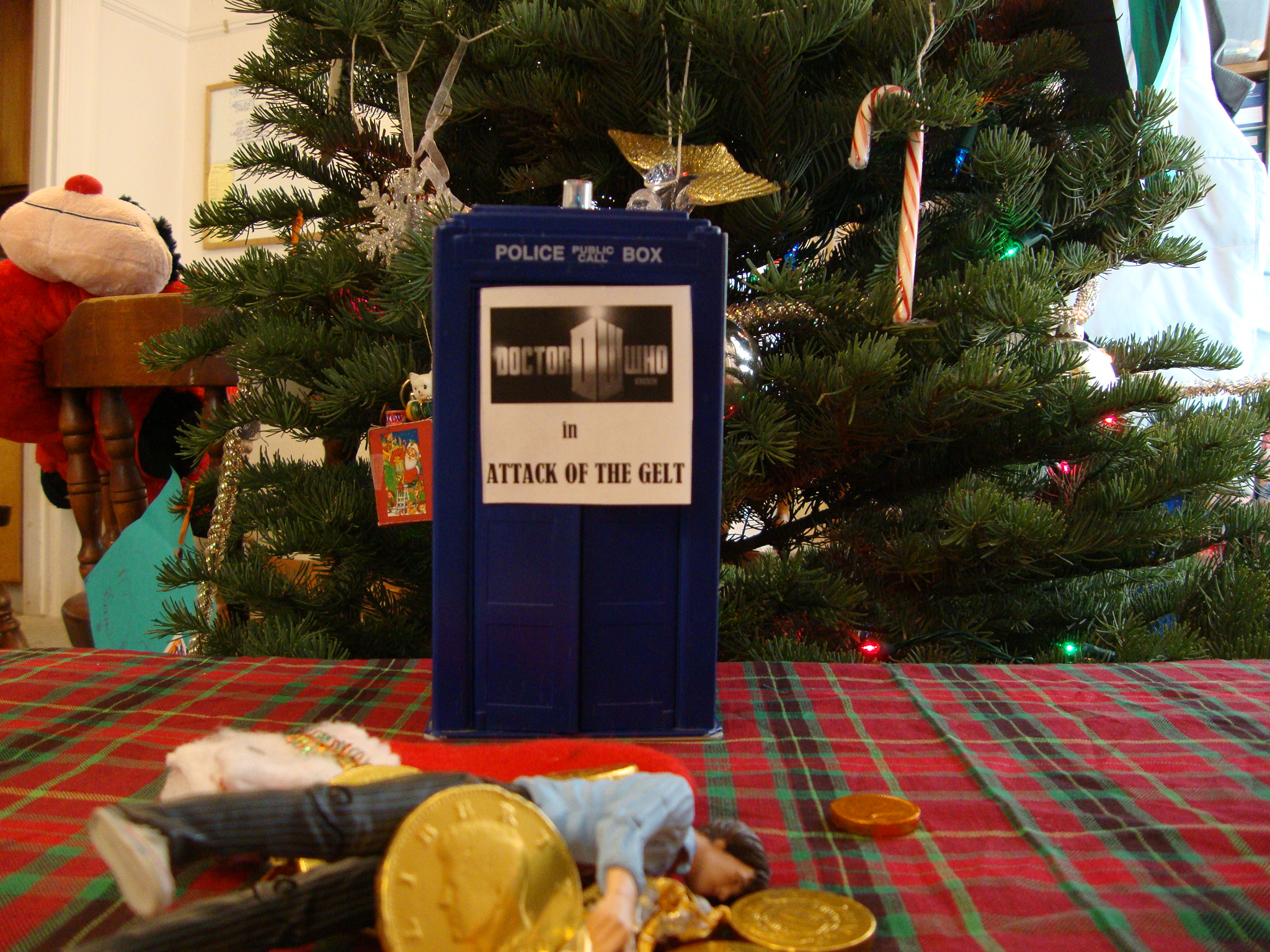
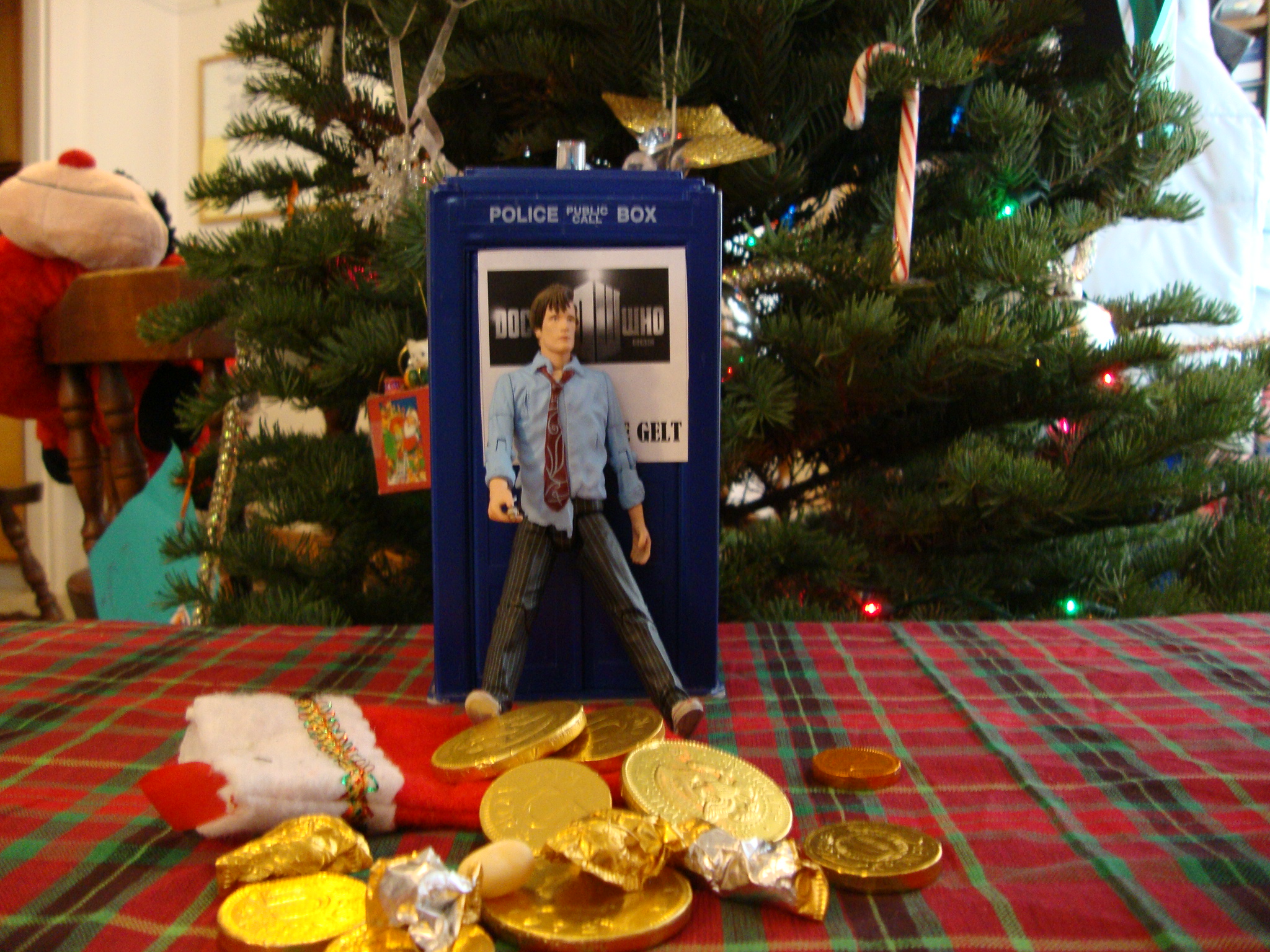
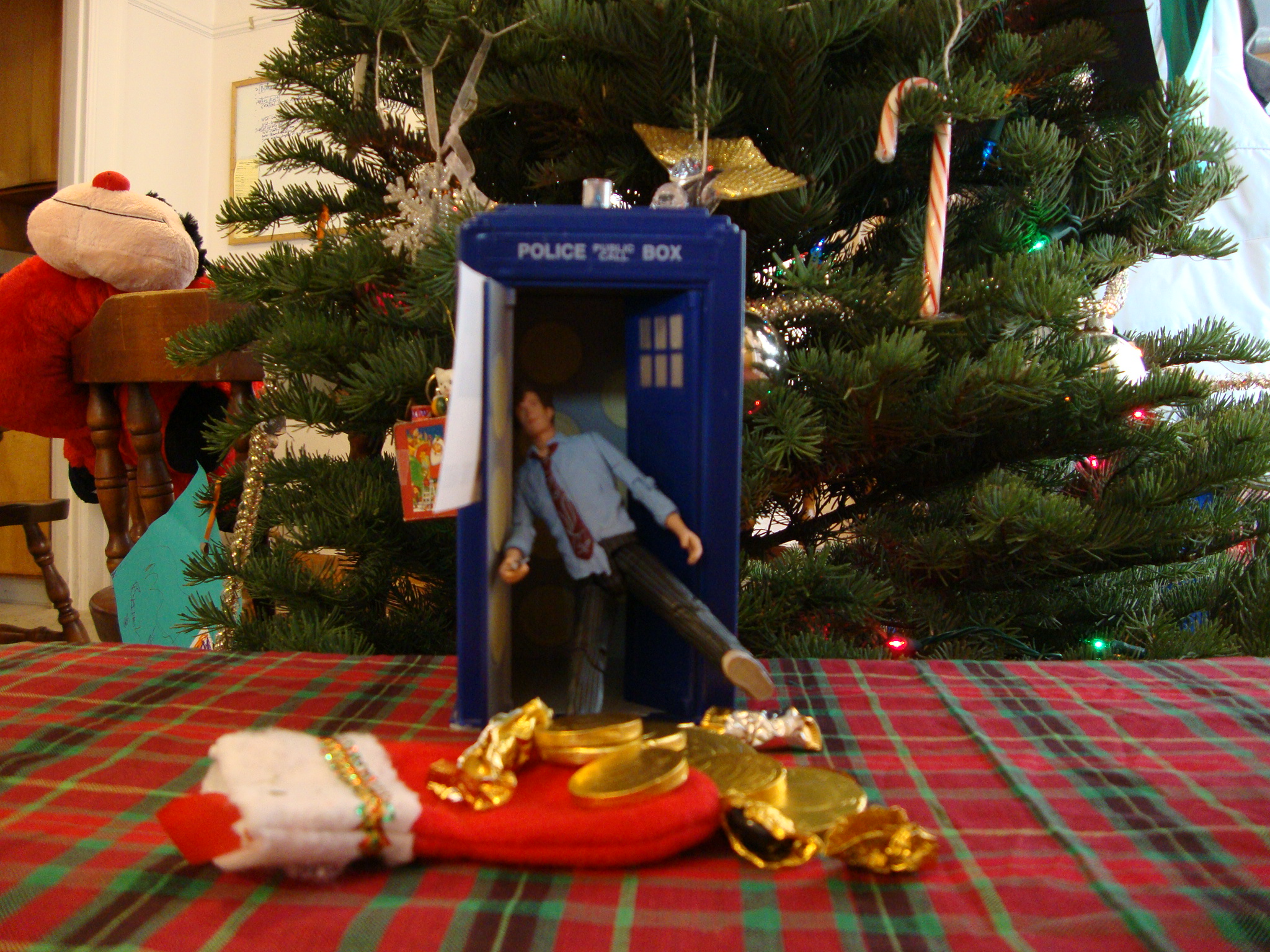
Doctor Who: Attack of the Gelt

As a little girl, I enjoyed playing with dolls and my wonderful dollhouse my parents built for me when I was six. I still enjoy it, but in much geekier ways.

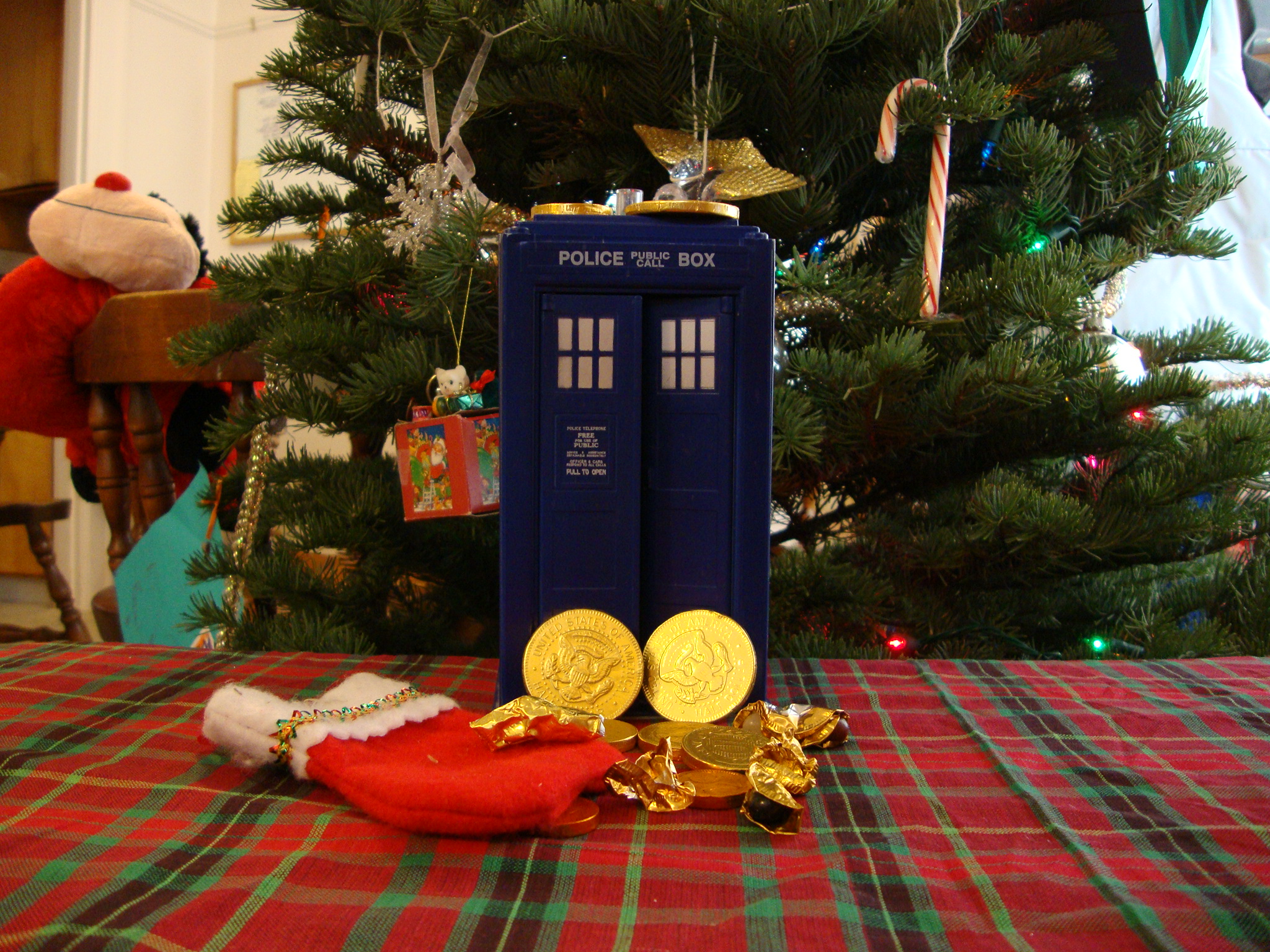
Here’s a stop motion animation I did a few years back, Doctor Who: Attack of the Gelt. The moment you link to it you’ll get an annoying video ad, but it seems to shut up if you move your mouse over it.

http://kristinking.livejournal.com/21819.html#cutid1

I don’t actually know where on my computer I put that, so I’ll just add a couple images here. Watch out, Doctor. Candy is dangerous!

DSC03115 DSC03116 DSC03119 DSC03122 DSC03136 DSC03140 DSC03142


– Kristin