
After my last post I wondered if the term “collective cognition” is already in use, and a quick Google search shows me the answer is yes. The next question: could it be manipulated? Also yes. Here are a few “teaser” sites for further exploration. But I’m going to resist the temptation to follow my curiosity because I have a backlog of writing projects . . . including novel revisions.
Since at least 2001, corporate strategists have been studying the manipulation of collective cognition. For example, here is the abstract to an article by John Mezias in the journal Long Range Planning, “Changing Collective Cognition: A Process Model for Strategic Change.”
Firms face increasing pressures to modify their strategies and adjust to rapidly changing environmental threats and opportunities. Yet strategic reorientations are difficult to achieve, especially as most methods fail to recognize the cognitive aspects of change. While some methods such as facilitated workshops have become increasingly popular to help top management teams better facilitate strategic change, these have largely evolved on the basis of successful experience rather than on an understanding of cognitive processes. This paper seeks to fill this gap, by drawing both upon theoretical literature and experience with successful change facilitation practices from Europe and the US. Its focus is on the cognitive aspects of strategic orientation and provides a practical guide to those who use this process.
In other words, when corporate leadership wants to make a change to strategic organization, this article is recommending also changing collective thought processes.
Here’s an outline of topics covered:
- Introduction
- From theory to practice
- From the individual to the collective
- Changing collective cognition
- Problems with recognizing a need for change
- Problems with mobilizing change forces
- Problems with overcoming change barriers
- Unlearning, learning and cognitive reorientation
- The facilitated Change Workshop
- Summary and conclusion
But why stop with changing collective cognition within a single corporation, when the world is full of potential customers and policymakers? That’s definitely happening within the field of education. Corporately funded think tanks are pushing messages, for instance, that public schools are failing, and encouraging people to become “change agents.”
And what do you know, the manipulation of social media is indeed being studied. This from “Mnemonic convergence in social networks: the emergent properties of cognition at a collective level” by Coman, Alin, et al, published 2016 in the journal Proceedings of the National Academy of Sciences of the United States.
Here we report results on the formation of collective memories in laboratory-created communities. We manipulated conversational network structure in a series of real-time, computer-mediated interactions in fourteen 10-member communities. . . . The social-interactionist approach proposed herein points to optimal strategies for spreading information in social networks and provides a framework for measuring and forging collective memories in communities of individuals.
Apparently they built collective memories out of nothing? Well, if that capability is available, somebody’s going to use it.
And that’s quite enough dystopia for one day. I am an optimistic person, though, and I do believe there are utopian solutions that involve intentional, democratic, and compassionate attention to collective cognition.
-Kristin
(Picture is from Doctor Who: “The Lie of the Land,” featuring aliens who had the power to manipulate collective memory provided one person gave consent.)

From Doctor Who “The Lie of the Land”




![[Screen shot reading: "Confirm bulk action. This action will affect all 1,827 conversations in Inbox. Are you sure you want to continue? OK/ Cancel"]](https://kristinking.org/wp-content/uploads/2018/01/confirm-bulk-action.png?w=500)


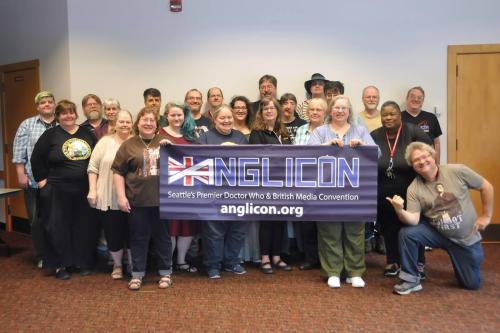
 I never expected to see a woman play the official “Doctor Who,” but here we are, with Jodie Whittaker cast as the 13th Doctor. Are the fans ready? Not entirely. This weekend at Anglicon 2017 I had one telling experience, with one high-profile guest doubling down on previous comments opposing the casting. He had already been publicly criticized for those comments and had taken those comments as “getting in trouble” unjustly. This tells me that either nobody sat down with him and had a thoughtful conversation on the topic, or that somebody tried and he didn’t listen. Either way, the communication failure is frustrating!
 Kristin Ann King