Category Archives: daily life

Breast cancer treatment, in fast-forward

The short version: some time ago, I was diagnosed with breast cancer and underwent treatment. After a round of chemotherapy and surgery, I have no detectable cancer. You never know with cancer, but this is as close to a happy ending as I’ll get any time soon!

Why I’m making this post: Breast cancer happens to so many people that it ought to be discussed as matter-of-factly as, say, a broken arm or leg, but it usually isn’t. And not talking about things can make them scarier, and people who are scared sometimes put off their mammograms. Don’t do that. They can save your life, and they can also save your breasts.

Preliminaries aside, here is a collection of social media posts that chart my journey over the course of about six months. They’re all pretty upbeat and optimistic, and yeah, that was my attitude overall, but do bear in mind that I made these posts when I was feeling well enough to post.

OK, so – deep breath – a couple weeks ago I was diagnosed with breast cancer. Routine mammogram, stage 1, and because I am “young” (for breast cancer at least) I will start an aggressive chemotherapy and hormone therapy. Obviously I have all kinds of feelings but it’s easier for me if I keep things matter-of-fact when I give news. Any and all good thoughts / healing prayers / whatever you’ve got are greatly appreciated. Also, if you’ve been delaying anything: GET SCREENED! Cancer=bad but early=good. In all likelihood I will not need a full masectomy. Because early.

Grateful! For all the support expressed regarding my breast cancer diagnosis. Various people have offered help and I haven’t responded yet but I will, and also appreciate greatly. My chemo/hormone infusions will start on the 9th. It’s good because the longer I wait the more anxious I get.

First day of chemo today. I have an awesome support system at the ready so my plan is to go there and then somebody else takes care of everything.

Yesterday’s chemo went well and I had lots of family to take care of everything! Mom took me to the infusion, made sure I had food & drink, got the attention of the nurses, figured out my “cooling gloves” and footies, plugged in my cell phone etc etc etc. No reaction to the drugs. Went home and went to bed and got waited on. Spouse made up a chart of which medicine to take when. We had a family activity of Kahoot! which we always find hilarious. I’m expected to have some energy through the weekend because of a steroid they gave and then crash on Monday. Today’s main job is drink 2 liters of water.

EDIT: 2 liters of water accomplished and it’s only 9:47 p.m. Dang, that was hard.

One week in to chemo, and with luck I’m past the worst of the side effects. Tired but doing well. The oncologist took blood (why does everyone want my blood???) and everything is going as expected.

Before I lose all my hair – a new haircut!

General update: Chemo yesterday, went as well as can be expected, I’m feeling reasonably well today. I had my very first Definite Hot Flash after chemo was done.

General update: About 10 days into my 2nd chemo cycle, I think I’m past most of the worst side effects. And they weren’t too terribly bad. But I’m more tired than last time around. Spouse gave me a 1/4 inch buzz cut yesterday! No pic to share yet – must figure out a pose. My hair had been hurting quite a bit and the buzz cut helps a lot.

Today’s update: Yesterday’s oncologist visit showed me on track with stuff. She was quite happy with the quality of my food intake. “Whatever you’re doing, keep doing it.” White blood count is up after Granix shots (they stimulate the bone to make more cells). Red blood count is gradually going down, accounting for my tiredness, and will continue to go down thru the whole thing. Next treatment is on the 20th, and over the weekend I plan to have some ideas put together for what kinds of help to ask folks for. Food is a tricky wicket in our household as everyone eats something different, but I’ve got some ideas.

Today’s update: chemo today. I actually enjoy the infusion because they pump me full of Benadryl and then I sit there in an easy chair with a pillow and blanket and my mom next to me, listening to an audiobook and dozing while people bring me drinks and stuff. I put cold packs on my hands and feet for part of the time and that is less fun.

Reckless human experimentation on myself: I’m going to drink 4 ounces of milk and see what happens. (Lactose intolerance is a chemo side effect. Because I might have it, I’ve been off milk for nearly a week, which is the longest since I was in elementary school and allergic.) Should be informative.

EDIT: I appear not to be lactose intolerant. That’s good. I like milk.

Update: my chemo infusion got postponed by a week because my white blood count was too low. On the plus side, I temporarily have extra energy. On the minus side, that extends treatment a week. I am eager to have it done with.

Update: It’s been about two weeks since my last chemo infusion and I’m feeling pretty well. The first 7 days I was much more exhausted than any time prior. The first 10 days I couldn’t really eat what I wanted. My digestive system is saying, “excuse me, WHAT did you just put into me? Effective immediately, all food subject to inspection and expulsion.” On the happy side of things, yesterday I discovered hot almond milk with carob powder. Yum. Midwinter break was a welcome interruption from life stress and I went for walks in the park with family. My next infusion is scheduled for the 9th and the LAST ONE (knock on wood) the 31st. That would put my immune system back on track in a few weeks. Lumpectomy probably a month and a half later. Then radiation. And a year of hormone therapy – more infusions every 3 weeks but nowhere near as bad as chemo.

Infusion today! 5th out of 6th, so the end is in sight. All well wishes are much appreciated and do help me keep my spirits up

This is the day in my chemo cycle where I’m emotionally at a low point. I’m feeling “left behind” with so many people lifting covid precautions — it’s like the rest of the world gets to go back to normal, but not my family. Seattle Public Schools made an abrupt change in plan to eliminate universal masking earlier than previously announced, and that just makes me feel worse. Tomorrow I’ll feel cheerier, but honestly, today I just want to wallow.

On the upswing. Mood, energy, and digestion all improving. I craved tater tots, which is a good sign. On the down side, they weren’t tater tots! They were “crowns.” Like if you took out the middle, which is the potato part. Don’t get me wrong–I still ate them. But the actual tater tots will have to be another day.

Ran a fever yesterday – my white blood counts got low. Rest, water, cranberry juice, and Granix (a shot that tells my bone marrow to make more blood cells) and now the fever is gone. But I am in my “nadir” – the point where my white blood count is lowest. The chemo drugs are still killing them for about another week, and I get these Granix shots, and with any luck everything balances out. I will rest more today.

Good energy today, and my white blood count is up. Looking forward to 8 more good days until the next (and LAST!) infusion. (Knocks on wood.)

Tomorrow’s chemo will disrupt my ability to read; nonetheless, today I went to Third Place Books and treated myself.

Today was my last chemo infusion – now I get 3 or 4 weeks of feeling crappy. But every day will be a little bit better. Also, I LOVE the book Ten Steps to Nanette. Everyone should read it. Humor, wisdom, perceptiveness, an unflinching look at reality, being unabashedly herself, exceptional comic timing, good buildup, empathy, forgiveness, I just don’t even know what-all.

When I am feeling better, I will have to pick up the parts of life that I have put down. I am frankly terrified at the concept.

Spent the morning polishing up a chart I made of my symptoms over the course of chemo. I recommend doing it because it helps things feel less unpredictable. Notable findings –

  • worst exhaustion was days 1-9
  • stomach acid worst days 3-8 but improved from cycle to cycle because I learned to eat smaller and simpler meals
  • if I ran a fever, it was day 8 or 9
  • thrush of the mouth happened days 4-8
  • if I had a nosebleed, it was day 7
  • diarrhea was days 4-10

I’m on day 11 of my last cycle! Not fully out of the woods . . . I expect some symptoms to continue a while because effects are cumulative. I’m also continuing with hormone therapy, so some will continue to recur but with me being much more prepared. I plan to make good friends with Imodium.

Also I’m getting a 2nd Covid booster on Monday, so next week might be a roller coaster!

Update: With chemo finished, I got an MRI and it showed an “excellent” response. What exactly that means I don’t know for sure, but it’s looking likely that the cancer is all gone. If that is the case, I still have a lumpectomy in my future, most likely in late May, and then nine months of hormone treatments, and then five to ten years of estrogen pills!!! If I am unlucky and it is discovered after the surgery that any cancer was left, I will have to do more chemo. Grateful for the state of modern medicine, that all this is possible.

The lumpectomy is Wednesday, along with the biopsy that will tell me whether or not any detectable cancer is left. Obviously, I’m shooting for NOT. Currently pondering what kind of foods I will want to eat as I recover. Tapioca pudding is as far as I got so far. Maybe pumpkin pie. Tuna fish? Pros and cons there.

Hooray!!! The post-surgery pathology report showed no detectable cancer! The chemo + targeted hormonal drugs got rid of it. Woohoo! There’s always the chance of some sneaky cells hiding out, so I still have to do four weeks of radiation and seven more months of drug infusions (just not chemo yay) and then ten years of pills. Yeah that’s a lot. But I’m very happy.

Obligatory pandemic post

I see it’s been two years since I posted last. The pandemic knocked me for quite a loop. I didn’t get Covid, not yet anyway, but everything about my life feels different now. I think I’m back to posting to my blog, which makes me think I might be adjusting — question mark???

How to Celebrate the New Year

New Years has always struck me as an odd holiday. Winter’s just digging its fingernails into our lives, so . . . what’s different? I used to make resolutions but found they didn’t last. I’m the same person this year as last, more or less.

But this is what New Years is good for: clearing out 2017! All the sorrows and heartaches, and all the expectations I placed on myself but couldn’t fulfill.

Starting with email. You get to this screen, and you click “OK.”

[Screen shot reading: "Confirm bulk action. This action will affect all 1,827 conversations in Inbox. Are you sure you want to continue? OK/ Cancel"]

[Screen shot reading: “Confirm bulk action. This action will affect all 1,827 conversations in Inbox. Are you sure you want to continue? OK/ Cancel”]

I’d say I made a resolution to actually address my emails as they come in, rather than letting 1,827 of them pile up . . . but I don’t want to lie to myself.

Next step: the dreaded papers stack. Full of all those bits and pieces I figured somebody might want or need, and they don’t.

Every day begins a new year.

Happy New Year!


Anglicon 2017 Recap

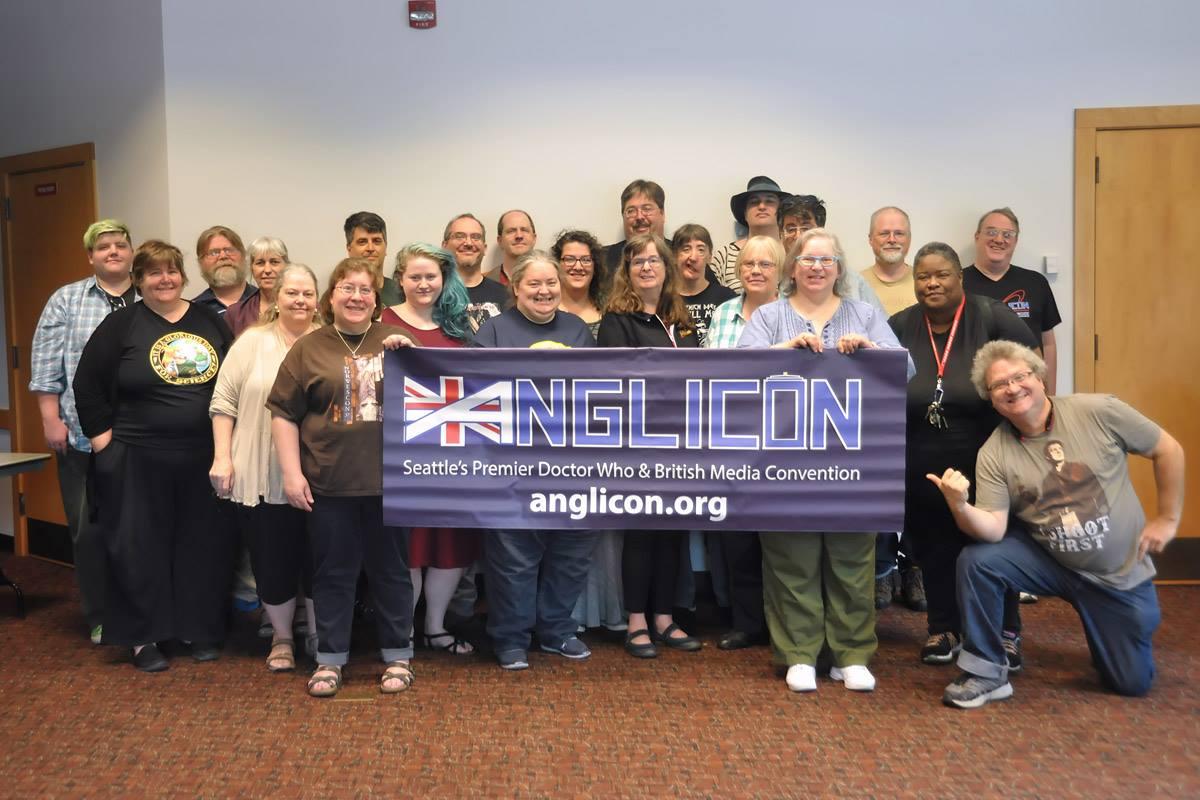
I went to Anglicon this year, along with my son, to revel in Classic Doctor Who fandom. Much fun! It’s nice to meet people who liked Doctor Who before it was trendy. Highlights:

I lived the Classic Who tropes (not always on purpose):

  1. Losing track of companions: This began the moment I left home. I hopped in the car to pick up my spouse from the bus stop, but due to bad directions, I drove around aimlessly only to find he’d walked all the way home. It was a good omen.
  2. Wandering through corridors: The hotel room was a half mile from the convention area, along a twisty route. This would have been true to the show, except the walls didn’t wobble.
  3. Tea: I enjoyed a proper black tea in the Hospitality Suite.
  4. An unattended TARDIS: And as usual, someone had left the door open, and someone else had wandered in. (They fixed this by Saturday, though.)
  5. Losing track of companions (again): In the end, exhausted beyond belief, I kept trying to gather family members, and they kept wandering off.

Fanstruck by Sylvester McCoy:

I lined up early for a photo op with Sylvester McCoy so that I wouldn’t spend the entire con worrying about getting one. I needn’t have worried, since there was plenty of time for photo ops, but it was a delight to see him show up and perform crowd control.  Later, during his Q & A, he put on another stellar performance, getting down into the audience to answer questions with a quick wit and well-timed comedy. And finally, I hung out in the general vicinity as he wandered through the art show with his “handler,” admiring the art.

And Peter Davison:

He had so many stories to tell about his acting career. The audience questioned him about everything from his first time acting to his upcoming works. My second favorite: his account of directing The Five(ish) Doctors Reboot, including the moment when all the actors were in their spots, the cameras adjusted, the lights on, and he was waiting around to hear people shout “Action!” only to realize that was his job.  And my favorite: his account of filming All Creatures Great and Small, with . . . actual animals about to give birth.

The game room:

I got a chance to play my first Doctor Who role-playing game, run by a game master who kindly took into account my inexperience (and that of my son as well). Something I’ve wanted to do for a long time.

The panel “Should the Doctor Be a Woman”?

Poorly named (because the next Doctor is a woman) but great in-depth conversations about the past and future of a female Doctor. I’d like to spend an entire post on that, so I’ll skip it here.

The film festival:

I only had the chance to see two short films but liked them both. The first was a sci/fi zombie crossover, “Father’s Day”, that was at the same time gross and heartbreaking. The other film, “Renegades,” by Grant Pierce Liester, was riveting, with small moments gorgeously done.

All the costumes:

So many people put so much detail and care into dressing up. It’s a delight to watch.

The Corgi parade:

One of the guests of honor is a Corgi who starred in Dirk Gently, along with his sister. I missed most of the Corgi antics. But on Sunday as I walked down the hallway, I found everyone lined up for something, and it turned out to be a parade of dogs (many in costume), led by a Dalek. Boy, were those dogs pleased with the attention!

And the conversations:

I mostly kept to myself (introvert!) but the conversations I did have were fun.

All in all:

I don’t attend many cons, finding them exhausting, but this one was worth it. Thank you to everyone who worked so hard to put it on.

anglicon-staff-2017

The Plum Harvest

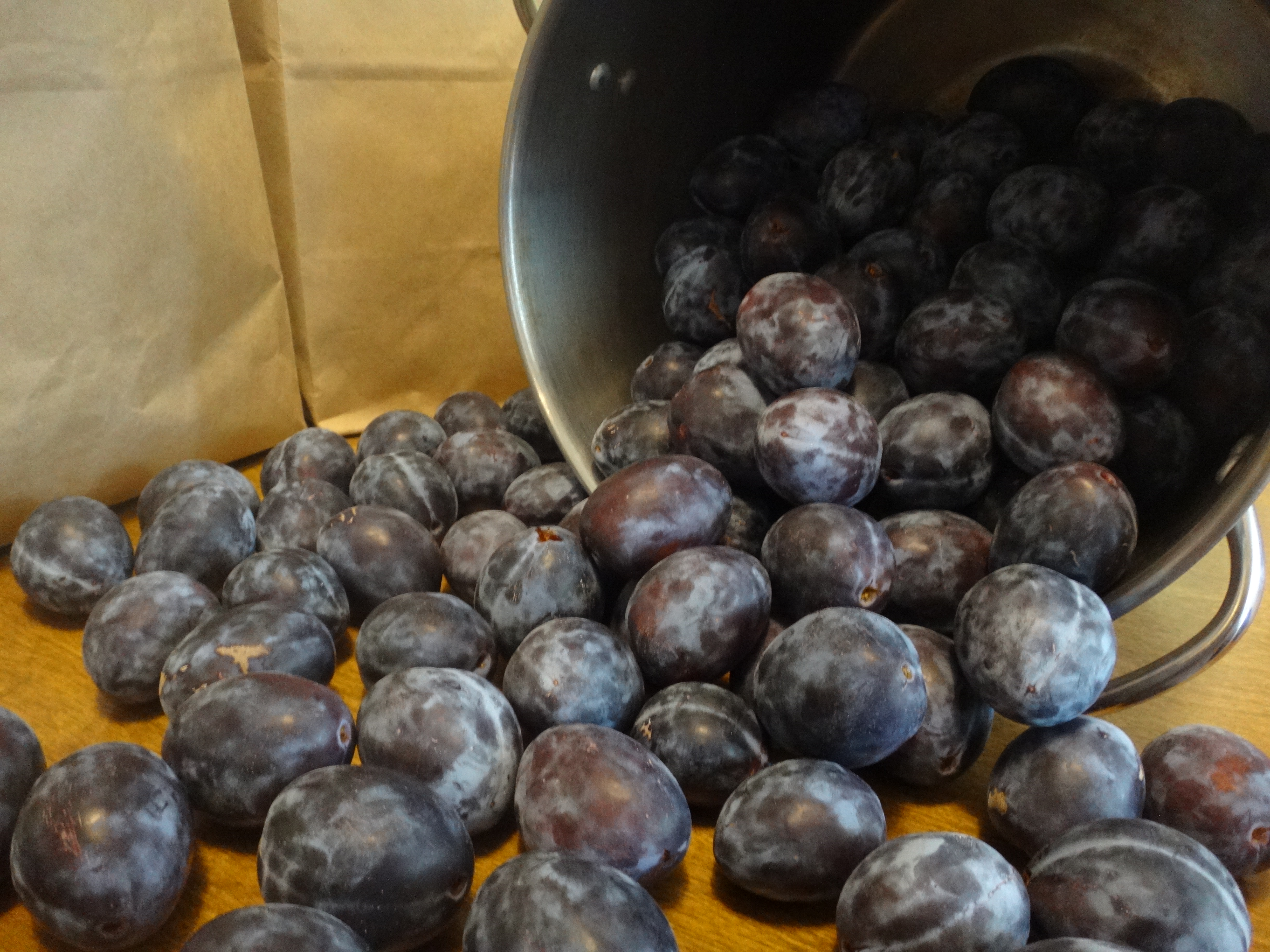
It was enormous this year. With help, I’ve taken at least sixty pounds of it off the tree so far, and there are more left. These are just a few:

DSC03988

our plum harvest

What does a person do with that many plums, anyway??? When I was growing up, our family made plum jam. Way too much work! Also, I like them raw, not cooked. Very best: sun-warmed and overripe. The only way to get that kind of plum is to have your own tree, or stay on good relations with a friend or neighbor who has a tree.

There’s a limit to how many fresh plums you can eat in a day and still crave them. I’ve gone over it. So . . . I’ve frozen some, made some into muffins, and given some away, to lots of different people. Some are going to a Food Security project, still in its infancy.  It’s an anti-capitalist effort.

Speaking of capitalism, and economics, what is the value of a fresh, ripe plum? The grocery store says it’s about $3.50 per pound, and since there are 12 of these plums in a pound, that would cost just about $0.30. In theory, if I wanted to sell all sixty pounds myself, I could get about $210. But that’s only if I could sell every last one, at that price. About half are bruised or have small bites, and we’re used to buying fruit that looks perfect. So it’s down to $105, barring clever marketing or packaging or whatnot.

Is that the only way to measure the value of a plum? What about its caloric value? About 30 calories. That would be 360 calories for a pound and 21,600 calories for the lot. Well, that’s interesting. Assuming that 2500 as an average daily caloric intake, those plums would feed a person for 8 days. (Do not try this at home, kids. Your colon can’t take it.) In a time of famine, this would be a windfall.

Or what about value in terms of time expended? Never mind the time it took to plant and water the tree, because it’s self-sufficient by now. But there’s pruning, keeping bindweed away, and hosing it down to prevent aphids. This year, an extra “climate change tax” of time because it rained ash, so I’m washing and drying the plums. Then of course, there’s the time it takes to pick the plums. Let’s estimate 30 hours annually. In that case, the plums are worth two pounds an hour.

In that case, one hour of labor gets me $7 worth of plums – not even minimum wage. Or, to see it another way, it gets me a third of my daily caloric intake. (Kids, again: Don’t eat all those plums in one sitting.)

These comparisons let me notice some things: first, we usually think of value in capitalism’s terms; and second, there are so many other ways to measure it.

What about the plums’ value to the tree? Clearly, since the tree just drops them on the ground, they’re worth nothing. On the other hand, if it wasn’t going to bear fruit, I wouldn’t have planted it in my back yard. So the tree owes everything to its plums.

How does the tree repay the favor? By sharing its plums. (Side note, it gives plums to the bees as well, which did the tree the favor of fertilizing the fruit in the first place, and which take bites of the fruit at harvest time.)

How do I repay the favor? Also by sharing the plums. And that brings me back to the food security project. It’s an anarchist thing. There is a hazy long-term goal of providing a sustainable source of food to a community, especially in case of economic collapse or whatnot. Will it succeed? Or will it go the way of many anarchist projects – abandoned in favor of something shinier? You can never tell.

All I know is that if people are truly interested in destroying capitalism, we have to build something else. And that “something else” depends on people not starving. It requires food to be produced, transported, distributed, and eaten. Somebody has to do that work. In any economic system.

In the meantime, twenty-some pounds of plums left my hands and went off to a meeting of anarchists, where they were shared and eaten and taken home. And valued.

Thanks, tree!

– Kristin


Why genealogy?

Elenor, Ellen, Eleanor, Helena. Every official source seems to list her name differently. Why? After some digging, I learned that she could read but not write.

But that’s not the main question. The question I started with: which one of her husbands was my ancestor? Odd, conflicting family stories. Brothers who ran away from their father, or stepfather. They were adopted, but by which one?

The answer, which comes out only partially, is that there was one hell of a soap opera happening in the late 1800s. Elenor’s first husband Thomas had married before, not sure what happened to her. So Elenor married Thomas, and then had two sons. At some point, after the birth of the oldest son, she either left or divorced Thomas for a Henry (who had abandoned his first family to go gold mining, and who would later start a third family, after Elenor’s sons ran away from home and Elenor divorced him). She took her two boys, but later, Thomas filed a suit to get the oldest son back.

The game of musical spouses notwithstanding, it looks like my ancestor, the father of the oldest son, is Thomas. It took me three days of research and the answer feels somewhat anticlimactic.

But now there are more questions. Why did Elenor give up her oldest son? And several years later, when she went back to retrieve the oldest son, did Thomas give him up? Was it because he was busy with his third family? Why did the two boys later run away? Did they stay in contact with Elenor or did the family lose track of each other?

This is a story for which I’ll never know the details. The two boys had a happy ending. What about Elenor? She was indigent when she divorced Henry. Did she manage to have a good life anyway?

So why do I research genealogy? I’m seeking answers. But to what question? I confess I don’t know.

Chasing around after long-gone dead people to whom I am only remotely connected, but without whom I’d never exist. There’s some deep mystery there.

I do feel a greater understanding of human history. It’s a muddle. It’s full of people trying to survive the best they can. Sometimes they’re the oppressors and sometimes the oppressed, and sometimes they move from one category to the other.

And every one of the official stories about our collective past is a lie.

– Kristin

Picture of deeply entwined tree roots

We usually show genealogy as “a family tree” with happy ancestors adorning the branches. But our past digs deep, becomes unknowable fast. And many stories, like Elenor’s, become like bramble. (Image from the public domain.)


Let that be a lesson to me!

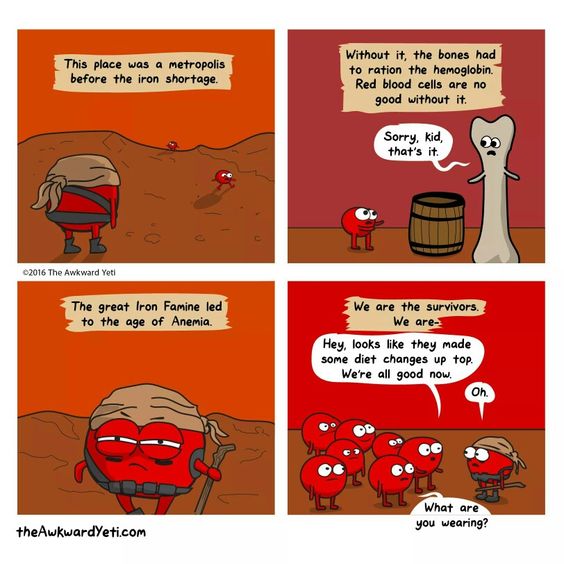
Somehow I ran down my iron stores and ended up with iron-deficiency anemia. In retrospect, it was inevitable. I’m a pre-menopausal woman, and although I’m not a vegetarian, I rarely eat red meat. Also, I donate blood.

The symptoms came on gradually and didn’t scream out “iron deficiency!” For starters, my red blood count was normal less than three months ago, when I last gave blood. But I was frequently lightheaded and had activity-related headaches, and a normal aerobic workout would wipe me out for the whole day. Oh, well. Now I know. I’m taking the supplements and starting to feel better, except for the upset tummy that iron supplements cause.

But it’s also a metaphorical object lesson. I just kept right on giving blood, without making sure I had enough iron in reserve. In other words, I ran myself into the ground. But I do that in many other areas of my life as well. I give other people more of my time than I mean to. And since the last presidential election, I’ve pushed myself to be more politically active than I can handle, which has meant an important life goal (my novel) has been sliding.

So my goal for the next month or so, as I build back up my iron stores and my energy: practice being selfish. I’ll see how it goes!


Shadow work and the gift economy

In earlier posts I’ve discussed shadow work — the unpaid labor that complements wage work in a market economy. This includes everything from childcare and housekeeping (which together make up ten hours of my unpaid day) to commuting to shopping — basically any efforts that make it possible for a worker to sell their labor. I’ve also discussed subsistence work — the unpaid labor that provides for basic human needs — and the ways in which subsistence work can also function as shadow work, by making a wage laborer cheaper to maintain. Finally, I looked at work from a market economy perspective and a household economy perspective.

So there’s another kind of economy that is worth looking at: the gift economy. In a gift economy, basic needs are met through gifts rather than barter or market exchange. As it turns out, some peoples have historically run on the basis of a gift economy, and all peoples have incorporated gift economy principles and practices to some extent.

There’s a helpful discussion of gift and market economies in the article “The Khoekhoe Free Economy: A Model for the Gift” by Yvette Abrahams, found in the anthology Women and the Gift Economy: A Radically Different World View is Possible, ed. Genevieve Vaughan.

The essay discusses the history of the indigenous people of South Africa, the Khoekhoe. Their gift-giving economy was lost after hundreds of years of colonialism, slavery, apartheid, and structural adjustment–but many aspects of it remain. For example, it is the tradition at mealtime for a family to keep a little in the pot, in case someone knocks on the door and needs it.

Women give huge amounts of free labor, and according to Abrahams (writing in 2003), women’s subsistence farming provides about 66% of the food that feeds the continent, but it is never included in economic figures because it is given away, not sold.

This would be a workable economic solution except that women’s ability to farm is limited. For one thing, whites own 85% of the land in South Africa. For another, women have access to it only if they have a husband or a son.

So today in South Africa, the gift economy is broken in some important ways. It’s not a free social exchange, for instance, if one person needs the gift in order not to starve. It’s also not possible to gift when you have nothing. Abrahams writes: “Today, I cannot give away my labour. I have to work in order to eat.”

Also, the free labor operates not only as subsistence but also as a free subsidy of the wealthy. Abrahams writes: “Women’s non-waged labour provides two-thirds of all the food that Africans eat each year. In a way, it leads to greater independence, but in another way, it is a huge subsidy of the globalized capitalist economy.”

In other words, the gift economy is being exploited by the market economy. And the free gift of subsistence labor that people provide each other, to meet human needs, is being transformed into shadow work.

Is there a way to turn that around? Could understanding the relationship between the market and gift economies help us build a radically different future?

If you start to think about the gift economy, it is everywhere. The land gives freely of itself, providing sustenance and water and asking nothing in return. And from the moment of a child’s birth, their parents are providing the free gifts of food, shelter, and love. Even in the Western world, people are constantly giving each other presents — for birthdays, holidays, housewarmings, baby showers, weddings — and holding potlucks, and giving to charities, and volunteering, and the list goes on. Gift-giving is a normal human activity. Perhaps it is the market economy (which we mistakenly imagine is the only one that exists) that is artificial.

But if we have a gift economy, right here and right now, it is a broken one. When the market economy takes the free gifts but provides nothing in return, the gift economy runs out of steam and fails. We need to fix it.

Next up, I’ll talk about some more gift economies, both familiar and new.

– Kristin

womanand_giftcover


My posts on shadow work

Over the past several weeks, I’ve been contemplating the unpaid labor of mothers. The caregiving we do, essential in its own right, is also an economic contribution that goes on mostly in secret. I do apologize in advance for being lazy in my terminology through some of my posts, using the terms “women” and “mothers” as if we are the only ones who take on primary caregiving roles. Here are links to all the posts I’ve made:

I started out thinking about women’s liberation, and how it did and did not happen. I wrote: “Our role as primary caregiver, combined with economic exploitation, means that a woman is left largely alone to take on the multi-year, 24-hour-a-day responsibility to bring up the child.” I pointed out that although women who have money, or a wage, or a spouse with money, can pay somebody to do childcare, but these are all essentially workarounds to the primary problem that in an economy that requires a wage for simple survival, we don’t get one for the work we do.

Next up, I talked about how the wider economy uses women as a free source of human capital. I noted that “The unpaid labor mothers do, when we are perceived to be “not working,” has economic value to somebody outside our family, and people in power have measured that value.”

Then I named the unpaid labor done by parents, for the economic benefit of someone else, using Ivan Illich’s term “shadow work.” First I introduce the problem, then I give a longer analysis of Illich’s work, and finally, I consider two kinds of unpaid labor, shadow and subsistence, and two kinds of economies: household and market.

Next, I discussed shadow labor and gift economies.

There’s work yet to be done, and I hope I will get to it. It’s likely I won’t, at least in the forseeable future.

I am really interested in talking about shadow work and the prison-industrial complex. Is prison labor shadow work? What happens to a household economy when a worker, whether it be a shadow worker or a wage worker, is taken away to do prison labor?

I’m interested in looking at fertile and infertile women as two gender categories. Infertile women operate in our economy much like men, while fertile women end up stuck with shadow work and all it entails. I’d also like to challenge feminism and ask whether it really liberated women, or whether it just created a new class of men (infertile women) who may or may not be destined to flip genders.

I’m also interested in doing an economic thought experiment. What if all caregivers got a wage for the work they did? If it happened by way of wage earners getting a bigger wage, to cover all the caregiving work done for their families, and you gave the wage earner and the caregiver equal wages, then wages would have to double infinitely, wouldn’t they?

Finally, what about unions and shadow work? If I’m doing work and not earning a wage, and there’s nobody to ask for a wage from, then what is a union to me?

Another time, I hope!

– Kristin

512px-Shadow_2752

By Nevit Dilmen (Own work) [GFDL (http://www.gnu.org/copyleft/fdl.html) or CC-BY-SA-3.0 (http://creativecommons.org/licenses/by-sa/3.0/)%5D, via Wikimedia Commons

Shadow or subsistence?

In yesterday’s post I talked about the difference between two forms of unpaid labor: shadow labor and subsistence labor.

Subsistence labor is the work that provides for basic human needs, and shadow labor is the unpaid complement to wage labor. It makes it possible for a worker to enter the market economy.

I made the observation that there’s a relationship between shadow and subsistence labor, using the example of backyard gardening. It would be subsistence work, because it provides for basic human needs, but also shadow work, because it makes a wage laborer easier to feed. So the same activity qualifies for both. How do you make sense of that?

I’d say it depends on which economy you’re looking at: the household economy or the market economy. We hardly ever look at the household as an economy, but it is.

In understanding the world around us, we need to look closely at shadow labor and subsistence labor, understanding them separately, in connection to each other, in connection to the household economy, and in connection to the market economy.

When you start to do that, you see some things that were hidden. The household economy includes both wage labor and shadow labor. This is true whether it is an economy of one person or an economy of ten. The market economy skims a little off the top of the household economy, both in the form of wage labor and in the form of money spent on consumer goods and services.

Curiously, this holds true for communism as well as capitalism. The theory behind communism was “from each according to ability, to each according to need.” In practice, though, some people ended up getting more than others. Skimmed off the top.

Overall, state-run communism was a failure. But curiously, even in a market economy, a household economy can be run in communist fashion. That’s how ours is. All the money earned by the wage laborer is deposited in a joint account, and we decide democratically how it is spent. On the level of the household economy, I feel proud of myself and an equal to my spouse.

But the underlying communism of our household economy does nothing whatsoever to stop capitalism. There’s a little skimmed off the top, or a lot. And on the level of the market economy, I am seen as nothing.

The underlying communism of our household economy also does nothing whatsoever to challenge the inequality between households. Our household makes enough money to meet our basic needs and then some. Other households struggle to make ends meet, even though the people within it work just as hard. As for ours, if we lost the wage labor, we’d be right there struggling to make ends meet.

In theory, though, could the values of a household economy be used to transform the wider economy? It’s worth a look.

– Kristin

https://www.flickr.com/photos/lorettastephenson/7902147342

Cat Question Mark by Retta Stephensen