Category Archives: public education

Public schools belong to the people, not corporate interests. Teachers organizing professionally and politically is A Good Thing. And every students needs something different to learn well.

Strange times to raise children

This week we found out that the state had agreed to hand over all kinds of confidential data to our local newspaper, so they could get grant money from a nonprofit funded by our local billionaire to help further his political goals. I wrote about some of the ramifications on the Aqueduct Press blog.

Racial segregation of schools in the 21st century

Seattle Public Schools is rezoning right now, to meet capacity shortages that were caused by their decision several years back to close a bunch of schools. The closures occurred largely in the south part of Seattle, which is the most racially diverse area. There were closures in the north part of Seattle too. The school that our kids now attend was slated for closure. The community fought back and won, and two years later it was completely overcrowded. So the closures made no sense.

Something else happened as a result of the closures. When capacity shortages started to happen, the Summit K-8 program at the Jane Addams site was closed down, and about half of the students, who bussed in from South Seattle by choice, were sent back to South Seattle. What could the district do? There really were not enough seats to go around, and the Jane Addams site was being underutilized. And the choice to close schools in the north, while a mistake, was in the past.

That’s how racial segregation of schools is working in the 21st century.

Now the school district is rezoning to meet capacity needs. Some neighborhoods were once assigned to schools within walking distance. (It’s actually called a “walk zone” because Seattle has quite a few geographical barriers to walking to school, such as hills and freeways.) But this isn’t happening equitably. The district, which is probably shorthanded because of budget cuts, drew preliminary boundaries and then requested community feedback. Now, mysteriously, it appears that more diverse neighborhoods are losing access to nearby schools than less diverse neighborhoods are.

Why? How could this happen?

Let me back up and explain why I even know about this. In Seattle we have a community blog called Save Seattle Schools. I think it started back when the original school closures did. Bloggers Melissa Westbrook and Charlie Mas report and comment on district goings-on. And they provide a forum for parents all over the city to share information and perspectives.

IMO, they’re among the best investigative journalism around schools in Seattle.

Anyway, they posted open threads for parents in the different areas of Seattle to comment on these boundary changes. The thread for Southeast Seattle has a blogger, JvA, with a theory about why this has happened. Here’s what her neighborhood looks like:

Mid Beacon Hill is far more mixed, with white, Chinese, Filipino, and Vietnamese each only comprising 17-26% of the population. There is no racial or linguistic majority at all. The majority of residents speak a language other than English.

Her neighborhood was rezoned out of its walk zone. So was another neighborhood, Georgetown. Both neighborhoods, quite rightly, protested the change. However:

As far as I can tell, the district didn’t consider any such cultural or linguistic factors when assessing the input. I mean, it’s obvious white / US born / English speaking populations speak up more often than other populations, right? It’s obvious this is a farce, right?

She’s not even sure that the non-English speakers were notified:

Has the district even translated any of the materials about these radical changes to Beacon Hill, let alone tried to distribute them? My daughter goes to Maple, so I know for a fact that there have been no handouts in her backpack about it. Is it up to me to try to explain to all the folks on my block (Tagalog, Japanese, Mandarin, Vietnamese, Eritrean…) what is going on?

This is how racial segregation of schools happens in the 21st century.

And this isn’t just about that one neighborhood. No, there’s a pattern:

–Citywide, families at 28% of Title 1 (low-income) schools would lose official Seattle Public Schools-designated walk zones, compared to 12% of non-Title 1 schools.

–Under the new proposal, 67% of Beacon Hill schools would lose walk zones, compared to 13% for the rest of the city.

–All of the Beacon Hill schools losing walk zones are Title 1 (low-income) schools.

Poverty and racial inequity. What a winning combination.

There’s just one thing in her comments I disagree with:

I know it’s not very Seattle to talk about racial / cultural inequity . . .

Plenty and plenty of people in Seattle care about this. Plenty don’t, of course. I do.

What’s going to happen with this small neighborhood? Stay posted by watching JvA’s blog, at:

http://midbeaconhill.blogspot.com/

What are our students’ privacy rights, really?

As a parent, I want to know that my children’s information is kept private. I tell them not to put their birthdates on any Web pages that ask for them, I keep their names out of this blog, and I have filled out FERPA opt-out forms to prohibit disclosure of student information.

But there are some things I can’t control, and information given away by my child’s school to the private sector is one of them. That’s because of recent changes to the federal privacy law (FERPA). These changes were made right around the time that it became possible to build massive databases of student data — databases that can be shared across states and over the life of my child, from cradle to grave. Let’s take a quick look at the law, to see where the weaknesses are.

A summary of the FERPA law is available here. It tells when schools need permission to disclose information, and when they don’t.

  • Generally, schools must have written permission from the parent or eligible student in order to release any information from a student’s education record. However, FERPA allows schools to disclose those records, without consent, to the following parties or under the following conditions (34 CFR § 99.31):

    • School officials with legitimate educational interest;
    • Other schools to which a student is transferring;
    • Specified officials for audit or evaluation purposes;
    • Appropriate parties in connection with financial aid to a student;
    • Organizations conducting certain studies for or on behalf of the school;
    • Accrediting organizations;
    • To comply with a judicial order or lawfully issued subpoena;
    • Appropriate officials in cases of health and safety emergencies; and
    • State and local authorities, within a juvenile justice system, pursuant to specific State law.

Schools may disclose, without consent, “directory” information such as a student’s name, address, telephone number, date and place of birth, honors and awards, and dates of attendance. However, schools must tell parents and eligible students about directory information and allow parents and eligible students a reasonable amount of time to request that the school not disclose directory information about them. Schools must notify parents and eligible students annually of their rights under FERPA. The actual means of notification (special letter, inclusion in a PTA bulletin, student handbook, or newspaper article) is left to the discretion of each school.

Note that organizations conducting studies on behalf of the school can get access to this data, and it’s nonconsensual — meaning that parents can’t opt out.

There’s also a little something in there that’s extremely misleading. School officials can get access. That’s reasonable, right? But wait — how are “school officials” defined?

For that, we have to check out the actual text of the law (20 U.S.C. § 1232g; 34 CFR Part 99). Under paragraph 99.31, it says, “A contractor, consultant, volunteer, or other party to whom an agency or institution has outsourced institutional services or functions may be considered a school official under this paragraph provided that the outside party—”

(It goes on to list the specific conditions that have to be met.)

That’s awfully misleading.

There are also conditions under which this information can be redisclosed by “school officials” to other parties. That gets tricky and complicated.

Paragraph 99.33(a)(1) says:

An educational agency or institution may disclose personally identifiable information from an education record only on the condition that the party to whom the information is disclosed will not disclose the information to any other party without the prior consent of the parent or eligible student.

That makes it safe, right?

Oops, no. Paragraph 99.33(b)(1) says:

Paragraph (a) of this section does not prevent an educational agency or institution from disclosing personally identifiable information with the understanding that the party receiving the information may make further disclosures of the information on behalf of the educational agency or institution if—

To make a long story short, there are times where a school can disclose personally identifiable information, such as social security numbers, to third parties in the private sector, and then those third parties can then disclose this information to somebody else. And this can be done without parental consent.

Even worse: if you dig into some other privacy laws, such as those protecting medical information and those protecting students with disabilities, you’ll find that they all point back to the FERPA law. This means that information can be shared to third parties as well.

Now we know this can be done. But is it?

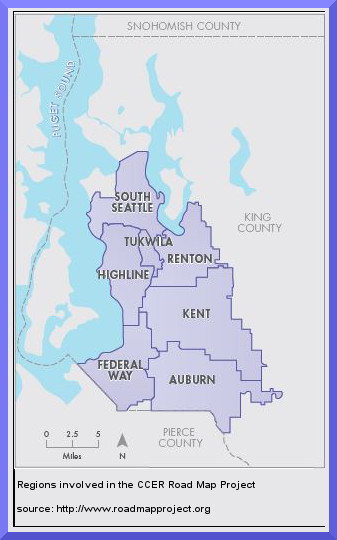
The long answer is a subject for another post. But the short answer is “yes.” There have been different releases for different regions of the U.S. In the Puget Sound region (Washington State), this data has been released to a nonprofit called the Community Center for Education Results for all students attending in public schools residing in these areas:

Image

If you live in any of the affected areas and want to know more, post a comment and I’ll get back to you.

Mysterious timing for Chicago school closures

Image

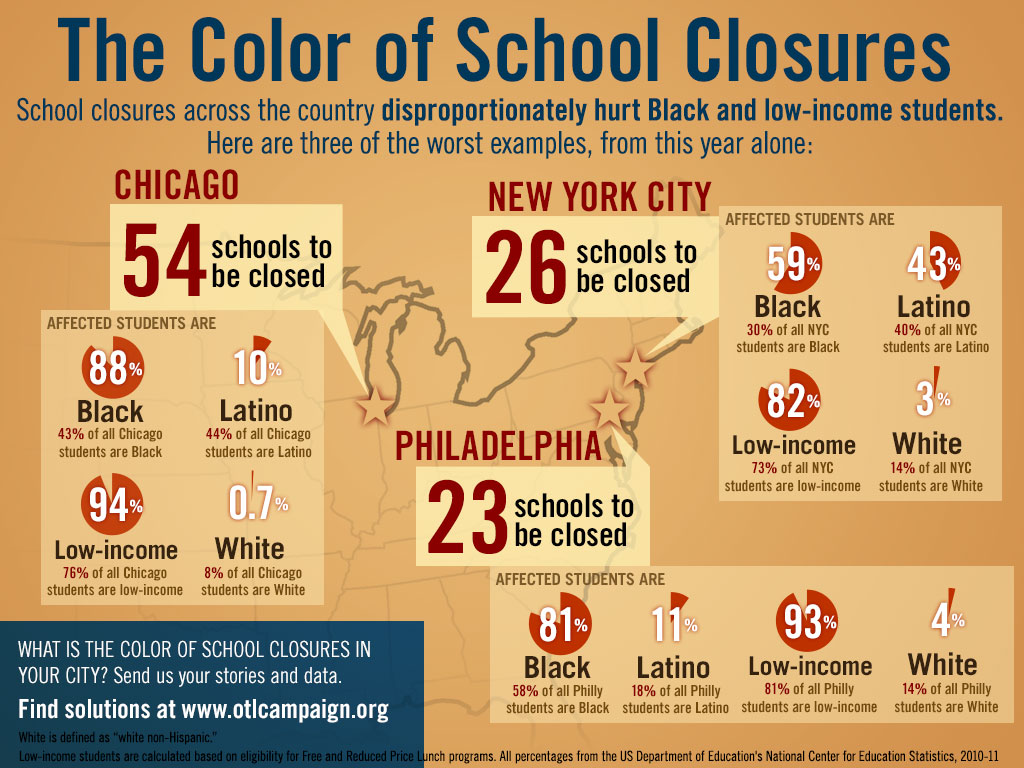
This spring, thousands of Chicagoans gathered to protest school closures. 54 schools were closed, against the wishes of the impacted communities. If you’ve missed this story, you can follow it back all the way to 2011 on the Huffington Post.

The official story behind the closures was that they were underutilized and that Chicago Public Schools just didn’t have the money to run them. But at the very same time, the school district is requesting applications from charter school companies.

They’re closing neighborhood public schools, against the wishes of the communities impacted, and replacing them with privatized charter schools.

In which kinds of neighborhoods? In Chicago, as in New York and Philadelphia, these school closures are happening mostly in communities of color. Here are the numbers:

Image

But I digress. I was talking about the mysterious timing. What I’m talking about here is Teach for America, the nonprofit that was originally supposed to staff schools where teachers were hard to find. I remember learning about it many years ago from a PBS special. It showed a bright-eyed, passionate teacher going into a difficult classroom and excelling. Great, right?

Not so much, as it turns out.

In January, months before the school closures were announced, the Teach For America Board of Directors by some strange coincidence projected that the number of charter schools in Chicago would double, or in other words, increase by 52.

The same number as the public schools that closed.

Was Teach for America involved in the school closures? It sure looks that way. Blogger Ed Shyster, who broke the news about TFA’s charter school projections, argues that these projections  represent “backwards planning” in which those in power decide on the result they want (52 new charter schools) and then design the plan. He further points out that there are close ties between TFA, charter school companies, and charter school authorizers (who help decide which charter schools can open).

The Washington Post Answer Sheet reprinted his blog post in the article “How Big Can TFA Get?” Check it out.

Why would TFA do this? If the mission is to help poor communities, why would TFA override their express wishes to keep their neighborhood schools?

I think the easiest way to answer this is to look at an article from the right-wing blog Education Next. TFA leaders go on to become “educational entrepreneurs” — which is to say people who are starting charter school organizations or otherwise privatizing education.

And, as it turns out, this is a core part of TFA’s mission. Read between the lines on their “Lifelong Leaders” web page. It says:

“As an alum, you will join a network of like-minded people who support each other personally and professionally in endeavors that further our mission – such as opening and staffing schools, partnering on social entrepreneurship initiatives, and sharing additional opportunities to advocate for students.”

Just to be clear, “opening schools” means opening charter schools. And “social entrepreneurship initiatives” means privatization.

And why would TFA want to privatize education? This part is really really important. It isn’t because TFA is somehow “evil” or whatever. It’s because the people who run it, who have loads and loads of money and power, think that privatizing our schools is the best way to “help” our communities.

But look back at the original photograph here. These people didn’t want to be “helped” by having their schools closed.

Next up: Are nonprofits our frenemies?

Are our schools teaching arithmetic?

My dad the mathematician taught me something important about math. Mathematics has two aspects that go hand in hand: arithmetic and concepts. Arithmetic is basic addition, subtraction, multiplication, and division. It’s hard to learn the concepts if you don’t have a good grasp of arithmetic, and it’s boring to learn arithmetic without the concepts. 

Math can be fun. I’m serious here! How come so many people hate it? How come so many women feel like they’re no good at math? 

There are a lot of reasons, but let’s start with ground zero. Arithmetic. How many people have their math facts memorized? I assumed everybody who gets to adulthood has their math facts memorized, and I assumed it was being taught in schools. Now I’m not so sure. 

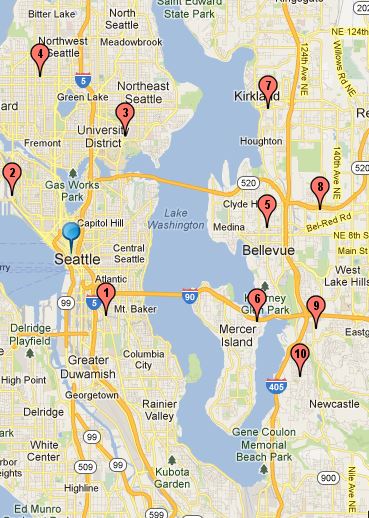
Here in Seattle there are a lot of the parents I know are paying for math tutoring, particularly for arithmetic practice. Check out this map of Kumon tutoring centers. There are ten centers within nine miles of downtown Seattle. 

Image

Kumon tutoring centers near downtown Seattle

People are paying for something that really should be the job of schools. However, it’s hard for teachers to “squeeze it in.” How could that possibly be? Is it because high-stakes standardized testing has squeezed it out? 

Now take another look at that map, bearing in mind that northeast Seattle, Bellevue, and Redmond are the most affluent and whitest parts of this area. Where are these tutoring centers concentrated, and where are they completely absent? There are none in southeast Seattle. Guess it’s not so profitable there. 

This is the “opportunity gap” in action. 

In addition to paying for tutoring, many Seattle parents are practicing math facts at home. This would be fine if kids were also getting it at school. But if they’re not getting sufficient math fact practice at school, then parents who are practicing math facts at home and paying for tutoring are masking a significant deficit in our children’s education. 

This is the opportunity gap in action. 

So I’ve been asking around. Math fact practice is not necessarily a daily event in the classroom. If kids haven’t mastered arithmetic and subtraction by the end of grade 2, they’re not necessarily going to get any more practice, but they will be expected to start learning multiplication, division, and fractions. If they are significantly below standard, they will be eligible for some kind of pullout service, where they get math help but miss the regular curriculum other kids are getting. Plus, the stigma of “not being good at math.” So they fall farther behind. 

This is the opportunity gap in action. 

Now, there’s a lot of talk of “accountability.” High-stakes standardized testing is supposed to hold teachers and schools accountable, isn’t it? Well, it doesn’t work. It punishes teachers if they spend too much time teaching what’s not on the test. And I don’t think that basic math facts are on the test. 

Through elementary school, there are two tests Seattle kids get. One is the Measures of Academic Progress (MAP), and it’s district mandated. The other is the Measures of Student Progress (MSP), and it’s state-mandated. The MAP test is untimed, which means that if kids are counting out their math facts on their fingers, that’s fine. As for the MSP, I’ve looked at a practice test  and it hasn’t got much in the way of math facts. It focuses on math concepts and generally uses easy arithmetic. And yet enormous amounts of time and money are spent on these tests. Schools have to give up their libraries for weeks in order for these tests to be given. Schools are rated based on these tests, and the trend is for teacher evaluations to be based at least partly on the results of these tests. 

If parents want math facts to be taught in schools on a daily basis, then we kind of have to stand in line, behind the demands of these tests. 

What’s the answer? To me it’s blindingly obvious. Do these three things.

  1. Take five or ten minutes out of every school day to drill on math facts. But some kids are farther along than others, right? Won’t the kids who already know addition and subtraction be bored? Actually, I think it’s okay for kids to be bored for five or ten minutes a day.  
  2. Take some of the pressure off the teachers. Cut down on the amount of concept material that is required to be taught and eliminate the high-stakes component of standardized tests.
  3. If you’ve got to have insanely expensive standardized tests, at least take part of that test time and use it to measure math fact mastery.

Of course, everybody and their dog looks at schools and thinks they see a massive problem that is blindingly obvious to them. Most people are wrong. Am I wrong? Am I missing something? 

All I know is I’m out of time for today. I’ve got to go drill my son on math facts. 

Best writing teacher ever

Now that I’ve spent the week complaining about writing curriculum in schools, it’s time to give a shout-out to my best writing teacher ever. It could well be my ability to write with confidence came from him.

Now what’s funny is that he wasn’t a writing teacher. He was my seventh grade social studies teacher. But here’s what he did: he started off every class period with a ten-minute freewrite. It was graded — by quantity, not by content. He came around and looked at our journal entries and gave us a check, check-minus, or a check-plus. But he made a special point that he didn’t read what we had written, which meant we could write whatever we wanted.

I loved it. I wrote snippets of stories, complaints about being tired or hungry, and who knows what all.

Now, that didn’t turn me into a writer. I’ve always loved to write stories, from early elementary school to now, and I would have done it even without that teacher’s help. But would I have written as freely?

I don’t even remember that teacher’s name, but he sure did me a favor. Thank you, teacher.

Scored by Lauren McLaughlin: Some Thoughts

Note: This is an expansion of a book I reviewed on the blog post “Pleasures of Reading, Viewing, and Listening in 2012” on aqueductpress.blogspot.com.

Scored by Lauren McLaughlin
(http://www.powells.com/biblio/62-9780375867910-0)

This YA novel is the dystopia for our time. What happens when you put together No Child Left Behind high-stakes standardized testing with surveillance measures like spy-cams and GPS monitoring of cell phones, and then introduce a company whose product is a single score for every child, which colleges and corporations will then use to sort people?

That is the reality for Imani LeMonde, a high school student whose scores put her on track for a college scholarship — something that is otherwise out of reach for all but the very rich. The scores are supposed to establish a meritocracy to replace our system of inequalities, but something else is going on. Scores update minute-to-minute, and they depend not only on school performance but also day-to-day activities and peer group associations.

Imani’s troubles begin when her score drops precipitously because her friend Cady is kicked out of her house and moves in with a boy. This takes her off the college track, and if her scores drop farther, her only options will be welfare or the military. She has a choice to make — but it’s not the simple moral dilemma of whether or not to denounce Cady to regain her score, because that option is not open to her. Instead, she has to look deeply into the scoring system to understand how it works — and what matters to her.

The society pictured here is not far off the mark. Our teens and children will be subject to more surveillance than we ever imagined. Case in point: school records are kept in “longitudinal databases” where they can be tracked over long periods of time and across school district and state lines. And by school records I mean test scores, tardies, absences, ethnicity, dental records – you name it. (For a sneak peek of the hundreds of items that can be collected, visit http://nces.sifinfo.org/datamodel/eiebrowser/techview.aspx?instance=studentElementarySecondary.)

This information is being provided to the private sector without public comment or scrutiny. For example, the Seattle Public School district signed a Memorandum of Understanding with an organization called the Community Center for Education Results, indicating that the district would be sharing its database of student information with CCER. This database excludes “personally identifiable” information about the students according to the federal FERPA law, but because it is so specific, it is potentially identifiable information, particularly if you are nonwhite, use special education services, and so forth. Also, private sector organizations could easily combine this information with other databases.

(Thanks to the mirmac1 for her comment on Feb 21, 2013 on the blog saveseattleschools.blogspot.com.)

Just as one example among many, yesterday I went to the Pacific Science Center and visited an exhibit called “Professor Wellbody’s Academy of Health and Wellness.” This is a grant and foundation-funded exhibit. As part of the exhibit, children can join the “Academy” by entering information about themselves – first name, school attended, and health habits such as diet and sleep. So now there’s a database about kids per school, and a certain lack of clarity about who will get that information.

Ten years from now, could a prospective employer check the database for these types of information about my children? I bet. Could they get a score? I bet.

Is the MAP test “really about the children?”

Confirmation from Seattle Times that parents are in solidarity with teachers and students:

On Tuesday, only 97 of the roughly 400 ninth-graders who were supposed to take the MAP reading test did so, said Garfield Principal Ted Howard. The other 300, he said, had their parents’ permission to be excused.

Something else from this article bears serious consideration.

Banda said many teachers and parents have told him the MAP is a useful tool.

“Regardless of whether we think testing is good or bad, it’s really about the children and making sure we are able to identify any potential gaps in their learning,” he said.

Superintendent Banda didn’t mean to, but he got at the heart of the problem with the MAP test. It is a useful tool for some, that’s true. But is it “really about the children”?

For some, yes. But for policy-makers, no. On a district-wide and state-wide level, it’s being misused:

  • Test scores are being used as part of teacher evaluations – in some states, it makes up as much as half the teacher’s evaluation. This despite there is no evidence that student standardized test scores measure a teacher’s performance and plenty of evidence that such use is arbitrary.
  • Test scores are being used to classify students into “normal learners,” “advanced learners,” and “kids who need special services.” It could be a useful tool if a human being had authority over how to interpret and use the results, but policies are in place that withhold that authority.
  • Test scores are being used to bar students from graduation.
  • Test scores are being used to grade schools with letter grades, as if such a thing made any sense.
  • And test scores are being collected and stored in a national database, along with various other information about the students – race, ethnicity, income level, dental records, you name it. It’s being kept for long-term use. Can you give me a guarantee that when my kids reach the workforce, that data won’t be in the hands of prospective employers? Hmm???

It’s not about the children. It’s about top-down control of our schools, teachers, and students.

Make the test about the children, Mr. Banda, and I’ll let you give it to my kids.

Till then, I’m opting out.

Garfield High has made history

Garfield High students, teachers, and parents, you have made history. People will be talking about you for generations to come. The first U.S. school in a testing revolt that has been too long in coming. A school where students, teachers, and parents have all banded together to support each other.

This is going down in history whether Garfield High wins or loses. I hope Garfield wins, because it will embolden those of us who want our education to be child-driven rather than results-driven. But no matter what happens, the actions at Garfield are sparking other actions nationwide. It didn’t create the movement against high-stakes standardized testing, but it is a focal point for struggle.

And what is that? Well, yesterday the superintendent demanded that the test be administered. The teachers are still boycotting the test, but apparently administration is giving it. However, a whole bunch of students are refusing to take it. And a whole bunch of parents are supporting them by submitting opt-out forms. With that kind of solidarity, the district cannot win. It can only save face. Sort of.

My condolences, Superintendent Banda, to have the misfortune of being in a conflict you cannot win. I can kind of get where you might be coming from. If I were you, I would be reluctant to side with students and teachers for fear of being smeared by the corporate types who want results-driven education. All I can say is, try not to be on the wrong side of history.

Thoughts on the MAP boycott

For whoever hasn’t been following this bit of news – it’s been in the national media – teachers in Seattle are boycotting a standardized test called Measures of Academic Progress, or MAP. The boycott was initiated by teachers at Garfield High School. Students there are on serious testing overload! There are a bazillion tests required for graduation, which is a problem in and of itself. And on top of that, there’s the MAP. This test is not required for graduation and students are not taking it seriously. At the same time, teachers evaluations are strongly affected by the student’s test results.

All these issues – testing overload, tests being used inappropriately – are a national problem. Some consider excessive testing to be child abuse. Testing is pushing out time for learning. Many people agree that basing teacher evaluations on student test scores is highly arbitrary. Parents are frustrated when standardized tests are used for student placement in lieu of the human judgment by teachers.

Something else is going on, too. Our schools are facing many different kinds of privatization, from privatization of schools (such as charter schools and vouchers) to privatization in schools (transforming schools in the model of the private sector, including dehumanized, centralized control). This is misleadingly called “education reform.” That’s where the push toward high-stakes testing is coming from. That’s why a lot of states have passed laws mandating that student test scores make up one-half of a teacher’s evaluation. And that’s why there’s a call for “multiple measures” of student achievement – that is, multiple tests. Test overload.

There’s pushback from the community affected. Students, parents, and teachers alike. At Garfield, all three have come together – the teachers are boycotting, the PTSA supports it, and the associated student body supports it. All over the city and nationally, people are supporting the boycott. By coming together, I think we could kill the MAP. It’ll be a major win not just for Garfield and not just for Seattle: it will provide inspiration nationwide.

But then what? This brings me to the rather inconvenient fact that most of us fighting this standardized testing overload seriously need to grapple with. Some parents, some teachers, and some students like the MAP. Some oppose it, some support it.

And to be honest, they do it for some good reasons. Kids fall through the cracks. They really do. Without testing, some struggling students are not identified and end up graduating high school without being able to read. Without testing, some advanced learners are not identified. The MAP test catches some of those. And in some cases, the MAP is the only tool that’s useful for that purpose.

But then on the other hand, the Seattle Public School District is using it to bar students from the advanced learning program. Kids who demonstrate the ability to work well above grade level, but who don’t meet a score cutoff on the MAP test, are denied access.

Parents do have a recourse, but it has the word “Privilege” smeared all over it. You can appeal. For an appeal to be successful, in many cases, that means private testing. Two groups of people can get that: the group of parents who can afford the $300 per child that you would need to slap down; and the group of parents whose kids qualify for free-or-reduced lunch AND who have the wherewithal to jump through all the hoops needed to locate and arrange private testing, get their child there on time and prepared, and appropriately fill out the forms. Plenty of kids are going to fall through the cracks.

Is it worth it? Is identifying some children’s education needs worth the price of barring others from programs they need?

And is it worth jeopardizing teachers’ jobs over an arbitrary measure?

And is it worth spending so much learning time and money and so many instructional resources (library space, tutor time, you name it)?

I don’t mean the answer is “no.” I mean that these are questions we need to be asking and answering as a community of students, teachers, and parents.

Also, we need to be asking these questions separately from and independent of the private sector individuals and organizations who are interested in privatizing schools. They want to know, “How can we transform education so it looks good to us?” But we want to know, “What’s the best way to bring up and educate our kids?”

We also need to be asking questions like, “How much testing is too much?” and “What kind of testing is appropriate for our kids and at what grade?” and “What is this test measuring?” and “What are the limitations of this test?”

(That last is a biggie. To understand what the limitations are, people need to understand some basic statistics concepts. Measurement error, confidence level, standard deviation. Almost nobody does. We’re using these numbers without understanding them. We’re worshipping the numbers.)

We need to be asking these questions.

Because even if the MAP goes away, it’s going to be replaced by something else. There will be a whole slew of new tests to measure mastery of the new Common Core Standards. (By the way, one organization that will be sitting pretty is Pearson, the company that makes tests and curriculum and as such, has a vested interest in promoting high-stakes testing and testing overload.) States will continue to pass laws mandating that student test results play a role in teacher evaluations. Communities will continue to resist.

So tell me, what do you think? How are these tests helpful? How are they harmful? Is there a way to use them without getting burned? Is there a way to stop using them without leaving some students’ needs unmet? Let me know what you think.