Category Archives: utopian

What could we do to build utopias? Liberatory practices, ambiguous utopias, possible worlds.

Scored by Lauren McLaughlin: Some Thoughts

Note: This is an expansion of a book I reviewed on the blog post “Pleasures of Reading, Viewing, and Listening in 2012” on aqueductpress.blogspot.com.

Scored by Lauren McLaughlin
(http://www.powells.com/biblio/62-9780375867910-0)
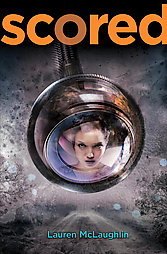
This YA novel is the dystopia for our time. What happens when you put together No Child Left Behind high-stakes standardized testing with surveillance measures like spy-cams and GPS monitoring of cell phones, and then introduce a company whose product is a single score for every child, which colleges and corporations will then use to sort people?

That is the reality for Imani LeMonde, a high school student whose scores put her on track for a college scholarship — something that is otherwise out of reach for all but the very rich. The scores are supposed to establish a meritocracy to replace our system of inequalities, but something else is going on. Scores update minute-to-minute, and they depend not only on school performance but also day-to-day activities and peer group associations.

Imani’s troubles begin when her score drops precipitously because her friend Cady is kicked out of her house and moves in with a boy. This takes her off the college track, and if her scores drop farther, her only options will be welfare or the military. She has a choice to make — but it’s not the simple moral dilemma of whether or not to denounce Cady to regain her score, because that option is not open to her. Instead, she has to look deeply into the scoring system to understand how it works — and what matters to her.

The society pictured here is not far off the mark. Our teens and children will be subject to more surveillance than we ever imagined. Case in point: school records are kept in “longitudinal databases” where they can be tracked over long periods of time and across school district and state lines. And by school records I mean test scores, tardies, absences, ethnicity, dental records – you name it. (For a sneak peek of the hundreds of items that can be collected, visit http://nces.sifinfo.org/datamodel/eiebrowser/techview.aspx?instance=studentElementarySecondary.)

This information is being provided to the private sector without public comment or scrutiny. For example, the Seattle Public School district signed a Memorandum of Understanding with an organization called the Community Center for Education Results, indicating that the district would be sharing its database of student information with CCER. This database excludes “personally identifiable” information about the students according to the federal FERPA law, but because it is so specific, it is potentially identifiable information, particularly if you are nonwhite, use special education services, and so forth. Also, private sector organizations could easily combine this information with other databases.

(Thanks to the mirmac1 for her comment on Feb 21, 2013 on the blog saveseattleschools.blogspot.com.)

Just as one example among many, yesterday I went to the Pacific Science Center and visited an exhibit called “Professor Wellbody’s Academy of Health and Wellness.” This is a grant and foundation-funded exhibit. As part of the exhibit, children can join the “Academy” by entering information about themselves – first name, school attended, and health habits such as diet and sleep. So now there’s a database about kids per school, and a certain lack of clarity about who will get that information.

Ten years from now, could a prospective employer check the database for these types of information about my children? I bet. Could they get a score? I bet.

A Weekend at Potlatch/Foolscap

I spent the weekend at a “reader’s spa.” Chocolate fondue, rest time, reading time, conversation, coffee, brunch, board games, even a masseuse at the ready.

Actually, it’s not called a spa.You could call it a weekend-long book group meeting, with food.

But it’s not called a book group either. It’s called a con, short for convention. But it’s unlike any other con I know about. I’m not altogether sure how to explain it. First off, it was a hybrid between two different cons — Potlatch and Foolscap. I’ve never been to a Foolscap, but I’ve been going to Potlatch for years. It is all about science fiction/fantasy book fandom, and beyond that it means different things to different people. There’s a hospitality suite with free food (and a donation kitty, of course) and hardworking volunteers. There’s a “book of honor” rather than a “guest of honor”, and the book provides a focal point for conversations that take place. As for the conversations, there are two kinds of programming: panels and microprogramming. The panels are decided in advance and involve lots and lots of audience participation. Usually the audience talks more than the panelists. The microprogramming are events that get decided on the spur of the moment. People write them up and then people attend them.

(Now when I said there was a book of honor rather than a guest of honor, that only applied to the Potlatch side of things. Foolscap has a guest of honor – in fact, two. Nancy Pearl, celebrity librarian, and Michel Gagné, artist and cartoonist. And they were responsible for the chocolate fondue.)

Potlatch is extremely well suited for introverted readers and writers. We just plain have difficulty with conversation. Not only that, but we do conversation differently. Actually, what I mean is that *I* do conversation differently. I hear something, and it sets something off in my mind, and then I take a long time to mull it over. Or I read something in a book, and although I might like to talk to somebody about it, maybe nobody around me has read the same book and then before long I forget whatever it was I wanted to say. So in general, in my daily life, I simply don’t talk about what matters most to me.

Put another way, cocktail party conversation is hell for me.

At Potlatch, on the other hand, I might attend a panel with something pre-prepared to say. Or I might spark off some idea somebody else had. Or I might derive some casual conversation to share with somebody later in the elevator. Or I might just remain silent and then go home and write about it later.

That would be now.

Censorship on overdrive

What is censorship? A central committee allowing publication and distribution of approved items only? 

What’s the role of a public library? Historically they’ve taken a stand against book-banning.

What is censorship in the digital age?

What is the role of a public library in the digital age?

All these questions and others have been churning around in my mind ever since reading this post:

http://aqueductpress.blogspot.com/2012/03/what-most-people-dont-know-about-e.html

Overdrive, the (for-profit) provider of ebooks for public libraries, holds a monopoly on providing ebooks, probably for purely pragmatic reasons (they’re the first to come up with a system the library could actually use), which would be one thing if they allowed for downloading of ALL books, but they don’t. Only approved books–that is to say, only books put out by major publishers–that is to say, only books with the information that the corporate interests who control the publishing industry want us to have.

I’m wondering about intellectual freedom for my children, brave new pioneers of the “screen-time generation.”

addressing racism

Going back to a work I studied in college – Yearning: race, gender, and cultural politics by bell hooks – I found this:

Lastly, I gathered this group of essays under the heading Yearning because as I looked for common passions, sentiments shared by folks across race, class, gender, and sexual practice, I was struck by the depths of longing in many of us. Those without money long to find a way to get rid of the endless sense of deprivation. Those with money wonder why so much feels so meaningless and long to find the site of “meaning.” Witnessing the genocidal ravages of drug addiction in black families and communities, I began to hear that longing for a freedom to control one’s destiny. All too often of our political desire for change is seen as separate from longings and passions that consume lots of time and energy in daily life. Particularly the realm of fantasy is often seen as completely separate from politics. Yet I think of all the time black folks (especially the underclass) spend just fantasizing about what our lives would be like if there were no racism, no white supremacy. Surely our desire for radical social change is intimately linked with the desire to experience pleasure, erotic fulfillment, and a host of other passions. Then, on the flip side, there are many individuals with race, gender, and class privilege who are longing to see the kind of revolutionary change that will end domination and oppression even though their lives would be completely and utterly transformed. The shared space and feeling of “yearning” opens up the possibility of common ground where all these differences might meet and engage one another. It seemed appropriate then to speak this yearning.

There’s a ton to pull out of this. The whole concept of yearning and longing resonated with me. And then there’s this: “Particularly the realm of fantasy is often seen as completely separate from politics.” I agree. Since I’m a science fiction / fantasy writer, I especially like the word “fantasy.” Because to me it means, “what if?” Radical politics try to transform society, but without the “what if,” where exactly, do you want society to go? There’s important visioning work to be done, and fantasy and science fiction certainly does it. But my critique of fantasy and science fiction is that it does visioning work and then stops there – there may be no explicit connection between the world a F/SF writer or reader wants to see and the change it takes to actually get there.

This resonated with questions of privilege and oppression. I’m white. I don’t like racial oppression. I don’t want it. Nonetheless, I have white privilege. What can I do, other than wallowing in guilt? So this – “Then, on the flip side, there are many individuals with race, gender, and class privilege who are longing to see the kind of revolutionary change that will end domination and oppression even though their lives would be completely and utterly transformed. The shared space and feeling of ‘yearning’ opens up this possibility of common ground . . .”

I like that possibility. Good. Possibility is better than closed options. But I think that a lot of radical texts point to possibility and stop there. But if we really do want to transform society, we can’t step there. We have to take the next step. Which means, I think, finding out what the next step actually is.

Superman Was Born Jewish

Right now I’m interested in the superhero story, where it came from, how it has evolved, what makes heroes “good” or “bad” in our minds, why we like antiheroes, and what we need from our superheroes. So I picked up a book on the history of superheroes,  Disguised as Clark Kent: Jews, Comics, and the Creation of the Superhero by Danny Fingeroth. I was amazed at the extent to which the Jewish experience shaped Superman – and, by extension, America’s national mythology.

In the book, Fingeroth talks about the original creators of the Superman comic, two Jewish boys named Jerry Siegal and Joe Shuster. Superman came out of a mix of their personal history, their cultural heritage, the immigrant experience, world events, and ideology surrounding them. I’m convinced Superman was born Jewish. But what fascinates me is how he was born Jewish. How did his story come to be, and what messages did it have for Americans? Looking at the past can help us see the present. Where have our superhero stories come from, and what are they telling us?

The Jews at the time were immigrating to America because of pogroms and the rise of fascism in Europe. They had come in fear for their lives. They had to maintain a double identity: their homeland identity and their assimilated, mainstream identity. Fingeroth writes, “When your history tells you that you can be murdered because of who your parents happened to be, the freedom provided by being able to blend into the mainstream culture is essential to survival.” Thus, Superman’s double identity was born. Just as the Jews had to disguise themselves as WASPs, so did Clark Kent.

The rise of fascism also brought a desperate need to the Jewish people – a need that cried out for a messianic figure. The creators of Superman, therefore, sent out subconscious messages to the American people. Fingeroth lists a few:

•    Look out for the Nazis!
•    Have some compassion for their victims!
•    Don’t you understand we are just like you?
•    You have to help!
•    Here is how you can use your gifts, America – to help those in need and distress! (p. 18)

Another historical influence was the Russian Revolution and the rise of Stalinism. Superman’s individualist ideology opposed the communist ideology. Fingeroth writes: “As expressed through Superman, the self was not to be subsumed to the collective. The self could best serve the whole by being allowed to flourish and thrive and express itself. This was the same celebration of the individual that had pervaded American popular culture from the solitary cowboy heroes of Owen Wister even onto the baseball fields . . . ” (42)

Yet another was the concept that science and reason could transcend human flaws, expressed in early science fiction.

One final influence was the Great Depression. Fingeroth quotes a 1975 press release from Siegal that shows how poverty added to the mix:

What led me into creating Superman in the early thirties?

Listening to President Roosevelt’s “fireside chats” . . . being unemployed and worried during the depression and knowing homelessness and fear. Hearing and reading of the oppression and slaughter of helpless, oppressed Jews in Nazi Germany . . . seeing movies depicting the horrors of privation suffered by the downtrodden . . . I had the great urge to help . . . help the downtrodden masses, somehow.
How could I help them when I could barely help myself? Superman was the answer.(41)

So that’s Superman. Born out of dire need, giving inspiration and hope to so many. What impact did he have back then? Did he inspire Americans to have compassion? Did he contribute to getting us involved in World War II?

It is ironic that the same qualities we needed from a superhero back then are getting us in trouble now: the individualist ideology, the idea that a hero can swoop down and save us (so we don’t have to do it ourselves). Our time is different. We beat Hitler and then became him, creating our own occupation camps of Japanese and ultimately dropping a weapon of mass destruction on two Japanese cities. State communism fell. An individualist ideology that went too far has contributed to the dismantling of our social safety net.

What do we need from our superheroes now? What are we telling them? What are they telling us?

Tune in next time. Same bat-time! Same bat-channel!

Works Cited
Fingeroth, Danny. Disguised as Clark Kent: Jews, Comics, and the Creation of the Superhero. Continuum: London and New York. 2007.