Thoughts on Veteran’s Day

Today I honor the veterans from my family. My beloved Grandpa Russell, who fought the Nazis in World War II. His experiences quieted him. He never once spoke to family about his time in the army and I can only guess at why. Did he want to shelter his family from the horrors of war? Or to keep his life compartmentalized, safe? I remember him as a quiet, friendly, laughing man who always went into his study alone with a newspaper and a pipe and watched the news, then M*A*S*H. Sometimes I joined him. Thank you, Grandpa Russell.

Then there was Sylvanus Hulet, Revolutionary War soldier. I don’t know too much about him. But his name, meaning forest grove, makes me happy. I hope he had a good life.

Today I’m thinking about the values the Revolutionary War soldiers fought for and how far we have strayed from them. “No taxation without representation” feels especially ironic. For one reason or another, there a re a lot of folks who must pay the price for the actions of our representatives, but who cannot themselves vote. As for freedom? We have the highest incarceration rate in the world. And many people, these days, go to prison without the benefit of a jury trial. The wars we fight are no longer for freedom or to save the world from the Nazis.

When it comes to veterans who fought in wars I find unjust, my feelings are complicated. But today I honor them too. They come home with scars I can only imagine. They risked their lives for what they thought was right. Or they fought without choice. I blame the people in charge, who sent them into a bad war.

May we all find peace and justice.


Modern Girls by Jennifer S. Brown

This summer I read the book Modern Girls by Jennifer S. Brown, and I did a mini-review, but it was in the middle of another blog post, so here it is again:

Wow, wow, and wow! When the Jewish “modern girl” in 1935 New York gets accidentally knocked up, what’s she going to do? Especially since her 42-year-old mother is in the same situation. I feel like I got plopped down right in their little apartment and met all their friends and relatives. Everything about mothering felt genuine to me, too–all the ambivalence, the love, and the hard work. Overall, a remarkable read, fun without being candy, deep and thoughtful–treating some serious issues–without being a downer. I want more.

#

I went to her reading tonight at Phinney Books, and it was a blast. She pointed out the perk of writing a historical novel: you get to read a lot and it’s considered Respectable Official Work — at least after something gets published. She also talked with great enthusiasm about the period in question. And I learned the difference between Yiddish and Hebrew.

So a confession: I’m a bit biased here. We were in the MFA program twenty years ago. We moved to different states and lost touch, and separately struggled to a) write something good and b) publish it. We also gave birth to our kids at about the same time. Go figure. Anyway, for both of us, persistence does pay off.

It’s a great book. Go read it.

And by the way, if you’re reading this post and you live in Seattle, go get it from Phinney Books. I hear they have some copies.


modern girls cover

– Kristin


On racism, sexism, donuts, and dictionaries

(updated 9/14 to include a little more nuance)

Yesterday I made a trip to the doughnut shop to look up words in old dictionaries.

Guess I’d better explain that. Our local doughnut shop, Top Pot Doughnuts, is decorated with four walls of bookshelves, holding gorgeous old books. Children’s classics, old encyclopedias, dictionaries . . . you name it. It looks like this:

(a picture of the walls of a Top Pot Doughnut shop in Seattle)

The walls of a Top Pot Doughnut shop in Seattle

It’s a lovely place to sit and have a cup of coffee and a doughnut.

But yesterday, I had a question on my mind: how have the definitions of the words sexism and racism changed over time? That question came out of the frequent arguments over whether “reverse sexism” and “reverse racism” exist, which ultimately comes down to the meaning of the words themselves. And of course, people argue about that too.

Who’s the final authority on such things? Listen to what the Merriam Webster editors have to say in an entry on racism:

Dictionaries are often treated as the final arbiter in arguments over a word’s meaning, but they are not always well suited for settling disputes. The lexicographer’s role is to explain how words are (or have been) actually used, not how some may feel that they should be used, and they say nothing about the intrinsic nature of the thing named by a word, much less the significance it may have for individuals. When discussing concepts like racism, therefore, it is prudent to recognize that quoting from a dictionary is unlikely to either mollify or persuade the person with whom one is arguing.

It makes sense when you think about it: a dictionary entry is not an authoritative answer but an attempt to define the actual usage of the word. But by whom? Everybody. So if there are multiple usages of a word, arguing over which usage is correct is foolhardy.

Or is it? When we argue over what a word means, do we change its usage? No one person changes it, but maybe our insistence of one definition over another is one little vote, to be added to the world’s constant project of language-making.

Context for the word “sexism”:

Here are two of many possible usages of the word “sexism”:

  1. “Prejudice or discrimination based on sex.”
  2.  “Prejudice or discrimination based on sex–specifically discrimination against women; behavior, conditions, or attitudes that foster stereotypes of social roles based on sex.”

Which definition is the correct one? Neither, of course. Both are in common usage these days.

A better question: which one should we use?

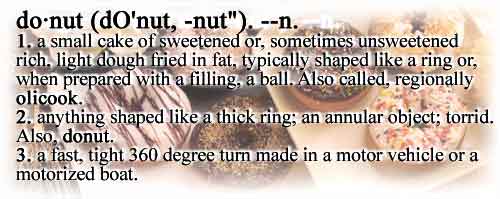
Hence, my interest in the dictionary. Here are some definitions, starting from today’s and going back in time to when sexism existed, but nobody had a word for it.

Merriam-Webster’s online definition, as of 9/12/2016:

  1. prejudice or discrimination based on sex; especially :  discrimination against women

  2. behavior, conditions, or attitudes that foster stereotypes of social roles based on sex

Webster’s, 1988:

Sexism [SEX + (racism)] discrimination against people on the basis of sex; specif. discrimination against and prejudicial stereotyping of women.

Webster’s 7th, 1967:

(entry not present)

Funk & Wagnalls, 1956:

(entry not present)

Well, of course it’s not present in 1967. It had only been coined two years previously, and it hadn’t made it out of feminist mimeographs. It wasn’t dictionary-worthy. Here’s some background from an online etymology dictionary:

sexist (adj.) Look up sexist at Dictionary.com1965, from sex (n.) on model of racist, coined by Pauline M. Leet, director of special programs at Franklin & Marshall College, Lancaster, Pennsylvania, U.S., in a speech which was circulated in mimeograph among feminists. Popularized by use in print in Caroline Bird’s introduction to “Born Female” (1968).

And the definition in “Born Female” (from a Feminism 101 blog post) is:

There is recognition abroad that we are in many ways a sexist country. Sexism is judging people by their sex when sex doesn’t matter. Sexism is intended to rhyme with racism. Both have used to keep the powers that be in power.

The quotation goes on to say that women can also be sexists, but the definitions provided makes it clear that she’s talking about women being sexist against women, not men.

Of course, the usage of a word in the past doesn’t dictate how it should be used in the present. However, in any argument over definitions, it’s worth noting that feminists coined the term for a specific purpose, and are still using it for that same general purpose. It includes some important context. For example:

  • there is widespread prejudice and discrimination specifically against women
  • people stereotype women
  • sexism is a tool for maintaining unbalanced power relations

When all that context is taken away from the term, something important is chipped away from the feminist movement too.

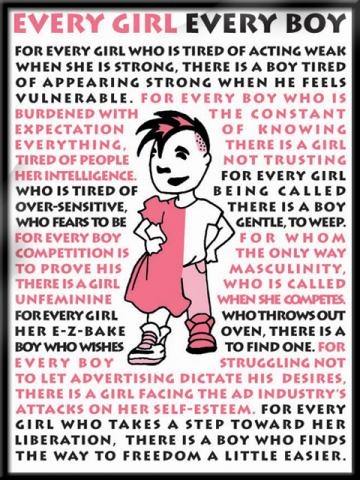
On the other hand, gender stereotyping and discrimination happens to men too. And to boys. This poster sums it up beautifully:
for-every-girl

Another thing that might be changing about the term: its use to describe prejudice and discrimination faced by trans people. There’s definitely some argument about this. Within some feminist circles, people feel that trans women can use the word “sexism” but trans men should use “gender prejudice.” I don’t agree.

All in all, it’s an ongoing conversation, which is as it should be.

At the same time, there are anti-feminists who are using the word “sexism” to refer to slights made by feminists against men. That’s being advocated on ultra-conservative websites such as Breitbart as part of a feminist backlash. It sounds reasonable, but in reality, it’s a way of shutting us up when we talk about sexism.

For that reason, I propose that the moral right to define the word “sexism” belongs to feminists. (Of any gender.)

Context for the word “racism”:

The word “racism” came into popular use after the French word “racisme” was used, by people who were fighting the Nazis in the 1930s. Just to be clear, the Nazis were a group of white supremacists intent on killing off people they considered a lesser race.

There were two earlier words, “racialism” and “race hatred,” both of which were apparently less specific and could refer to racial prejudice against whites. But after Hitler’s rise to power, the use of the term “racism” supplanted both.

You can find out a lot about the word “racism” from a dictionary, but there’s another cool tool: Google Ngrams. It shows the relative frequency of words in all the books Google has scanned, so it’s a nifty little tool for watching the way our collective minds have processed words. It can also give you insights you won’t find in most etymologies – it shows when a word first became popular. It’s not exact science; this Wired article talks about its shortcomings. It also has the amazing ability of linking you to typical publications of the time.

Here are the terms “racialism” and “race hatred” up to 1930.

https://books.google.com/ngrams/interactive_chart?content=racism%2Cracialism%2Crace+hatred&case_insensitive=on&year_start=1850&year_end=1930&corpus=15&smoothing=3&share=&direct_url=t4%3B%2Cracism%3B%2Cc0%3B%2Cs0%3B%3Bracism%3B%2Cc0%3B%3BRacism%3B%2Cc0%3B.t4%3B%2Cracialism%3B%2Cc0%3B%2Cs0%3B%3Bracialism%3B%2Cc0%3B%3BRacialism%3B%2Cc0%3B%3BRACIALISM%3B%2Cc0%3B.t4%3B%2Crace%20hatred%3B%2Cc0%3B%2Cs0%3B%3Brace%20hatred%3B%2Cc0%3B%3BRace%20hatred%3B%2Cc0%3B%3BRace%20Hatred%3B%2Cc0

After about 1940, the term “racism” supplanted both, and then it really picked up during the Civil Rights Movement:

https://books.google.com/ngrams/interactive_chart?content=racism%2Cracialism%2Crace+hatred&case_insensitive=on&year_start=1910&year_end=1990&corpus=15&smoothing=3&share=&direct_url=t4%3B%2Cracism%3B%2Cc0%3B%2Cs0%3B%3Bracism%3B%2Cc0%3B%3BRacism%3B%2Cc0%3B%3BRACISM%3B%2Cc0%3B.t4%3B%2Cracialism%3B%2Cc0%3B%2Cs0%3B%3Bracialism%3B%2Cc0%3B%3BRacialism%3B%2Cc0%3B%3BRACIALISM%3B%2Cc0%3B.t4%3B%2Crace%20hatred%3B%2Cc0%3B%2Cs0%3B%3Brace%20hatred%3B%2Cc0%3B%3BRace%20hatred%3B%2Cc0%3B%3BRace%20Hatred%3B%2Cc0

I could look at Google ngram for hours. Try it. It’s a bit addictive!

How about dictionary definitions of the word racism? Here’s something to consider: for most of Western publishing history, the people in charge have been white. So I’m taking their definitions with a grain of salt.

Funk and Wagnalls, 1956

Racism – An excessive and irrational belief in or advocacy of the superiority of a given group, people, or nation, on racial grounds alone; race hatred.

Websters 7th, 1967

Racism – 1) A belief that race is the primary determinant of human traits and capacities and that racial differences produce an inherent superiority of a particular race; 2) Racialism

Racialism – racial prejudice or discrimination

Websters, 1988

Racism – 1) A doctrine or teaching, without scientific support, that claims to find racial differences in character, intelligence, etc. that asserts the superiority of one race over another or others, and that seeks to maintain the supposed purity of a race or the races. 2) Any program or practice of racial discrimination, segregation, etc. based on such beliefs.

In conclusion . . .

It’s fascinating: you can see the hand of history all over these definitions!

The word sexism came specifically from feminists and was apparently once more radical. Once it came into common use, it began more often to refer generally to gender and less often specifically to women.

On the other hand, the word racism probably did not come from the actual targets of racism, but rather from people doing antiracist work (fighting the Nazis). The earlier dictionary definitions were unlikely to have been written by the actual targets of racism. Because, you know, prejudice and discrimination.

When did people of color start having the power not only to define the word racism for themselves, but also to get their definition into common usage? Do people of color have that power?

Another way to put the question: are white people listening when people of color define racism? And if not, why not?

I proposed that feminists have the moral right to define the word sexism. By that same token, I acknowledge the right of people of color, fighting racism, to define the word racism.

Of course, what actually happens to either of these words is under nobody’s control. It’s up to the hand of history to decide.

Meanwhile, I think I’ll go for a donut.

– Kristin
donut-dictionary

from mel-o-cream.com


The gift economy in the U.S.

I’m learning a lot from the book Women and the Gift Economy, but it has to be taken with a huge grain of salt. There’s a lot of coverage of indigenous societies, some from first-hand accounts and some from outside, Western observers. So it’s vulnerable to the same problem that anthropology in general suffers: whenever a “first world” observer comes to a “third world” culture, they take with them a number of unconscious biases. Moreover, “first world” observers don’t even understand our own culture.

So what would anthropologists say about us? What does the gift economy look like in the U.S.? What are our rituals and customs?

They might say we have a deep spiritual connection to The Free Market, one that supersedes even Christianity in importance. They might base this assumption on the fact that we tithe to banks and give most of our money and possessions to corporations, both for-profit and non-profit. It’s a strange way of looking at things, to be sure. But it’s a good idea to make things strange every so often–it stretches our thinking.

People go to work and earn a wage. Then we trade in that wage for subsistence, and when we have extra we trade it for goods and services. If we end up with surplus goods, sometimes we throw them away or sell them or just hoard them, and sometimes we gift them. Who do we gift them to? Very often, to for-profit and nonprofit corporations. These corporations then sell them to other people, in exchange for their wages. We’re gifting, but not to people. We’re gifting to institutions.

When we have surplus money (or think we do), we often do the same thing: donate to charities. We have social taboos against gifting to people (for example, the homeless people on street corners), and we have taboos against accepting gifts.

On holidays, we make gifts to each other, but we have social taboos against re-gifting, gifting things we make, and gifting used items. Gifts have to come from a store, in their original packaging, preferably with a gift receipt so that unwanted items can be returned. We have to earn a wage to buy these gifts, which means we use The Free Market as an intermediary in our exchanges.

We sell our labor on The Free Market to get our wages, but we also give it away to the market. Whenever we do unpaid overtime, and whenever we volunteer for non-profits, we’re giving our labor to corporations.

Of course, we also gift directly to people–usually to the people in our social circles, especially our families, but not always. And we violate the social taboos all the time. We give to panhandlers, help strangers in need, and make items to gift.

But a significant part of our giving is to institutions, and when we do this, we lose power. Once we give our money to a charity, for example, it’s the charity who decides on who is worthy to receive. The people who receive also lose power. If they’re given food, for example, they don’t get to pick what kind. They also lose social status, because in order to receive the gift, they have to demonstrate they are in need, meaning they are poor, meaning that they are at the bottom of a social structure in which human value is measured by wealth. They are also denied the opportunity to reciprocate, partly because they’re given so little and partly because of social taboos.

We also gift our labor directly to people, in the form of favors. But we have become more and more reluctant to ask people for favors, and that does become a downward spiral.

So that’s a glance at our gift economy, as it stands now. People are giving away an awful lot of time, energy, and resources, using customs we’ve taken for granted. But maybe it’s time to rethink them. To whom are we giving? Why? Are our gifts reciprocated? What is the power relationship between giver and giftee? Are we building community or impersonal institutions? Have we made connections between our political goals and the gifts we give, or have we compartmentalized instead?


Thoughts? Comments?

– Kristin

Gift economies large and small

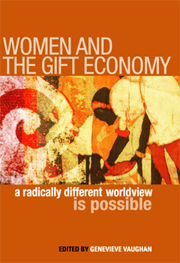
Gift economies have been with us throughout history. The book Women and the Gift Economy, ed. Genevieve Vaughan, has examples from South Africa, Big Mountain Black Mesa in Arizona, the Carribean, El Salvador,  and elsewhere.

On a smaller scale, and here in the U.S., gift economy projects are all around us. Here are just a few:

  • Little free libraries
  • Open source software
  • Creative Commons
  • Wikipedia
  • Kickstarter
  • Freecycle

There’s also a facebook phenomenon of “Buy Nothing Groups,” local groups where members give away items for free or ask for items. Its organizers had been inspired by the gift economies practiced in villages in Nepal.

And there are “free shops” or “give-away shops” and “The Really, Really Free Market,” which people organize in parks to give away goods.

 #

Here’s my question: is this phenomenon going to change society? Do these new gift economies offer an alternative to capitalism? Or are they a complement to capitalism, the same way shadow work is a complement to wage work?

I’m not saying this to be a downer. I really do hope people will find viable alternatives to capitalism, because capitalism is not working. I am saying it because we need to look critically at the solutions we hope will work, rather than glorifying them just because they are “alternative.” Maybe some gift economies do a better job of resisting exploitation than others. And maybe there are safeguards that can be put in place.

#

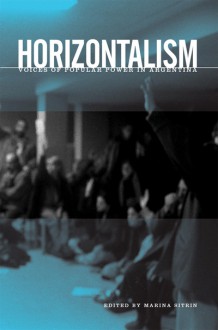
I don’t think the answers to my questions will be found in the U.S. and Europe, the so-called “first world.” I think the so-called “third world” is far ahead of us in social innovation. So let’s take a quick visit to Argentina, based on what I learned in the book Horizontalism, ed. Marina Sitrin (2006).

In 2001, Argentina suffered an economic meltdown, caused by the policies of the IMF. Banks froze their accounts and used depositors’ money to pay off foreign debt. Corporations fled. Factories shut down. In other words, capitalism broke itself. How could people survive? A movement was born, called horizontalidad. Or a collection of movements, including occupations of factories and workplaces, unemployed worker movements, new barter systems, direct democracy, neighborhood assemblies, and much more.

When Sitrin edited the book, many of these new movements were being co-opted or were changing in other ways. What has happened since then?

I don’t know the whole story. But fast forward in time to 2010, and a new phenomenon sprung up in Argentina: the gratiferia, meaning the market where everything is free. It has since spread to many other countries.

The grateferia in Argentina is maybe different than, for example, the Buy Nothing Facebook group that I participate in, because it’s maybe informed by a different kind of social consciousness, called politica afectiva (a politics of social relationships). Or just because the people of Argentina know, the way people in the United States do not, what happens when money suddenly disappears, and again, what happens when it comes back.

That’s all for now.

-Kristin


Related Links

Women and the Gift Economy, ed. Genevieve Vaughan

Really, really free market

Beginnings of the Buy Nothing Facebook groups

Horizontalism, ed. Marina Sitrin

Gratiferias

Other gift economies

horizontalism


Shadow work and the gift economy

In earlier posts I’ve discussed shadow work — the unpaid labor that complements wage work in a market economy. This includes everything from childcare and housekeeping (which together make up ten hours of my unpaid day) to commuting to shopping — basically any efforts that make it possible for a worker to sell their labor. I’ve also discussed subsistence work — the unpaid labor that provides for basic human needs — and the ways in which subsistence work can also function as shadow work, by making a wage laborer cheaper to maintain. Finally, I looked at work from a market economy perspective and a household economy perspective.

So there’s another kind of economy that is worth looking at: the gift economy. In a gift economy, basic needs are met through gifts rather than barter or market exchange. As it turns out, some peoples have historically run on the basis of a gift economy, and all peoples have incorporated gift economy principles and practices to some extent.

There’s a helpful discussion of gift and market economies in the article “The Khoekhoe Free Economy: A Model for the Gift” by Yvette Abrahams, found in the anthology Women and the Gift Economy: A Radically Different World View is Possible, ed. Genevieve Vaughan.

The essay discusses the history of the indigenous people of South Africa, the Khoekhoe. Their gift-giving economy was lost after hundreds of years of colonialism, slavery, apartheid, and structural adjustment–but many aspects of it remain. For example, it is the tradition at mealtime for a family to keep a little in the pot, in case someone knocks on the door and needs it.

Women give huge amounts of free labor, and according to Abrahams (writing in 2003), women’s subsistence farming provides about 66% of the food that feeds the continent, but it is never included in economic figures because it is given away, not sold.

This would be a workable economic solution except that women’s ability to farm is limited. For one thing, whites own 85% of the land in South Africa. For another, women have access to it only if they have a husband or a son.

So today in South Africa, the gift economy is broken in some important ways. It’s not a free social exchange, for instance, if one person needs the gift in order not to starve. It’s also not possible to gift when you have nothing. Abrahams writes: “Today, I cannot give away my labour. I have to work in order to eat.”

Also, the free labor operates not only as subsistence but also as a free subsidy of the wealthy. Abrahams writes: “Women’s non-waged labour provides two-thirds of all the food that Africans eat each year. In a way, it leads to greater independence, but in another way, it is a huge subsidy of the globalized capitalist economy.”

In other words, the gift economy is being exploited by the market economy. And the free gift of subsistence labor that people provide each other, to meet human needs, is being transformed into shadow work.

Is there a way to turn that around? Could understanding the relationship between the market and gift economies help us build a radically different future?

If you start to think about the gift economy, it is everywhere. The land gives freely of itself, providing sustenance and water and asking nothing in return. And from the moment of a child’s birth, their parents are providing the free gifts of food, shelter, and love. Even in the Western world, people are constantly giving each other presents — for birthdays, holidays, housewarmings, baby showers, weddings — and holding potlucks, and giving to charities, and volunteering, and the list goes on. Gift-giving is a normal human activity. Perhaps it is the market economy (which we mistakenly imagine is the only one that exists) that is artificial.

But if we have a gift economy, right here and right now, it is a broken one. When the market economy takes the free gifts but provides nothing in return, the gift economy runs out of steam and fails. We need to fix it.

Next up, I’ll talk about some more gift economies, both familiar and new.

– Kristin

womanand_giftcover


Clara Oswald Series 9 – Moving On

(Part of a series of “feminist takes” on Doctor Who companions. Spoilers for Doctor Who Series 8 and 9.)

When I watch Doctor Who, I live vicariously with both the Doctor and the companions. The Doctor gets to have power and to talk smack to the ruling class. The companions, meanwhile, get to take a break from their regular lives and go on a thrilling extended vacation. That’s my expectation, anyway. And when it’s broken I get seriously pissed off.

I like to see companions take a journey of personal growth and end up somewhere different-and better-than where they started. For me, the bar was set by Nyssa, who departed from the Tardis to hunt for a cure on a plague planet. (I’m deliberately not considering the possibility that the plague kills her.) Few companions have been treated that well, though. They’ve been killed, married off, suffered memory loss, simply been abandoned, or gotten stranded in time. And when I’m living vicariously through the companion, that’s disappointing.

In Series 9, Clara Oswald departs. Does the show do her justice? I’d say yes. She continues on the trajectory established in the Series 8 episode “Flatline,” in which she temporarily takes on the Doctor’s name and token of power to act like him. But as Clara becomes more and more like the Doctor, she’s also punished for it. She’s seen as a danger junkie. And in “Face the Raven,” her actions kill her. Definitively. We watch her die. Many fans are sad. I’m not sad. I don’t get sad when companions have bad endings: I get furious.


But two episodes later, in “Hell Bent,” we see her again. How is this possible? We’re in a time travel show. Clara is snatched out of time, just moments before her death, and in between one heartbeat and the next she has an infinity to explore. (She’s “in-between-finite,” a term I learned from you-tuber Vi Hart in an entertaining discussion of Pi.) She ends up with a Tardis and the ability to defer the moment of her death as long as she likes. In her last scene, she spins off in the Tardis to have adventures. She gets to fulfill her destiny as a wandering adventurer. Sweet.

Even sweeter: fanfiction writers are taking the scenario and running with it. On sites like Archive of our Own, Fanfiction.Net, and A Teaspoon and an Open Mind, people are paring up Clara and her traveling companion Ashildr and writing stories like crazy.

And so the story goes on.

cc40e6e2cc8fb2a2f4ec2a7123cc8b5ff7540f0e_hq


Feminist Take: Clara Oswald Series 8

(Spoilers for Doctor Who Series 8)

In Doctor Who Series 8, companion Clara Oswald came into her own. The actress, Jenna Coleman, simply shone. She was strong, brittle, funny, powerful, beautiful, unique. And she continued to maintain her life outside the Tardis. But the storyline itself betrayed her by pitting her accomplishments on board the Tardis against an otherwise compelling relationship with a richly characterized man. In so doing, it failed both Clara Oswald and Danny Pink.

From the moment we meet Clara Oswald in Series 6, she is something more than human. She’s a human/Dalek hybrid who has resisted Dalek conversion better than anyone ever–so well that she takes over the Daleks’ telepathic world. She is plainly and simply human in the beginning of the first episode of Series 7, but in the middle of the show, she gets a brain upgrade of alien origin that makes her hyperintelligent. She’s off on a hero’s journey, and it’s amazing. Through it all, she never fails to maintain her connection to her “real life,” the life Human Clara had chosen for herself before becoming entangled with the Doctor.

Then the end of Series 7 hits and Clara has another upgrade of alien origin, one that splinters her throughout time and space to live a thousand different lives, playing the hero in each of them. She also literally enters the Doctor’s essence, getting to know him arguably better than any other companion–so much so that in later episodes she starts to become the Doctor.

So what is in store for her in Series 8? A smackdown. She starts a relationship with a man named Danny Pink, a former soldier with his own complicated past and his own heroic journey to undertake. Just as in Series 7, she attempts to keep her home life and Tardis life separate. But two people won’t let her: the Doctor and Danny Pink.

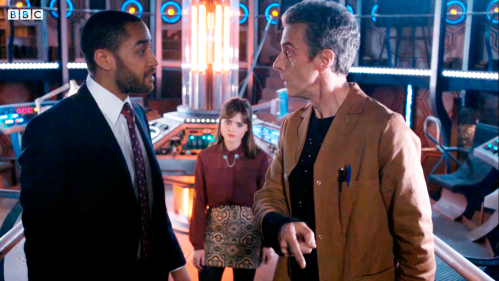
The Doctor, upon regenerating, has become more unstable than usual, and gone farther into an ethical gray zone. Toward Clara, he acts as a toxic combination of jealous boyfriend, protective grandfather, and military commander. He interferes in Clara’s life in “The Caretaker,” where he first meets Danny Pink and first starts to denigrate him by calling him a P.E. teacher when he actually teaches math. (We’re never told whether this is racism–Danny is black–or jealousy or just because Danny was a soldier, but my money’s on racism.)

Danny sees the abusive aspect of this relationship and names the Doctor, accurately, as a military commander. He predicts a moment when the Doctor will push Clara too far, and when that moment does come, he’s ready as a friend with a hug and some solid advice. But he oversteps himself and in so doing enters abusive-boyfriend territory.

Here’s the conversation that takes place after “The Caretaker.”

Danny says “I know men like him. I’ve served under them. They push you and make you stronger until you’re doing things you never thought you could. I saw you tonight. You did exactly what he told you, you weren’t even scared, and you should have been.”

This is a lovely, chill-down-the-back moment. Danny’s right.

Clara shrugs it off: “I trust him. He’s never let me down.”

Danny replies. “Fine. If he ever pushes you too far, I want you to tell me because I know what that’s like. You’ll tell me if that happens, yeah?”

Clara promises to tell him. So far, so good. Stop right here, and it’s a brilliant setup for the drama of the season.

But then Danny says, “If you break that promise, Clara, we’re finished. . . because if you don’t tell me the truth I can’t help you, and I could never stand not being able to help you. We’re clear?”

This is emotional manipulation. Instead of stopping at giving the her emotional support of a friend, an equal, he’s insisting on being her protector. And she never once calls him on it. She spends a fair bit of the season lying to him–going off with the Doctor and telling him she’s not–and I can only assume it’s because Danny has threatened to break off the relationship. This is not acceptable behavior.

Worse, Danny never acknowledges that Clara has been doing anything of import in her adventures aboard the Tardis. And we never see him asking about her past. Apparently, he’s satisfied with the half of Clara that likes to teach and hang out with him. Meanwhile, Clara’s perfectly willing to give Danny the impression she’s something less than she is. That shows a lack of respect for him.

While Clara and Danny are having their strange, dysfunctional relationship, Clara’s heroic journey is charging forward, full-steam ahead. In “Kill the Moon,” she confronts the Doctor to call him on his B.S. A few episodes later, in “Flatline, she literally takes on the role of the Doctor, complete with moniker, sonic screwdriver, and her own companion. She has a moment of epiphany when she asks herself, “What would the Doctor do?” and then corrects herself: “No. What would I do?” She has come fully into herself as a hero.

Then what? Two episodes later, in “Deep Water,” she gets a smackdown. Danny has confronted her about lying and said (finally!) that he’s okay with her traveling in the Tardis, as long as she doesn’t lie to him. So she starts off ready to confess everything. There’s an opportunity for them to finally have it out, for Clara to lay claim to her personal growth and accomplishments . . . but before she can manage it, Danny is suddenly killed (fulfilling the “Black Man Dies First” trope, by the way.). Clara is devastated. She finishes out the season as an emotional wreck. Her heroic journey is cut short.

There’s an age-old question this season appears to be playing out, badly. Can a woman be a good wife/mother/girlfriend and have her own life, too? Apparently not. We should just stay at home and let our men protect us.

This treatment wasn’t fair to Danny, either. It sidelined his own heroic journey, which was actually one of the most moving if you look at it in isolation. As an ex-soldier who left the army after accidentally killing a young boy, he became the one man to defy orders and save the Earth from Cybermen, and then, given the chance to return to life, sent the young boy instead.

I doubt the showrunner, writers, and editors meant to send the message they did. I think Danny’s sudden possessiveness, which destroyed Clara’s storyline for me, was just a slip-up. And that’s embarrassing. The show can and should do better.

Looking forward, in Series 9, it does. Mostly. But that’s a topic for another time.

Danny-Clara-Doctor


Feminist Take on Doctor Who’s Companions

I’ve been working off and on over the years to create little bits of feminist analysis on the Doctor Who companions and thought I’d share them here. There’s a demand for “strong female characters” in our popular media, and the show has responded to it. Has it succeeded or failed? Both, of course. If there is a Feminist Ideal, and could a character live up to that ideal without being overly perfect, or contradictory, or both? I found myself in the strange position of judging the female characters. (Are they strong? Do they get to be the protagonists? To what extent are they the equal of the Doctor? Which stereotypes do they fit into, and which do they resist?) How catty of me.

So here are my links. None of them represent The Final Word on feminism, the companions, or anything else. They’re what I saw, as I saw it at the time.

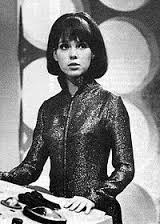
Zoe Heriot from the Patrick Troughton years, seasons 5 and 6. I fail to provide any criticisms whatsoever, because she was the first companion I ever saw and I simply adore her. She’s in black and white, she’s a screamer, and she’s the best.

Amy Pond in “The Eleventh Hour.” The Doctor meets the little girl Amelia Pond, and this visit marks her for life and transforms her into his perfect traveling companion. He leaves in his TARDIS, promising to return in five minutes, but instead returns when she is a grown woman. Was this accidental, or deliberate? Whose purposes did it serve?

River Song in “Silence in the Library” and “Forest of the Dead.”  Fan reaction has been mixed for this character, but I argue that she is powerful throughout. I might be reading more into this character than I should, but hey, it’s fun.

River Song after “The Time of Angels” and “Flesh and Stone.” I waffle back and forth between saying she’s a stereotype and saying she isn’t, and between saying she’s powerful and saying she’s not.

Clara Oswin Oswald after “Hide” and again after “Journey to the Centre of the TARDIS” and again after “The Crimson Horror.” Honestly, I don’t know what to think about her. Clara Who?

Clara Oswin Oswald in Series 8, written immediately afterward and again upon more reflection. She’s both extremely powerful and strangely mired in a bad relationship that depends on her pretending to be something she’s not.

And finally, Clara Oswin Oswald’s departure in Series 9.


zoe at tardis console


Fun this week

Much too much heavy thinking on this blog lately. Mental health break! What’s been fun in my life?

Last Tuesday’s Clarion West reading. Elizabeth Bear boggled my mind when she explained her writing schedule. Four hours of writing a day. Wow.

Friday’s Clarion West party. I got to chat with cool people, eat ridiculously delicious desserts, and drink in a view. Anybody can get invited to these, at least for next year. How did I get invited? By supporting Clarion West financially last year. Support the writeathon this year, and you’ll get invites for next year.

Visit from some family and a gorgeous, though way too long, hike through one of Seattle’s enormous parks.

Lots and lots of Gilmore Girls. My spouse and I usually just watch SF/F shows: Buffy, Angel, Orphan Black, Supergirl, Battlestar Galactica, you name it. (I left off Doctor Who because that’s mostly my obsession.) Then somebody said that Gilmore Girls was this amazing feminist class struggle thing and we started watching it, and for a while we kept expecting vampires to jump out at us, except they didn’t. The show is all about relationships: the single mother and her daughter; the daughter and her mother; the daughter, mother, and wealthy grandparents; boyfriends and fathers; and an entire small town.

Three great books, one of which ends on a cliffhanger. I won’t say which one, but the cliffhanger did not help my mental state one bit! I would ask the author to please, please, please write a follow-up.

Dragonheart by Cecelia Holland. Vivid and primordial story of a castle by a sea, a dragon, and a cursed princess. The quote on the front of the book by Kim Stanley Robinson says the book takes these images and “plunges them right into your unconscious,” and he would not be wrong.

Modern Girls by Jennifer S. Brown. Wow, wow, and wow! When the Jewish “modern girl” in 1935 New York gets accidentally knocked up, what’s she going to do? Especially since her 42-year-old mother is in the same situation. I feel like I got plopped down right in their little apartment and met all their friends and relatives. Everything about mothering felt genuine to me, too–all the ambivalence, the love, and the hard work. Overall, a remarkable read, fun without being candy, deep and thoughtful without being a downer. I want more.

(As a side note, it also had an odd resonance with Gilmore Girls and with all the things I’ve been pondering about shadow work.)

Doctor Who: Borrowed Time by Naomi A. Alderman. The Doctor and his companions Amy and Rory must save people who borrowed time and must pay it back . . . at compounding interest. A sharp and stinging critique of capitalism, also funny and with heart. It’s unfortunate that I skimmed this book before reading it–my son read it first, and I was helping him with his homework by looking for a character who changed in the course of the book. Enjoyable nonetheless!

The Terrible Zodin – Doctor Who fanzine I’ve just barely started to read. Like it!

– Kristin

modern girls cover