Category Archives: everything else

This category means, “I didn’t know where to put this post.”

Skeptical about “Skeptic” this month

Every month we get Scientific American in the mail and I devour it. This month’s has three intriguing articles: one on meditation, one on a human-powered helicopter (!!!!!), and one about the relationship between democracy and peace.

That third article, “Can democracy lead to perpetual peace?” is part of the magazine’s regular “Skeptic” column. Its focus is “Viewing the world with a rational eye” and I usually see it debunking pseudo-science. This month the author, Michael Shermer, is covering a scientific theory that democracies might be less warlike. He goes over various ins and outs and studies and articles, including the Polity Project and a recent article by political scientist Havard Hegre, and then gives his own theory:

“I propose human nature itself and our propensity to prefer the elements of democracy. Peace is a pleasant by-product.”

But something’s missing from this analysis, related to one of the most important scientific concepts: correlation is not causation. Shermer covers the possibility that  greater democracy leads to more peace and the possibility that there is a third factor, but doesn’t consider the possibility that peace leads to democracy, and war leads to authoritarian forms of governments.

That’s my personal theory, after looking at ancient Mesopotamia. It turns out that democracy didn’t begin with the Greeks — decisions were once made by an assembly on a town and city level. The secular leader of a town and city gradually took on more and more power, until that leader became a king, and then a god-in-the-flesh. This happened over thousands of years. And what prompted this increase of power?

I theorize that it was war. There’s an interesting story in the Enuma Elish, a creation myth from the city of Babylon in the 18th century BCE. The goddess Tiamat incites a civil war among the gods, and a young god, Marduk, is asked to fight her. The price? Supremacy over the assembly of gods.

Here is an excerpt from the Enuma Elish, adapted from a translation in The Babylonian Genesis by Alexander Heidel (pp 31-32).

Tiamat, our bearer, hates us. She held a meeting and raged furiously. All the gods went over to her. . . They had a meeting and planned the conflict . . . I sent Anu, but he could not face her. Nudimmud also was afraid and turned back. Then Marduk, the wisest of the gods, your son, came forward. His heart prompted him to face Tiamat. He opened his mouth and said to me: “If I am indeed to be your avenger, to vanquish Tiamat and to keep you alive, convene the assembly and proclaim my lot supreme.

Marduk’s rise to power  has striking parallels in the actual political situation of around the same time: Hammurabi became king of Babylon, was drawn into some defensive wars, and then went on the offense, eventually conquering and uniting all of Mesopotamia under one rule.

That looks to me like a clear example of war leading to authoritarian rule. Another, more recent example, might be the Patriot Act passed toward the beginning of the Iraq war. It limits our constitutional freedoms to such a degree that only war could have made it possible.

I don’t know if my theory is right or not. But I am surprised to see it omitted from the column. Maybe it’s because U.S. citizens have been so inundated with the concept that the U.S., as a democratic entity, can export its democracy and thereby bring peace throughout the world. (Never mind that we are becoming less democratic and bringing more war than peace.)  Maybe that kind of thinking is creating a blind spot even for the skeptical columnist who views the world with a rational eye.

I do love the title, though. Perpetual peace. That would be nice.

happy sumerian couple

Readers, I owe you some posts!

The other day I was looking at my page views and saw that somebody had been looking at my posts on persuasive writing for activists. I promised a post a week and got through half . . . then stopped. Same thing with the fanfiction workshop. Sorry! I realize I need to finish these. I do get distracted. If you’re somebody who’s interested, and waiting on, either one of these, shoot me a comment. That’ll help motivate me. Thank you!

Hello readers!

Hello readers! I keep seeing more blogger followers appear and I’m very grateful for your interest. I’d love to visit your blogs and introduce myself but I’m working like crazy to finish up past projects before the kids’ school year ends, so I haven’t been a very social blogger. But I’d love it if you stopped by and said hello. Cheers!

What do small publishers and indy bookstores have in common?

Q: What do small publishers and indy bookstores have in common?

A: They’re making hardly any money. It’s a labor of love.

I knew that intellectually before, but now I really know it. Having finally self-published my book, I now understand all the time and effort that goes into it. You have to sell a lot of copies to recoup the cost. And how do you sell those copies? By spending even more money to promote the book. And time. Lots and lots of time. It’s definitely deepened my respect for small publishers.

Small bookstores are struggling too. I miss A Woman’s Place bookstore in Salt Lake City and Red and Black Books in Seattle. A Woman’s place hosted my first reading, and Red and Black Books hosted a reading AND introduced me to Octavia Butler, an author I would not have found on my own. I remember that when I went in to give the reading, I saw a paperback book of hers sitting on a spinner, looking shiny and new and fun.

The small bookstores that survive, like Ravenna Third Place Books near my home, have to sell both used and new books because the profit margins on new books are so small. Third Place also had to add a restaurant and pub. Don’t get me wrong: I love going to the restaurant and pub. I’m just saying that’s what it takes to break even as an independent bookstore.

Enter the writers struggling to break into publishing. We don’t just have to write excellent and desirable books; we also have to convince a publisher that they won’t be taking a loss by putting out our books. We must also somehow convince a publisher we’re worth the risk. That’s the part I didn’t understand all the time I kept trying (and failing) to sell my book to a publisher.

What’s a writer to do?

You don’t need me to answer that question. Everybody and their dog is going to answer that question for you: there’s that one story about the guy who made a million bucks selling books out of the back of his car. (Of course, that’s not going to be the reality for most writers, but never mind that.)

Let me ask a different question:

What can writers do in order to make the publishing and bookselling world more hospitable to authors? I’m talking big picture, can we forget about our piece of pie for a second and find out how to make that pie bigger for everybody?

Yes indeed! We need to band together and support the small presses and independent bookstores we eventually hope will support us. So without further ado, here are a couple publishers and independent bookstores that make my five-star list.

Small Presses

Calyx – for supporting women’s writing

Aqueduct Press – for supporting speculative fiction and women’s writing

Book View Cafe – awesome midlist authors who banded together to sell ebooks

Bookstores

Ravenna Third Place Books – my neighborhood bookstore and new-mom refuge

Elliott Bay Books – Seattle’s best-known

Powells Books – I seriously take trips to Portland specifically to spend all day (or days) at this “City of Books”

Got a small press or independent bookstore you’re crazy about? Add a comment.

– Kristin

The way I read books

Right now I’m reading Tea with the Black Dragon by R.A. MacAvoy. I last read this book twenty-some years ago, and it marked a turning point in my understanding of the way I read books.

I devour books. I understood that part already. I charge straight through and often miss key plot points or character points. I rarely know what a character looks like.

It takes me a minute to get into them. Often, I read the first couple pages two or even three times before I understand the character and setting.

If I get excited about what’s happening, I skip ahead on the page.

A successful reading experience, then, usually involves repeated efforts to refocus my attention at first. That’s one of the things I like about reading: it puts me in a good frame of mind. Once I’ve settled in, I’m in the world, one hundred percent.

But here’s what’s interesting: I don’t see the world visually. I don’t make a mental picture of the characters or the setting. I see it in some other way I can’t explain.

And that’s where Tea with the Black Dragon changed my understanding of myself as a reader. As I got into the book, I heard the characters, plain as day.

Does anybody else have this experience?


Mentally ill people are not broken

Mentally ill people are not broken.

And mental illness is not . . .

  • a moral failing
  • contagious
  • best treated through medication only
  • best treated through jail
  • a problem of the individual
  • impossible to treat
  • somebody else’s problem

Rather, mentally ill people are just people, like you and me, who have a medically diagnosable illness. Like cancer. Only we’re not as kind to them as we are to people with cancer.

Mental illness is . . .

  • a mismatch between the abilities of a person to cope and the demands of a society that is becoming increasingly hostile to basic human needs
  • an illness that probably affects you, a family member, or a close friend
  • and therefore, a problem that affects whole families and communities, not just the person with the illness
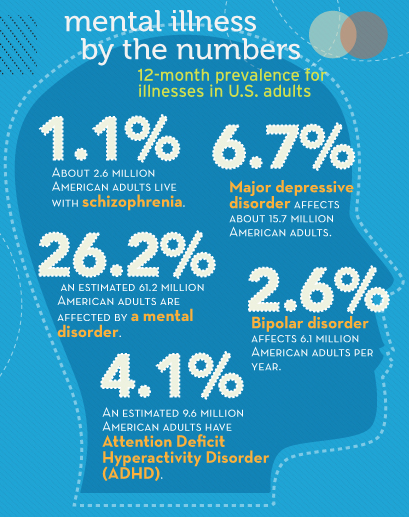
  • super common! About in four adults in the U.S. suffers from it in any given year
  • worsened by overwork, poor sleep habits, and inadequate diet
  • treatable through a combination of medication and counseling
  • an opportunity for growth

This is stuff everybody should know. I wish we taught it in high school. Because early intervention can make a huge difference! Here are a couple of links to helpful pages on the American Psychiatric Association web site.

Warning Signs of Mental Illness

Healthy Minds, Healthy Lives

Another cool site is the National Alliance on Mental Illness.

Image

– Kristin

Much obliged, astronomers!

Guess what? Astronomers have “eliminated most of the risk from global-scale, civilization-ending asteroid impact events during our lifetimes and the lifetimes of our grandchildren.”

They really ought to be bragging about this. But no. It was buried deep in the middle of an article in Sky & Telescope. The article was about the asteroid that hit the Russian city of Chelyabinsk this February. People wondered why astronomers didn’t detect the object before impact. Part of the answer is that it is relatively small, compared to the asteroids we really need to worry about. NASA began a program in 1992 called the Spaceguard Survey Report, with a goal of finding 90% of the objects that are near Earth and larger than 1 kilometer.

And . . . mission accomplished! Now they can look for the smaller stuff, the kind that has the ability to kill people but not wipe out entire civilizations.

(From “The Chelyabinsk Super-Meteor” by Daniel D. Durda in the June 2013 issue of Sky & Telescope.)

Image

Maybe

Lately, I have been thinking a lot of a taoist story I read in my twenties. I wish I could find the original source – looking for it online, I see it many times with no source quoted. It’s also often described as a “positive taoist story.” Is it?

The Taoist farmer lived in a small town in China. People were poor there, and didn’t have any luxuries. One day, the farmer’s horse ran away. Because the town was small, everybody in town knew what had happened. They all came running to the farmer, who was hoeing his field. “That is so terrible, so terrible!” they exclaimed. “Maybe”, said the farmer.

The next day, his son went out to search for the horse. At the end of the day, the farmer was working in his field when his son came home with four horses! Everybody in town came running to the farmer. “That is so amazing. You are so lucky! What good fortune!” they exclaimed. “Maybe,” said the farmer, continuing to work his field.

The son worked to train those wild horses. It was a hard job, and he worked steadily. One day, he was trying to ride one of the new horses, when the horse threw him, and he fell. He was badly hurt. The doctor treated him for a broken leg. Now the son could no longer help with the farm chores. All the neighbors came right over to the farmer, pouring out their consolations. “That is too bad.” “Oh, you were so unlucky.” “How terrible it is that your son was hurt.” The farmer continued planting his seeds and responded, “Maybe”.

About a month later, the king declared war on the nearby territory. All young men were obliged to serve in the army. As the neighbor lads marched off to the war, some of the parents came to the farmer. “You are so lucky. Your son has a broken leg, and can’t serve in the army.” The farmer continued working his field. “Maybe,” was his reply.

Song and a quote

My theme song for today is “Should I stay or should I go” –

Should I stay or should I go now?
If I go there will be trouble
If I stay it will be double!

Have you ever outstayed your welcome in a group? Or, rather, clung to a sinking ship like a drowning rat who didn’t know it was time to desert?

BUT, on a happier note, I found a quote about feminist science fiction that I like. It’s from this post on the Geek Feminism blog:

The author of the post, Mary, quoted a 2001 interview by Nick Gevers, a science fiction editor and critic:

[Gevers asks] Who, for you, are the finest SF authors now writing — both your fellow feminist writers and more generally?

[Le Guin answers] First I am to list fellow feminists and then… non-fellow anti-feminists? Come on, Nick, let’s get out of the pigeonholes. If feminism is the idea that differences between the genders, beyond the strictly physiological, are an interesting subject of study, but have not been determined, and so are not a sound basis for society to use in prescribing or proscribing any proclivity or activity — which is what I think it is — then I probably don’t read any non-feminist SF writers, these days. Do you?

Who else can merge biting wit, humor, and dazzling leaps of theory in just one sentence like that? Yes, my favorite author.

Potlatch Recap

March 8, 2010 – Back from the Potlatch con.

Their Web site describes Potlatch as a place where SF readers and writers meet on common ground. And that’s pretty much what it is. You don’t necessarily know, at first, whether the person you’re chatting with is a reader, a writer, a published author, a bestselling author, a bookseller, or an editor.

This is a little disconcerting, but overall, I really like it. I’m what you would call an author early in her career – a few short story publications under my belt, but no published books. I really need other authors to hang out with, and an informal setting is a nice way to do it. Some of my favorite times are when I’m in a circle of readers and writers talking about something a little tangential to writing – we may be trashing Star Wars, for example, discussing imaginary children, or commenting on how the sentence “I have to turn off my phone or it will take pictures of the inside of my pants pocket” would not have made sense twenty years ago. I also had a couple of wonderful in-depth conversations with people I like.

Here are the events I attended:

Friday afternoon writing workshop:
I took a writing workshop with author Ellen Klages (author of Portable Childhoods, The Green Glass Sea, and others). I’ve taken a lot of workshops, and I have to say, she was a breath of fresh air. There was general respect for all the stories (all of which were quite good and two of which – not mine – were nearly publishable) and a lot of laughs and running jokes. (“Three dyslexics walk into a bra.”) We took her for a beer afterward and talk ranged from the development and use of the first atomic bomb to Mrs. Piggle-Wiggle and googling one’s grandfather. I appreciated most of all that she had genuine enjoyment for stories and admired writers whether they were published or not – she told a story about a manuscript she had once read that was lovely and lyrical and wonderful but which the author never intended to publish, and how much she respected that.

Friday evening panel:
Authors Nisi Shawl, Ellen Klages, David D. Levine, Eddy Smith, and Natasha Oliver gave a panel on writing the “other” – how to responsibly portray characters whose ROAARS (race, orientation, age, ability, religion, or sex) differ from your own. For background, you can check out Nisi Shawl’s article “Transracial Writing for the Sincere.”

Saturday morning reading:
I went to a reading by Ellen Klages. She read some stories about interactions with her imaginary eight-year-old daughter. (Related stories have been published in her collection Portable Childhoods.) Nobody believed her at first when she said she has in fact no children whatsoever. “But it’s so spot-on!” all the parents said. “How did you know???” She attributed it to having been a child, but I personally think some of it must come from reading Mrs. Piggle-Wiggle. Or the child was an actual ghost. Or both.

Saturday morning panel:
I attended a panel on electronic publishing, presented by Vonda McIntyre, John D. Berry, and Janna Silverstein. It was a pretty high-level talk for authors and editors. Some topics included: the dreadful typography in ebooks; the cost of buying ISBNs for each version of ebook reader; a wish list for readers of ebooks; whether or not ebooks could do without graphics; and a question of whether e-publishing will destroy livelihoods for authors.

Saturday evening auction:
The auction at Potlatch benefits scholarships for the six-week Clarion West writing workshop – a fabulous cause, because it means that writers can participate regardless of income, which in turn means that upcoming novels will be more diverse class-wise. One of the high points: Ellen Klages auctioned off a dramatic reading of a Mrs. Piggle-Wiggle story, with the phrase “Don’t touch D___.” Also auctioned off was a lock of hair from someone who, sadly, is undergoing chemotherapy. I scored, among other things, a book autographed by Vonda McIntyre and a lap blanket she knitted. The auction ended right on time, which was good because folks had run out of money.

Sunday morning readings:
Short-story author Vylar Kaftan gave a reading of a story she had written the night before. She had donated the writing of a 750-word flash fiction piece on whatever topic the auction writer desired. It turned out to be disturbing and squicky, but with an orange tree and a happy ending, and I enjoyed it immensely.

Eileen Gunn, author of the collection Stable Strategies for Middle Management, gave a reading of a hilarious time-travel story she had finished that morning, along with the funniest story I’ve ever heard about the writing-of.