Tag Archives: art

Four Doctor Who moments for the Now

Art can reduce tragedy down to a form we can look at without losing our ability to cope. To see — not to look away — but to retain the ability to act. To see terror and retain courage.

Consider the Dalek — a genocidal killing machine. Fascism in its purest form. We bake Dalek cookies and eat them; we crochet them for use as potholders and ornaments; or, in my case, put them in dollhouses. It’s a way of controlling our fear. We defuse it with silliness and domesticity.
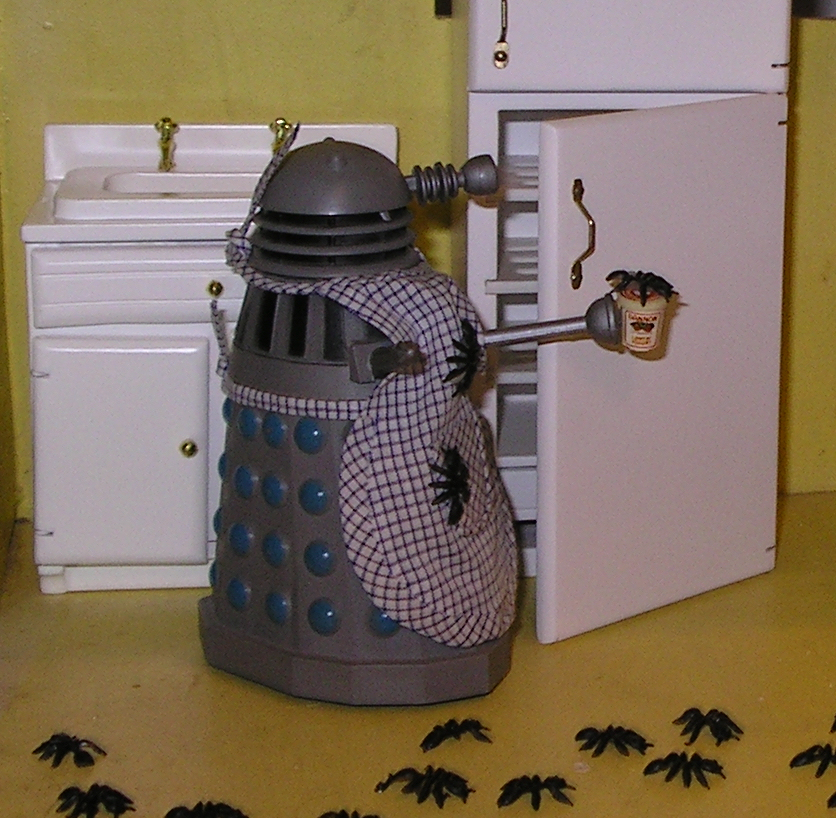
A Dalek stands in the kitchen of my dollhouse, wearing an apron and holding a jar of yogurt. Ants cover the floor and are climbing up its apron to get at the yogurt.

Art also teaches us to recognize historical patterns. A nazi or fascist might not sieg-hail or use the amateurish German accent we recognize from TV, but we can still learn to notice a violent authoritarian regime that must be resisted.

Here, then, are four moments in Doctor Who that speak to us in the United States, today, right now.

1. “It’s happening again!”

    In the episode “Turn Left,” Donna Noble and her grandfather Wilf say goodbye to their host Rococco, an Eastern European man who had welcomed them with open arms into his apartment when they were displaced by war. Donna is confused about why he has to leave in the back of an army truck.

    “Oh, but why do you have to go?” she asks.

    Rococco replies cheerily. “It’s the new law. England for the English, et cetera. They can’t send us home. The oceans are closed! They build labour camps.”

    “I know,” asks Donna, “but labor doing what? There aren’t any jobs.”

    She still hasn’t clued in, but Wilf’s heart is breaking. His lips tremble. He salutes Rocco and mutters,

    “Labour camps. That’s what they called them last time.”

    “What do you mean?” asks Donna.

    “It’s happening again,” says Wilf.

    That’s when she figures it out. She runs after the truck, but it’s already too late.

    2. I’m not lowering my bubble

    In “Dot and Bubble,” a young woman named Lindy is chatting with friends through her Bubble, wearable social media that nobody ever takes off. She and her lily-white peers are the children of the elite, and for some reason they have been abandoned by their parents and left to their own devices in the guarded town of Fineville. Nothing can get in or out, so they’re safe. Clearly.

    Oblivious, she walks past a body being dragged away and toward her office, where she and her friends do their two hours of work. The Doctor has hacked into her feed and tries to get her attention, but she gives a micro-expression of disgust and swipes him away. In the town of Fineville, racism won. The Doctor’s white companion, Ruby Sunday, appears instead and asks her to lower her Bubble just long enough to look at the real world.

    “I promise I will leave you alone if you could just look at the four desks in front of you,” says Ruby.

    “I am not…lowering… my Bubble,” says Lindy.

    “Okay. Can you stay inside and look beyond it? Can you do that?”

    Bit by bit, Ruby coaxes Lindy and her peers to look outside their Bubbles just long enough to run away from the monsters who are eating everyone in alphabetical order. To be safe, they just need to trust the Doctor.

    Will they?

    3. The Beast Below

    The Doctor and his new companion, Amy Pond, have landed on the far-future Starship U.K. He begins by falsely pretending he follows a Prime Directive: “We are observers only. That’s the one rule I’ve always stuck to in all my travels. I never get involved in the affairs of other peoples or planets.”

    Then they see a young girl sitting on a bench, crying all alone while adults hurry by without looking. Amy turns to the Doctor to ask him a question, only to discover that he is already outside of the TARDIS sitting on a bench and talking to her. He gestures to Amy to join him, and then he asks her to look at this world and tell her what’s wrong with it.

    “Is it the bicycles?” she asks. “Bit unusual on a starship, bicycles.”

    It isn’t the bicycles.

    “Life on a giant starship,” he says. Back to basics. Bicycles, washing lines, wind-up street lamps. But look closer. Secrets and shadows, lives led in fear. Society bent out of shape, on the brink of collapse. A police state.”

    He gives her a moment, then asks, “Do you see it yet?” 

    “Where?” she asks.

    He points to the young girl. “There.”

    4. Get some perspective, woman!

    In “Aliens in London,” the world is in crisis, and all the Very Important People are rushing around the British Parliament Building trying to figure out how to respond. Acting Prime Minister Joseph Green is entirely out of patience with this annoying minor official, Harriet Jones, who has arrived with a proposal for preserving cottage hospitals.

      Green barks out, “By all the saints, get some perspective, woman! I’m busy.” Then he rushes off, super-competently leaving her alone in the Cabinet Room with a file of Emergency Protocols.

      A bit irresponsible? Well, aliens have just landed in the middle of London, and most of the British Government is missing. It is an emergency, after all. As it turns out, though, this is an emergency of his own making. He is actually an alien, wearing a human skin, intent on making quick cash by destroying Earth. And farting. A lot of farting.

      Authoritarianism pairs well with farting, don’t you think?
      Politics and art (again)

      The topic of politics and art came up recently in a Facebook debate, and I had some perspectives to share. Rather than overwhelming my friend’s Facebook wall, I’ll share them in this post. Here are a few of the assertions made:

      “Censorship, even self-censorship to abet a political agenda, is anathema to art.”

      “Mixing politics and art doesn’t do art any favors.”

      In this post, I’ll start by generally considering the concepts art, politics, and self-censorship. Then I’ll put it in the context of the feminist movement and finish up with a work of political art by Frida Kahlo.

      Art

      There’s no defining the term art, but as a rough start I’ll say that it is something produced by people that speaks to the soul of those who receive it. (Except that nature makes art, too.) Art is created in a social context. It’s made many times–first by the creator, and then by the person who receives it.

      Art is made for art’s sake, as self-expression, as commerce, as politics, or for any number of reasons. What makes it art? That it transcends those conditions of production and becomes something that speaks to the soul.

      Art is shaped by culture, and in turn, it shapes culture.

      Politics

      There’s no defining politics either. In the Facebook discussion, everybody was using the term without agreeing on its basic definition, which in my opinion derailed the whole conversation. My own definition of politics is broad and expansive and stems from the feminist movement. That definition is so widely used that ignoring it will inevitably lead to confusion and pointless arguments.

      The personal is political. There’s a world of meaning in that statement. When a publicly elected official can pass a law legislating what a woman may or may not do with her womb, the personal is political.

      Politics, to me, is everything having to do with the power dynamics of human relationships. And as such, it’s an integral part of art.

      Therefore, the assertion “mixing politics and art doesn’t do art any favors” makes no sense to me. It’s like saying “mixing salt and ice cream doesn’t do ice cream any favors.”


      Art and social movements

      For every broken human institution we’ve ever had, there’s been art to back it up. To justify it, to put it in a positive light. Our culture is the water we swim in, the air we breathe, and it is inevitably reflected in our art.

      Then maybe a social movement comes along, intending to change the institution. Struggle ensues, and you’ll see resistance art. This is true for any social movement–feminism, civil rights, communism, or the push for democracy in the late 1700s.

      For every social movement against a human institution you’ll have two kinds of art: that which strengthens the institution and that which resists it. They’re both political. There are those who believe in a third kind of art, that which remains neutral. I’m skeptical. Sometimes the people who say that just don’t see the air we breathe.

      At the very least, whenever there is a struggle to change our social, cultural, economic, and political circumstances, art situates itself somewhere in the struggle. Maybe it’s actively building a wall against change. Or throwing rocks against a wall, or up in the picket lines fighting and getting tear gassed. It could be standing on the wall trying to simply observe–a risky business. Or sitting down and having a beer with the people who don’t want anything to change, feeling innocent. Perhaps, instead, it’s throwing pies at somebody. No matter what, though, art is somewhere.

      And art has power: to change our hearts and minds, to change our culture, to start a revolution or to glorify a king.

      Art, politics, and self-censorship

      Because art has power, there will always be people making demands of it. Do this! Don’t do that! At some point, those demands rise to the level of censorship. Maybe the artists face execution for their work, or the loss of a job. This is terrible for art (at least until whoever is in power gets deposed).

      In that context, I wholeheartedly agree with the sentiment:

      “Censorship, even self-censorship, is anathema to art.”

      However, I don’t agree with this one:

      “Censorship, even self-censorship to abet a political agenda, is anathema to art.”

      To me, it’s only censorship if the artist is at risk of execution or loss of ability to get a job, or if a censor has the power to stop the work from getting out in the world. There’s a high bar, and for good reason. Censorship is terrible. We shouldn’t weaken the term.

      By the same token, it’s only self-censorship if the artist limits or changes their work as a result of these kinds of repression.

      Anything else is whatever the artist chooses to do with their art, which is their own business. If they want to change or limit their work to abet a political agenda, they can do that. Call it self-regulation, or editing.

      People can even demand that an artist change or limit their work, and it’s not self-censorship. People make demands on art all the time. But art’s going to do whatever it does.

      Art, censorship, and feminism

      Feminist authors are often told their works are “too political.” We’re repeatedly told, by workshop reviewers and editors, that we should change or limit our literature. Or we’re not told that: our work is just dumped into the slush pile, because its political sensibilities offend.

      We’re asked to change or limit our work. We are often rejected by fiction markets because we don’t conform to prevailing notions. I could call that censorship, but I’m not going to. I set the bar high, and it applies equally to both sides of the debate.

      The feminist movement has gained in power, and people with feminist sensibilities have our own publishers and publications. We’re everywhere: writers, editors, publishers, reviewers, and on awards committees. We’re even approaching 50% representation in some of these areas, though we have a long way to go.

      Now that we’re here, we’re making our own demands. We’re saying, “Artists, we want the world to be different, and your art is part of that. We want you to stop perpetuating obnoxious stereotypes. Or even better, could you take our side in this struggle we’re having just now?”

      The demand itself–this is not censorship.

      Art, feminism, and backlash

      In the field of fantasy and science fiction, as in all the other fields of art, feminism has encountered a backlash. No surprise there. Part of the backlash is asserting that feminist fiction has politics, while good fiction does not. A lot of the people who believe that politics and art can be separated are really referring to politics that violate cultural norms. The politics that validate them go unnoticed.

      Another part of the backlash is the accusation of “political correctness.” This accusation, ironically, is used to silence a demand. We want our culture to change the way we use language, especially the way members of oppressed groups want people to refer to them. These are not unreasonable demands. If somebody is calling me a b**h or a c**t, I would ask them to stop.

      However, I don’t have the power to make anybody stop using words. I don’t have the power to enforce censorship. I don’t want that power, either. I want the power to effect social change as one member of a democratic debate.


      The work in question

      The work in question was “Five Signs Your Story is Sexist–Against Men.” This article considers five stereotypes: male heroes with no relationships, fathers that are distant or judgemental, men that are divided into winners and losers, male consent that’s disregarded, and feminine men who are mocked. And it offers suggestions for how to fix fiction that has those stereotypes.

      I don’t agree with all the advice in there. In some places it overstates its case and makes political statements I don’t agree with. Nobody should take its proscriptions and follow them blindly. At the same time, I was so happy to see a feminist article that talks about how stereotypes hurt men, and to tackle them as an element of craft.

      In no way does this article privilege politics over art. Feminist politics are all about the nature of human relationships, which is a proper subject of art.

      So I don’t see this work as any less legitimate as another article on the same blog, “Five Characters That Are Too Powerful.”

      I have disagreements with both articles, and I’d happily participate in a lively debate about them. But one thing they both do well: they start a fascinating and productive conversation about craft.

      Art, revisited

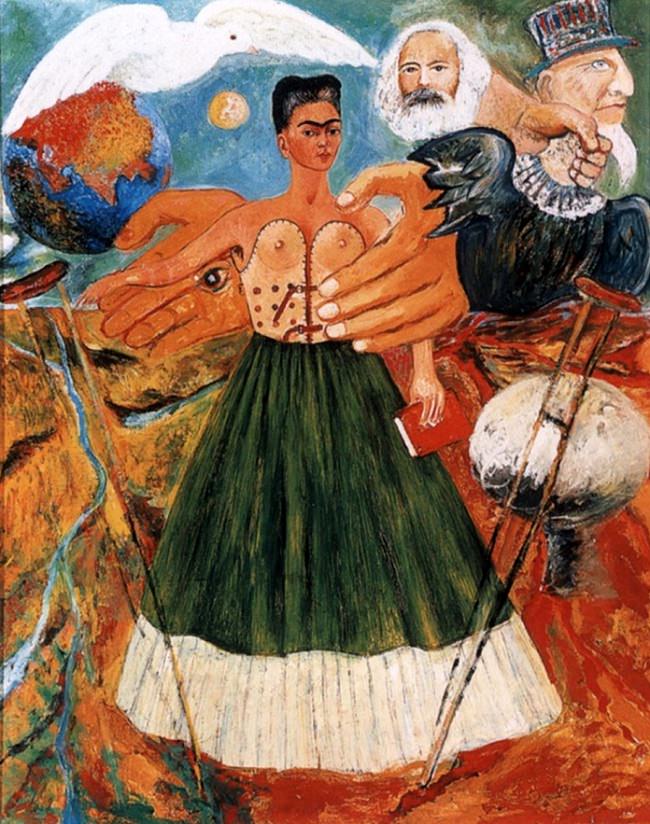
      All art is created, distributed, and remade in a social, cultural, economic, and political context. It takes politics as its subject and it makes proscriptions. And if it’s really good art, it transcends politics, proscriptions, and context. Take this painting by Frida Kahlo, “Marxism Will Give Health to the Sick.” It is overtly political, and it leaves us face to face with the unknown, watching and wondering.

      frida kahlo marxism-will-give-health-to-the-sick

      Frida Kahlo, “Marxism Will Give Health to the Sick” – from fridakahlo.org


      Image

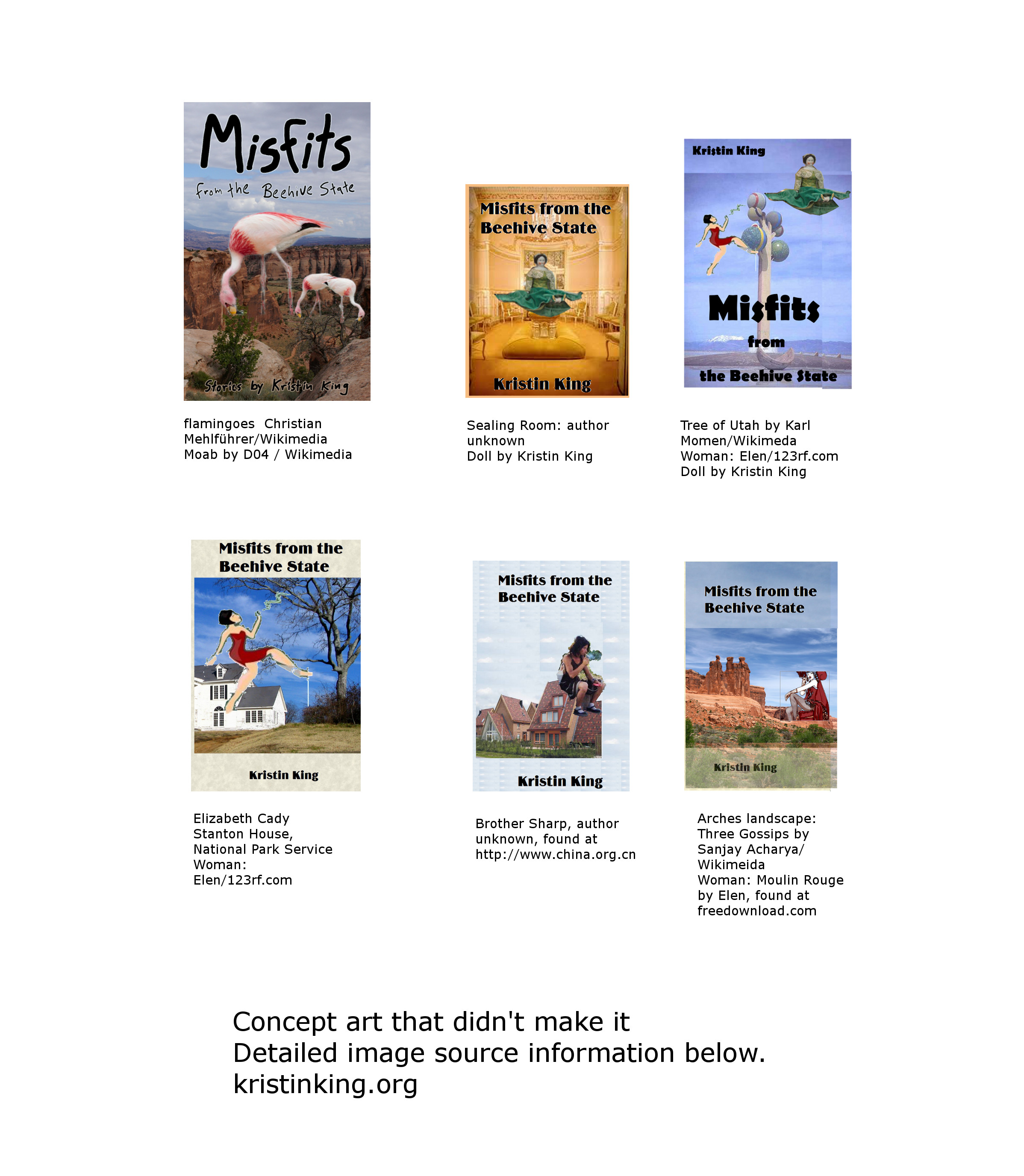
      Concept art that didn’t make it, presented for your viewing amusement

      Concept art that didn't make it, presented for your viewing amusement

      Here is the concept art that ultimately didn’t make it onto my book cover. They were all fun to make, but none of them had the right personality. (One day, though, I hope to write a story that will live up to the flamingo cover.)

      I learned a lot along the process. First, don’t use copyrighted works even for private concept art, because you might fall in love with something you can’t ultimately use. Second, it’s not easy, but you can search wikimedia commons for art that falls under “CC-BY-3.0” a common license that can be used for book covers. Third, there are a lot of stock photography sites that charge a small fee for the kind of print runs an indy author would have. Fourth, it’s way easier to have a graphic designer do your cover than to do it yourself. Fifth, I learned how to use the free image manipulation program GIMP. WIN!

      Here is some more detailed information about the art in this picture. I did my best, but if this is your art and I’ve attributed it incorrectly please let me know.

      Flamingo cover
      Moab by DR04, found at http://commons.wikimedia.org/wiki/File:05242008_Moab50.JPG
      Flamingoes by Christian Mehlführ, found at http://commons.wikimedia.org/wiki/File:James_Flamingos_MC.jpg

      Floating doll cover
      Sealing Room: author unknown, found at http://thetrumpetstone.blogspot.com/2011/02/unique-sealing-rooms.html
      Doll by Kristin King, photographed from antique at Lagoon amusement park

      Tree of Utah cover
      Tree of Utah by Karl Momen, found at http://en.wikipedia.org/wiki/Metaphor:_The_Tree_of_Utah
      Doll by Kristin King, photographed from antique at Lagoon amusement park
      Smoking woman by Nuria Garay Del Barrio, found at 123rf.com

      White house cover
      Elizabeth Cady Stanton House, found at http://www.nps.gov/ner/photosmultimedia/photogallery.htm?id=1B0E50FF-155D-451F-678AB4570B671E4D
      Smoking woman by Nuria Garay Del Barrio, found at 123rf.com

      Man on roof cover
      Steep Roof, author unknown, found at http://www.wienerberger.com/brands-products/koramic-clay-roof-tiles/projects-and-references/steep-roofs-on-scattered-buildings-make-modern-village.html?lpi=1120659566515
      Brother Sharp, found at http://www.china.org.cn/photos/2010-03/03/content_19511630_8.htm

      Arches National Park cover
      Three Gossips by Sanjay Acharya/ Wikimedia Commons, found at

      Woman smoking – Moulin Rouge, by Elen Moulin Rouge(?), found at http://all-free-download.com/free-vector/vector-people/moulin_rouge_40997.html

      Image

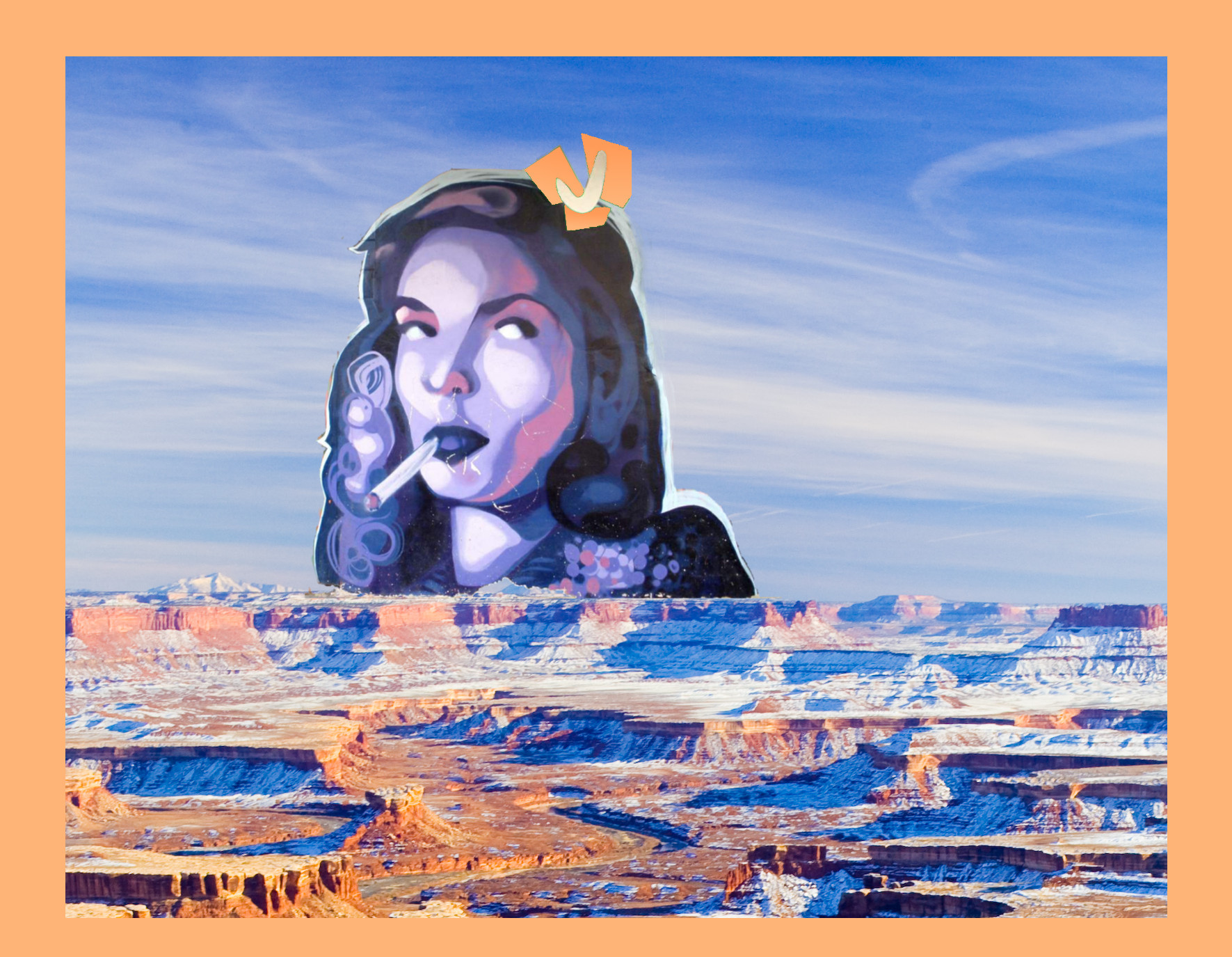
      Canyonlands Graffiti

      Canyonlands Graffiti

      I’ve been working with photo manipulation software and here is my favorite. “Canyonlands Graffiti,” copyright 2013 by Kristin King, offered under the Creative Commons Share-Alike license 3.0 (http://creativecommons.org/licenses/by-sa/3.0/). It is made up of two artworks from Wikimedia Commons: “Canyonlands National Park,” copyright 2008 by Alwynloh, and “Vitoria-Graffiti” by Zarateman. “Canyonlands National Park” is used under a Creative Commons Attribution-ShareAlike license: http://creativecommons.org/licenses/by-sa/3.0/deed.en.