Year’s Roundup: 2009

For the past several years, I’ve been contributing to the series Pleasures of Reading, Viewing, and Listening at the Aqueduct Press blog. What’s that? Well, it’s a bunch of blog posts written by Aqueduct Press authors showcasing shows, music, and what-have-you that we enjoyed. Want some fine recommendations from geeky, smart, creative, well-read feminists? Check it out. In the next few days, I’ll be reposting my essays.

Due to time constraints, I’m reposting without links or images, so I’ll also add links to the essays on the Aqueduct Press blog. Here’s the one from 2009.

A Sampling from 2009

Here is a small sampling of the books and shows I’ve enjoyed this year.

 Stories that Love Stories

In Ursula Le Guin’s The Telling, after the planet Aka joins the intergalactic community, all storytelling is forbidden. What happened? Suty comes as galactic observer and cultural anthropologist to find out. What follows is a quest of mystery and discovery that ends up on top of snowy mountains in a labyrinth of “books, thousands of books, in leather and cloth and wooden and paper bindings, unbound manuscripts in carved and painted boxes and jeweled caskets, fragments of ancient writing blazing with gold leaf . . .” Suty is trying to understand their banned religion, the Telling, which seems to come out of fragmented bits of unrelated stories, but finally comes to understand that the Telling is irreducible, that it is story itself.

Another book about the love of books is Italo Calvino’s If on a Winter’s Night a Traveler.

Italo Calvino learned about narrative from his experience of Italian cinema, where it was common practice to enter the theater in the middle of the movie, and maybe stick around to catch the beginning or maybe not, seeing the films all out of order. If on a Winter’s Night a Traveler has ten beginnings to novels, interspersed with the reader’s pursuit of the true story and of the woman Ludmilla. It is full of story, tales told in the darkness. As in the Telling, all the fragments of the story come together to make a grand narrative that defies rational explanation.

Doctor Who is a television show that has been an endless source of story since 1963. Like a book, the Doctor’s time machine, the Tardis, is bigger on the inside than the out. It can take you anyplace, to tell any story that can possibly be told. The Doctor defeats villains with his wits or, in the best of the stories (such as Hugo award-winning “The Doctor Dances”), through healing. The episode “Silence in the Library” is set on a planet that is a library, containing all the books that ever existed in the universe. It’s a treasure horde guarded by a dragon, the Vashta Nerada, devourers who live in the shadow – not every shadow, but any shadow. There, the Doctor meets one of the strongest female characters he’s ever encountered: River Song, an archaeologist who has her own adventures, knows his future, and in that future, has learned his true name.

 Stories About Borders and Bridges

A shy girl with glasses and a love of books, I learned in first grade that I didn’t fit. I’m white, and so I can “pass” as not-other, but only by lying, by holding back parts of myself that matter deeply. And so whenever I’ve become part of a community and realized I don’t quite belong, I’ve been quick to blame myself. But how I understand my identity and my part in the world has been changing, and it’s thanks to writers such as bell hooks and Gloria Anzaldúa, women I read back in 1995 and whose thoughts have been growing in my mind all these years. From Gloria Anzaldúa, I learned the concept of the border crosser, the nepantlera, who becomes a bridge between worlds, and the Borderlands, a transformational space that crosses a geographic, metaphorical, or spiritual border.

I recently picked up The Gloria Anzaldua Reader, ed. AnaLouise Keating and I’ve been slowly reabsorbing her ideas. In “La Prieta,” she writes about herself as a border person:

“Think of me as Shiva, a many-armed and -legged body with one foot on brown soil, one on white, one in straight society, one in the gay world, the man’s world, the women’s, one limb in the literary world, another in the working class, the socialist, and the occult worlds. A sort of spider woman hanging by one thin strand of thread.”

Hers was a painful life. As a child she labored as a farm worker near the Mexican border, had an adolescent’s body at the age of three and a hysterectomy at the age of five, and was so sensitive that the pain of others hurt her too. Too white, too brown, too gay . . . But, she asks, why? “Growing up,” she writes, “I felt that I was an alien from another planet dropped on my mother’s lap. But for what purpose?”

She has an answer to that question, which brings me to Adulthood Rites by Octavia Butler. The main character, Akin, is a half-human, half-alien hybrid. He fits in neither place, and he suffers for it. Not only do the human and alien (Oankali) worlds reject him, but he is also torn from an all-important sibling relationship; it’s a loss that can never be repaired.

But why? His suffering makes it possible for him to bridge the gaps between the human and Oankali worlds and bring possible salvation to humanity. The Oankali believe that humans suffer from a deadly genetic contradiction of intelligence plus hierarchy, and that it will necessarily lead the human race to destroy itself. And so, after humanity has all but wiped itself out, the Oankali are not prepared to save them. But at the end of the book, Akin is ready to take on the work, and it’s because he’s traveled between both worlds.

Like Akin and like Gloria Anzaldúa, Octavia Butler suffered greatly for her differences. She was too big, too black, too dyslexic. But for what purpose? Going back to Anzaldúa’s question, perhaps it is to build El Mundo Zurdo (the left-handed world), where “the queer groups, the people that don’t belong anywhere, not in the dominant world nor completely within our respective cultures . . . can live together and transform the planet.”

It is a tragedy that both Gloria Anzaldúa and Octavia Butler died much too soon. And so in the middle of an essay on pleasures I have to add a lament, for the troubles of their lives, for our loss of their imaginings.

 Stories About the Underworld

Perhaps it’s time to make a border crossing from our physical reality to the world of the soul, the underworld. So here are a few underworld stories.

“The Beads of Ku” by Nisi Shawl is an underworld story with humor and charm. The heroine, Fulla Fulla, has a head for business and the ability to move gracefully between our world and the Land of the Dead. When her husband grows jealous of her connection with the underworld, he breaks the rules, and it’s up to her to save him, using her wits and her skill at wrangling to outwit the king of the dead. It’s one of my favorites in her collection Filter House.

Humming The Blues by Cass Daglish is a translation of an underworld story written by the first person ever to sign her name to a text. Her name was Enheduanna, and in 2350 B.C., she wrote a poem about the goddess Ananna, who descended to the underworld and, with the help of her female friends, emerged triumphant. The exact meanings of the cuneiform text are impossible to know now, so Cass Daglish did her best by making a “jazz translation” of the text, delving into different possible meanings and using them to create a work of poetry.

 Stories in Picture and Chapter Books

Cheek by Jowl by Ursula Le Guin is a defense of animals, fantasy, and children’s literature. In “The Critics, the Monsters, and the Fantasists,” she writes, “To throw a book out of serious consideration because it was written for children . . . is in fact a monstrous act of anti-intellectualism. But it happens daily in academia.”

It’s all part of a general disrespect for children in our culture. It took being a mother for me to understand how seriously dysfunctional it is to marginalize and silence children. After all, a child is at the core of every one of us. Until you have paid serious attention to children, you can understand very little of the human soul. Children are alien, other, and so are we. So go ahead, find a children’s book you loved as a child, and enjoy it all over again. You know you want to.

Here are a few children’s books that will cheer you up in the dead of winter.

bell hooks’ Homemade Love is about Girlpie, a well-loved child. She breaks something special, and the break is devastating – has she lost the right to be loved? But her parents help her fix it. This is all about forgiveness and mending ruptures.

Shibumi and the Kitemaker by Mercer Mayer is a beautifully illustrated story about an emporer’s daughter who, on seeing the squalor of the city below her palace, goes aloft on a kite and refuses to come down until the city is as beautiful as the palace. The ending is exactly as ambiguous as it ought to be. In the beginning of the book is a poem about “authority without domination,” which I wrote down on a scrap of paper and then lost on my desk. So you’ll have to get the book if you want to read the poem.

Boo and Baa Get Wet, by Norwegian authors Olaf and Lena Landstrom, is part of a series about siblings named Boo and Baa, who have the innocence of children, the autonomy of adults, and a clearly loving relationship. They have little adventures that go wrong but always end up okay. Ants on a picnic, a cat stuck up in a tree, a cabbage that rolls down a snowy hill. In Boo and Baa Get Wet, they leave their croquet set outside and have to go get it in the middle of a thunderstorm. My favorite part is when there is a flash of lightning and the text says, “Now what? What happened?” In this silence, I can stop in my reading and talk to the children about what is going on. And the series is full of these little moments.

Pippi Longstocking by Astrid Lindgren is the anti-Bartleby. Bartleby’s refusal was passive and led only to his death, but Pippi’s “won’t” just means she has better things to do with her time. Luckily, she can back up her “won’t” with brawn, wits, and a pirate chest full of gold. While Bartleby let the police carry him off, Pippi led hers on a merry chase on her rooftop, letting them down only when they asked nicely. Hurrah, Pippi! Hurrah, humanity!

 And A Movie

My favorite movie from this year is Not One Less, about a thirteen-year-old girl who takes the job as substitute teacher in a remote Chinese province for an entire month. She has no qualifications and seemingly little to teach, but she’s the only one who volunteered. How could she possibly take charge of a class? When one of her students leaves the school to find work in the big city and then gets lost, she knows she has to find him. It’s impossible. But she is stubborn, determined, patient, and strong. Can she bring him back? This is a good counterpoint to the travesty of No Child Left Behind.

pencil and notebook3

Strange times to raise children

This week we found out that the state had agreed to hand over all kinds of confidential data to our local newspaper, so they could get grant money from a nonprofit funded by our local billionaire to help further his political goals. I wrote about some of the ramifications on the Aqueduct Press blog.

How long does writing take?

Q: How long does it take you to write 600 words? (That’s the equivalent of two double-spaced typed pages.)

A: Three hours. Two hours and forty-five minutes of procrastination (say:  a cup of coffee, a book, a bath, a sandwich, and some wandering around the house worrying about the clutter, and all this on a GOOD day) and fifteen minutes of writing.

Q: Fifteen minutes, huh? That’s fast. You must write a lot.

A: I taught myself to type in high school and then worked as a secretary for several summers. Letters can indeed come out of my fingers at the rate of 600 words in 15 minutes, which is 40 words per minute. But most of those words suck, to be honest. They’re probably going to be rewritten ten times over.

Q: Why not just go slower and write it correctly the first time?

A: HAHAHAHAHAHA

Q (defensively): What?

A: I have only the haziest idea of what I am going to write until I have written it. It’s sort of like driving a car on a foggy night with no road and your eyes closed.

Q: Well, good luck with that.

A: Thanks.

pencil and notebook3

Thinking about family traditions

My daughter’s teacher assigned her the homework of finding out about our family traditions and learning what our ancestors’ lives were like. I’m having an unusually difficult time with this. The thing is, these conversations about family traditions are happening in connection to the Nelson Mandela memorial curriculum our teachers are doing. The typical “Our family came from Scotland and here are some shortbread cookies” seems completely inappropriate in this context.

We celebrate all the standard US-Christian holidays: Christmas, Easter, the Fourth of July, Thanksgiving. But we don’t do it because it’s a family tradition; we do it because we’ve assimilated into a culture that celebrates them.

What about holidays “from the old country”? Well, which old country, anyway? These kids have thirty-two great-great-grandparents. They came from Scotland, Germany, Sweden, Britain, Ireland, and miscellaneous Scandinavian countries. Each of them had different family traditions, and most of them died out when the person with that tradition married into a family that had a different one. Or traditions died out when living conditions changed. My grandparents did “the harvest dance.” We don’t farm now, or even live in rural areas, and we don’t have a harvest dance. Conditions are changing faster than ever. The family I grew up in had fabulous Easter egg hunts. But we don’t do that. We go to the neighborhood Easter egg hunt, with plastic Easter eggs, and brunch afterward.

How about religious traditions? Thirty-two great-great grandparents, and sixteen great-grandparents, and nine grandparents, and four parents, and they tended to have conflicting beliefs. If I pick a tradition, why exactly would I pick that particular one?

So I have a vague general sense of unease about this whole thing. Maybe I feel like I should do a better job than usual, in honor of Nelson Mandela. Maybe I feel like when I tell our children about our heritage, I tell them nothing of use.

I’m also struggling because I’ve been reading up on our heritage in a much more broad, sweeping way. I’m fascinated by our cultural heritage, reaching back to the beginnings of written language in Mesopotamia. The people who lived back then were probably my ancestors, but even if they’re not, they brought me my cultural heritage. And then way, way back, we all have ancestry from Africa. That’s in our heritage.

So too much flows into my head whenever I think about heritage, and none of it is ready to be explained to an eight-year old.

Racial segregation of schools in the 21st century

Seattle Public Schools is rezoning right now, to meet capacity shortages that were caused by their decision several years back to close a bunch of schools. The closures occurred largely in the south part of Seattle, which is the most racially diverse area. There were closures in the north part of Seattle too. The school that our kids now attend was slated for closure. The community fought back and won, and two years later it was completely overcrowded. So the closures made no sense.

Something else happened as a result of the closures. When capacity shortages started to happen, the Summit K-8 program at the Jane Addams site was closed down, and about half of the students, who bussed in from South Seattle by choice, were sent back to South Seattle. What could the district do? There really were not enough seats to go around, and the Jane Addams site was being underutilized. And the choice to close schools in the north, while a mistake, was in the past.

That’s how racial segregation of schools is working in the 21st century.

Now the school district is rezoning to meet capacity needs. Some neighborhoods were once assigned to schools within walking distance. (It’s actually called a “walk zone” because Seattle has quite a few geographical barriers to walking to school, such as hills and freeways.) But this isn’t happening equitably. The district, which is probably shorthanded because of budget cuts, drew preliminary boundaries and then requested community feedback. Now, mysteriously, it appears that more diverse neighborhoods are losing access to nearby schools than less diverse neighborhoods are.

Why? How could this happen?

Let me back up and explain why I even know about this. In Seattle we have a community blog called Save Seattle Schools. I think it started back when the original school closures did. Bloggers Melissa Westbrook and Charlie Mas report and comment on district goings-on. And they provide a forum for parents all over the city to share information and perspectives.

IMO, they’re among the best investigative journalism around schools in Seattle.

Anyway, they posted open threads for parents in the different areas of Seattle to comment on these boundary changes. The thread for Southeast Seattle has a blogger, JvA, with a theory about why this has happened. Here’s what her neighborhood looks like:

Mid Beacon Hill is far more mixed, with white, Chinese, Filipino, and Vietnamese each only comprising 17-26% of the population. There is no racial or linguistic majority at all. The majority of residents speak a language other than English.

Her neighborhood was rezoned out of its walk zone. So was another neighborhood, Georgetown. Both neighborhoods, quite rightly, protested the change. However:

As far as I can tell, the district didn’t consider any such cultural or linguistic factors when assessing the input. I mean, it’s obvious white / US born / English speaking populations speak up more often than other populations, right? It’s obvious this is a farce, right?

She’s not even sure that the non-English speakers were notified:

Has the district even translated any of the materials about these radical changes to Beacon Hill, let alone tried to distribute them? My daughter goes to Maple, so I know for a fact that there have been no handouts in her backpack about it. Is it up to me to try to explain to all the folks on my block (Tagalog, Japanese, Mandarin, Vietnamese, Eritrean…) what is going on?

This is how racial segregation of schools happens in the 21st century.

And this isn’t just about that one neighborhood. No, there’s a pattern:

–Citywide, families at 28% of Title 1 (low-income) schools would lose official Seattle Public Schools-designated walk zones, compared to 12% of non-Title 1 schools.

–Under the new proposal, 67% of Beacon Hill schools would lose walk zones, compared to 13% for the rest of the city.

–All of the Beacon Hill schools losing walk zones are Title 1 (low-income) schools.

Poverty and racial inequity. What a winning combination.

There’s just one thing in her comments I disagree with:

I know it’s not very Seattle to talk about racial / cultural inequity . . .

Plenty and plenty of people in Seattle care about this. Plenty don’t, of course. I do.

What’s going to happen with this small neighborhood? Stay posted by watching JvA’s blog, at:

http://midbeaconhill.blogspot.com/

Parents, who’s got your kids’ student data?

Schools collect a whole lot of information about their students: demographics, grades, test scores, special education status, discipline information, medical information, and lots, lots more.

What’s their privacy policy?

Ask.

Seriously. Because they’re not going to tell you, unless you ask, that they can and do disclose personally identifiable information to the private sector.

I covered the “can” in another post, What are our students’ privacy rights, really? The short version is that recent changes to the federal privacy law (FERPA) allow schools to disclose personally identifiable information to “school officials” without parental consent, with “school officials” being defined to include people in the private sector.

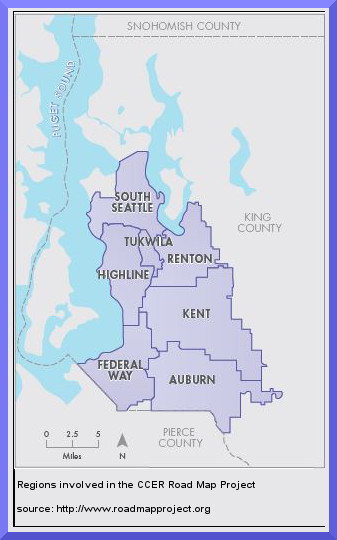
Here is the “and yes, they do” bit. And yes, they do, without even telling you. If you are a parent with a child at any of these schools, your child’s data has been released to the Community Center for Education Results. It’s for a research study aimed at increasing the number of kids ready for college in South Seattle and districts farther south in King County. 

Schools whose data was released:

  • Aki Kurose Middle School
    Arbor Heights Elementary School
    Beacon Hill International School
    Brighton Elementary School
    Cleveland High School
    Concord Elementary School
    Dearborn Park Elementary School
    Denny Middle School
    Dunlap Elementary School
    Emerson Elementary School
    Franklin High School
    Garfield High School
    Gatewood Elementary School
    Gatzert Elementary School
    Graham Hill Elementary School
    Hawthorne Elementary School
    Highland Park Elementary School
    John Muir Elementary School
    Kimball Elementary School
    Leschi Elementary School
    Madrona
    Maple Elementary School
    Mercer Middle School
    Orca @ Whitworth
    Rainier Beach High School
    Roxhill Elementary School
    Sanislo Elementary School
    Sealth High School
    Secondary Bilingual Orientation Center
    South Lake High School
    South Shore K-8 School
    Thurgood Marshall Elementary
    Van Asselt Elementary School
    Washington Middle School
    West Seattle Elementary School
    Wing Luke Elementary School

And here is a link to the authorization form signed by a previous interim superintendent, Susan Enfield, in October of 2011. It authorizes the state Office of Superintendent of Public Instruction (OSPI) to release data from the 2009-2010 school year through the 2011-12 school year such as:

  • student and staff schedules
  • student enrollment and demographic information, including special programs information
  • state test data
  • student grades

If it had been available, student discipline data would also have been included.

Was it a good thing to release this data? Do the benefits of the research outweigh the privacy concerns? Was there a need to release personally identifiable data (as opposed to de-identified data)? Were enough safety precautions taken with the data? 

I don’t know, I don’t know, I don’t know, and I don’t know.

But I do think that parents should have had the opportunity to decide whether or not this was an appropriate release of information. However, they weren’t even notified. Nor are they being notified about the follow-up data release authorized by current superintendent Jose Banda in Sept 2012. It permits release of data through the 2019-20 school year.

Nor are they being notified that Seattle Public Schools is telling third-party organizations that they can get access to private student data. In this Power Point presentation, the district explains that they will share data as allowed by FERPA to “school officials” including “third parties to whom the school or district has outsourced institutional services or functions.”

What about the security of data, when it’s shared? The SPS Best Practices are woefully inadequate. For example: “Never send your student level data through email without it being password protected.” Sorry, but password protection just doesn’t cut it.

Have there been other releases of information?

I don’t know the answer to that, and this worries me.

Image

Doctor Who and the Cake Invasion

Doctor Who and the Cake Invasion

Don’t worry, the Ice Warrior is on the good guy side. She’s saving the snowmen by clocking a Dalek with a candy cane. The Doctor, as often happens, is about to take credit for the whole thing.

Status update on the short story collection

It’s incredible how many steps it takes to publish a book, once the writing is done. But I’m getting there. As of today, I have incorporated all the copy edits. Yay!!! That means the text is finalized. FINALIZED. Sweet.

The cover art should be ready by November 15th. My next step is to get it in the proper format for ebook and print. The ebook formatting shouldn’t be too difficult — I’m using the Coffee Cup HTML editor and the Calibre E-book converter, and I’ve had plenty of practice with both of those. But I do have to find some pretty text features, called fleurons, to use for screen breaks. 

The hardest part is going to be writing the cover blurb. Yaagh! Those will be the hardest ~100 words of the whole collection. I probably shouldn’t do it. Nobody should ever write their own cover blurb, probably. I should probably find, or pay, somebody else.

If you want to learn GIMP . . .

Open-source programs can be hit or miss. How about a graphic manipulation program? Specifically, GIMP — the one to get if you can’t afford Photoshop. GIMP is hit and miss and hit again and miss again and finally, bingo!

I think I learned it the hard way:

  1. Try to edit a photograph using GIMP.
  2. Read the online manual.
  3. Use my newfound knowledge to try to edit pictures using GIMP.
  4. Repeat step 2 and 3 till I know how to use it.

That’s usually how I master new programs. But it’s really not a good idea, unless you already know terms like “RGB color” and “channels” and “alpha mask.” This is what I should have done:

  1. Try to edit a photograph using GIMP.
  2. Watch a Youtube tutorial.
  3. Refer to the online manual if confused.
  4. Try out what I learned.
  5. Repeat steps 1-4.

And here are links to the Youtube videos I should’ve watched.

http://www.makeuseof.com/tag/top-10-beginner-level-video-tutorials-learn-gimp-fast/#

I watched the Paths one today because that was one thing I didn’t know how to do. Coulda saved myself maybe 50 hours if I’d watched it sooner.

http://www.unixmen.com/30-great-tutorials-for-gimp/

Today I watched #12. In it, a kid uses GIMP to create a piece of surreal art involving trees and waterfalls and a castle in someone’s cupped hand. That’s worth watching just to be impressed with the kid.

So that’s that. Just in case the “me” from last spring is listening.

What are our students’ privacy rights, really?

As a parent, I want to know that my children’s information is kept private. I tell them not to put their birthdates on any Web pages that ask for them, I keep their names out of this blog, and I have filled out FERPA opt-out forms to prohibit disclosure of student information.

But there are some things I can’t control, and information given away by my child’s school to the private sector is one of them. That’s because of recent changes to the federal privacy law (FERPA). These changes were made right around the time that it became possible to build massive databases of student data — databases that can be shared across states and over the life of my child, from cradle to grave. Let’s take a quick look at the law, to see where the weaknesses are.

A summary of the FERPA law is available here. It tells when schools need permission to disclose information, and when they don’t.

  • Generally, schools must have written permission from the parent or eligible student in order to release any information from a student’s education record. However, FERPA allows schools to disclose those records, without consent, to the following parties or under the following conditions (34 CFR § 99.31):

    • School officials with legitimate educational interest;
    • Other schools to which a student is transferring;
    • Specified officials for audit or evaluation purposes;
    • Appropriate parties in connection with financial aid to a student;
    • Organizations conducting certain studies for or on behalf of the school;
    • Accrediting organizations;
    • To comply with a judicial order or lawfully issued subpoena;
    • Appropriate officials in cases of health and safety emergencies; and
    • State and local authorities, within a juvenile justice system, pursuant to specific State law.

Schools may disclose, without consent, “directory” information such as a student’s name, address, telephone number, date and place of birth, honors and awards, and dates of attendance. However, schools must tell parents and eligible students about directory information and allow parents and eligible students a reasonable amount of time to request that the school not disclose directory information about them. Schools must notify parents and eligible students annually of their rights under FERPA. The actual means of notification (special letter, inclusion in a PTA bulletin, student handbook, or newspaper article) is left to the discretion of each school.

Note that organizations conducting studies on behalf of the school can get access to this data, and it’s nonconsensual — meaning that parents can’t opt out.

There’s also a little something in there that’s extremely misleading. School officials can get access. That’s reasonable, right? But wait — how are “school officials” defined?

For that, we have to check out the actual text of the law (20 U.S.C. § 1232g; 34 CFR Part 99). Under paragraph 99.31, it says, “A contractor, consultant, volunteer, or other party to whom an agency or institution has outsourced institutional services or functions may be considered a school official under this paragraph provided that the outside party—”

(It goes on to list the specific conditions that have to be met.)

That’s awfully misleading.

There are also conditions under which this information can be redisclosed by “school officials” to other parties. That gets tricky and complicated.

Paragraph 99.33(a)(1) says:

An educational agency or institution may disclose personally identifiable information from an education record only on the condition that the party to whom the information is disclosed will not disclose the information to any other party without the prior consent of the parent or eligible student.

That makes it safe, right?

Oops, no. Paragraph 99.33(b)(1) says:

Paragraph (a) of this section does not prevent an educational agency or institution from disclosing personally identifiable information with the understanding that the party receiving the information may make further disclosures of the information on behalf of the educational agency or institution if—

To make a long story short, there are times where a school can disclose personally identifiable information, such as social security numbers, to third parties in the private sector, and then those third parties can then disclose this information to somebody else. And this can be done without parental consent.

Even worse: if you dig into some other privacy laws, such as those protecting medical information and those protecting students with disabilities, you’ll find that they all point back to the FERPA law. This means that information can be shared to third parties as well.

Now we know this can be done. But is it?

The long answer is a subject for another post. But the short answer is “yes.” There have been different releases for different regions of the U.S. In the Puget Sound region (Washington State), this data has been released to a nonprofit called the Community Center for Education Results for all students attending in public schools residing in these areas:

Image

If you live in any of the affected areas and want to know more, post a comment and I’ll get back to you.