Politics and art (again)

The topic of politics and art came up recently in a Facebook debate, and I had some perspectives to share. Rather than overwhelming my friend’s Facebook wall, I’ll share them in this post. Here are a few of the assertions made:

“Censorship, even self-censorship to abet a political agenda, is anathema to art.”

“Mixing politics and art doesn’t do art any favors.”

In this post, I’ll start by generally considering the concepts art, politics, and self-censorship. Then I’ll put it in the context of the feminist movement and finish up with a work of political art by Frida Kahlo.

Art

There’s no defining the term art, but as a rough start I’ll say that it is something produced by people that speaks to the soul of those who receive it. (Except that nature makes art, too.) Art is created in a social context. It’s made many times–first by the creator, and then by the person who receives it.

Art is made for art’s sake, as self-expression, as commerce, as politics, or for any number of reasons. What makes it art? That it transcends those conditions of production and becomes something that speaks to the soul.

Art is shaped by culture, and in turn, it shapes culture.

Politics

There’s no defining politics either. In the Facebook discussion, everybody was using the term without agreeing on its basic definition, which in my opinion derailed the whole conversation. My own definition of politics is broad and expansive and stems from the feminist movement. That definition is so widely used that ignoring it will inevitably lead to confusion and pointless arguments.

The personal is political. There’s a world of meaning in that statement. When a publicly elected official can pass a law legislating what a woman may or may not do with her womb, the personal is political.

Politics, to me, is everything having to do with the power dynamics of human relationships. And as such, it’s an integral part of art.

Therefore, the assertion “mixing politics and art doesn’t do art any favors” makes no sense to me. It’s like saying “mixing salt and ice cream doesn’t do ice cream any favors.”


Art and social movements

For every broken human institution we’ve ever had, there’s been art to back it up. To justify it, to put it in a positive light. Our culture is the water we swim in, the air we breathe, and it is inevitably reflected in our art.

Then maybe a social movement comes along, intending to change the institution. Struggle ensues, and you’ll see resistance art. This is true for any social movement–feminism, civil rights, communism, or the push for democracy in the late 1700s.

For every social movement against a human institution you’ll have two kinds of art: that which strengthens the institution and that which resists it. They’re both political. There are those who believe in a third kind of art, that which remains neutral. I’m skeptical. Sometimes the people who say that just don’t see the air we breathe.

At the very least, whenever there is a struggle to change our social, cultural, economic, and political circumstances, art situates itself somewhere in the struggle. Maybe it’s actively building a wall against change. Or throwing rocks against a wall, or up in the picket lines fighting and getting tear gassed. It could be standing on the wall trying to simply observe–a risky business. Or sitting down and having a beer with the people who don’t want anything to change, feeling innocent. Perhaps, instead, it’s throwing pies at somebody. No matter what, though, art is somewhere.

And art has power: to change our hearts and minds, to change our culture, to start a revolution or to glorify a king.

Art, politics, and self-censorship

Because art has power, there will always be people making demands of it. Do this! Don’t do that! At some point, those demands rise to the level of censorship. Maybe the artists face execution for their work, or the loss of a job. This is terrible for art (at least until whoever is in power gets deposed).

In that context, I wholeheartedly agree with the sentiment:

“Censorship, even self-censorship, is anathema to art.”

However, I don’t agree with this one:

“Censorship, even self-censorship to abet a political agenda, is anathema to art.”

To me, it’s only censorship if the artist is at risk of execution or loss of ability to get a job, or if a censor has the power to stop the work from getting out in the world. There’s a high bar, and for good reason. Censorship is terrible. We shouldn’t weaken the term.

By the same token, it’s only self-censorship if the artist limits or changes their work as a result of these kinds of repression.

Anything else is whatever the artist chooses to do with their art, which is their own business. If they want to change or limit their work to abet a political agenda, they can do that. Call it self-regulation, or editing.

People can even demand that an artist change or limit their work, and it’s not self-censorship. People make demands on art all the time. But art’s going to do whatever it does.

Art, censorship, and feminism

Feminist authors are often told their works are “too political.” We’re repeatedly told, by workshop reviewers and editors, that we should change or limit our literature. Or we’re not told that: our work is just dumped into the slush pile, because its political sensibilities offend.

We’re asked to change or limit our work. We are often rejected by fiction markets because we don’t conform to prevailing notions. I could call that censorship, but I’m not going to. I set the bar high, and it applies equally to both sides of the debate.

The feminist movement has gained in power, and people with feminist sensibilities have our own publishers and publications. We’re everywhere: writers, editors, publishers, reviewers, and on awards committees. We’re even approaching 50% representation in some of these areas, though we have a long way to go.

Now that we’re here, we’re making our own demands. We’re saying, “Artists, we want the world to be different, and your art is part of that. We want you to stop perpetuating obnoxious stereotypes. Or even better, could you take our side in this struggle we’re having just now?”

The demand itself–this is not censorship.

Art, feminism, and backlash

In the field of fantasy and science fiction, as in all the other fields of art, feminism has encountered a backlash. No surprise there. Part of the backlash is asserting that feminist fiction has politics, while good fiction does not. A lot of the people who believe that politics and art can be separated are really referring to politics that violate cultural norms. The politics that validate them go unnoticed.

Another part of the backlash is the accusation of “political correctness.” This accusation, ironically, is used to silence a demand. We want our culture to change the way we use language, especially the way members of oppressed groups want people to refer to them. These are not unreasonable demands. If somebody is calling me a b**h or a c**t, I would ask them to stop.

However, I don’t have the power to make anybody stop using words. I don’t have the power to enforce censorship. I don’t want that power, either. I want the power to effect social change as one member of a democratic debate.


The work in question

The work in question was “Five Signs Your Story is Sexist–Against Men.” This article considers five stereotypes: male heroes with no relationships, fathers that are distant or judgemental, men that are divided into winners and losers, male consent that’s disregarded, and feminine men who are mocked. And it offers suggestions for how to fix fiction that has those stereotypes.

I don’t agree with all the advice in there. In some places it overstates its case and makes political statements I don’t agree with. Nobody should take its proscriptions and follow them blindly. At the same time, I was so happy to see a feminist article that talks about how stereotypes hurt men, and to tackle them as an element of craft.

In no way does this article privilege politics over art. Feminist politics are all about the nature of human relationships, which is a proper subject of art.

So I don’t see this work as any less legitimate as another article on the same blog, “Five Characters That Are Too Powerful.”

I have disagreements with both articles, and I’d happily participate in a lively debate about them. But one thing they both do well: they start a fascinating and productive conversation about craft.

Art, revisited

All art is created, distributed, and remade in a social, cultural, economic, and political context. It takes politics as its subject and it makes proscriptions. And if it’s really good art, it transcends politics, proscriptions, and context. Take this painting by Frida Kahlo, “Marxism Will Give Health to the Sick.” It is overtly political, and it leaves us face to face with the unknown, watching and wondering.
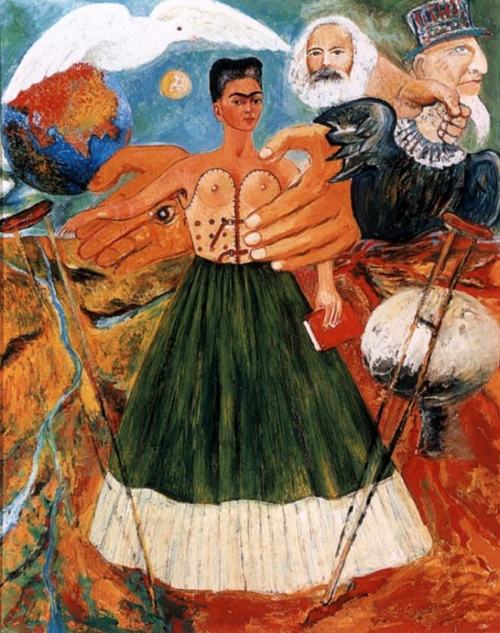
frida kahlo marxism-will-give-health-to-the-sick

Frida Kahlo, “Marxism Will Give Health to the Sick” – from fridakahlo.org

 

Six months on a Racial Equity Team

This year I was a parent participant on a Seattle Public Schools Racial Equity Team. What’s a Racial Equity Team? Short answer: it’s a group of people working together to confront racism at a specific school.

Longer answer: the Seattle school district has provided funds and training for a small number of schools to form Racial Equity Teams. (As a side note, during contract negotiations, the Seattle Education Association pushed for every school to have a racial equity team, but the district pushed back and ultimately only 18 schools got them.) You can read more about it on the Seattle Public Schools website, but sadly, they haven’t updated it since last year, so whatever work our schools have done is not reflected there.

At our school, the group of teachers and parents that ultimately became a Racial Equity Team got started partly in response to reports of race-based bullying and the recognition that the adults at the school were not prepared to handle it. There was some talk about starting something called a Restorative Justice Team, in which a group of students, led by parents or teachers, would meet regularly to help settle issues that arose.

Then we found out about the opportunity to get a grant, and we went for it. Our first two meetings ended up being all about filling out the grant application. We got the grant, which meant several of the teachers could attend district trainings and bring back what they learned to our team and to the other teachers at the school. Step one: they learned about bias. That’s a big and important step.

Having the grant happen right at the formation of the group changed its mission, though, in ways I still don’t exactly understand. There’s the big job of changing institutional racism, and the Seattle Public Schools chunk of it seems to be more about advancing academic equity — a smaller, more limited goal.

We spent a lot of time this year absorbing what we learned and trying to decide exactly what to tackle. We’ve had hugely valuable discussion, learning more about the specific needs of students at the school, and the challenges teachers face when trying to meet those needs. We also had conversations about race, gender, and ability.  But the focus is still coming together.

Will the work we do ultimately challenge institutional racism? Will it help students of all kinds feel safer in our halls, on our playgrounds, and on the school bus?

I sure hope so!

This work is necessary. It needs to be done at every single school in the district. And it needs to start now.

To be continued . . . 


Not at my school

I’ve been a parent at the same elementary school for seven years now, and I thought I knew it inside and out. Heard the parent gossip, volunteered in the classrooms, watched the kids on the playground, gotten to know the teachers. And then I heard from a parent about race-based bullying their child had experienced. Hair-pulling, name-calling, threats of physical violence, sexual assault. And the lack of appropriate response by the adults. And I thought, “Not at my school!”

See, my kids’ school, although it is mostly white, is less white than most of the schools in my neighborhood. We picked it for that reason. And the adults at the school are doing a whole lot of things to make sure everyone is included and treated fairly.

But the reality isn’t matching the intent. Once I started asking my friends the question, “Has your child experienced racism at the school?” it opened a floodgate of stories. How come I didn’t hear them, in all my seven years at the school?

One reason is that I didn’t ask. I just assumed things were mostly working. I’m not alone in that. White people like me, who grew up in segregated communities and were socialized not to talk about race, don’t ask the questions and don’t hear the answers.

Hearing the answers can be hard. There are truths we don’t want to accept, about racism in our communities and of course in ourselves. It’s easy to be defensive. “Not at my kids school! It’s a good school!” But defensiveness and avoidance just makes problems that much harder to solve. They build a wall between whites and people of color, reinforcing racial divisions.

On the other hand, learning to be honest about the reality around us gives us the power to change it.

So, white adults: if race-based bullying is happening at my kids’ school, it’s happening at yours too. And, most likely, despite best intentions, the other white adults in the community are mishandling the situation through avoidance and defensiveness. But this isn’t an always and forever thing. Everyone can change. Institutions can change.

It starts with us.


Elementary School “Book Swap”

This month I hosted a “book swap” for my child’s elementary school. It’s an idea that’s been rolling around in my mind for quite a while–I initially thought it would be great to have a book exchange party in which my kids and their friends could swap books they liked. But one thing led to another . . .

The book swap was much easier than I expected, and a lot more fun! Here’s a quick recap of what I did and how I went.

First, I approached the principal and the PTA with the idea. They suggested that I do the book swap in conjunction with a PTA “family partnership night.” Those happen regularly and involve games and free pizza. So I signed on to host the family partnership night and got some help. Then I sent out communication to the school well ahead of time, including both online and paper announcements. I was hoping for lots of people and lots of books!

Then I found some books to prime the pump. It turns out that there are usually tons of books for lower grades, but not so many for higher grades. I went to a thrift store and found some appealing upper-grade books for about a dollar each. It would alternatively have been a good idea to solicit donations from middle-schoolers. I also reached out through my local “Buy Nothing” Facebook group and left a box in the office so people could donate books early. Finally, the kids and I worked on clearing our own shelves.

The day of the event, I showed up early to order the pizza and to put out signs on the cafeteria tables, so that the people who brought in books could organize them roughly by grade level (pre-K through 1st, 2nd & 3rd, and 4th & above). I didn’t have to do the organizing myself because the kids were all over it.

We had a gorgeous spread of books by the time we were done! It was heavy on the picture books and light on the books for fourth graders and above, but there were at least some.

Kids were allowed to take 2 books each to start off with. Once everybody had taken two books, it was more of a free-for-all. When we were done, about half the books had been taken and half remained.

And that was it! Really fun and easily manageable.

I asked other people on the Soup for Teachers Facebook page if they’d done anything similar, and people have. Here were some of the responses I got:

  • One school hands out “book bucks.” Kids who bring books get one “book buck” for each book they bring in. But every student gets a “book buck,” whether they brought books or not.
  • Another school takes donations and then uses volunteers to sort them. Each student then gets the same number of books.
  • Another school does the swap during school hours, classroom by classroom. They get books from a variety of places, from the thrift store to the spring library sale to Goodwill. Then students visit, one classroom at a time, and each student takes one book.

Has anybody else done a book swap for a school? How did it work? Would you do it again?

childrens-books-with-morals-340x306

image from modernreader.org

Privilege, Power, and Getting Things Done

Sometimes I’ll be sitting in a group discussing our plans and somebody will say, “Hey, I have an idea! What if we do this?” The person looks around to the group for an answer. Some people shrug, some people look interested. Somebody might respond to the idea and somebody might bring up another idea, or the original person might expand on the idea.

Now everybody’s thinking, “Well, let’s see what the group thinks about this idea.”

But does a group think? And if so, how do you know what it thought?

People’s eyes settle on one or two people. There’s a smile and a nod from those people, or a frown. Somebody speaks.

“Well I think this. What does everyone else think?”

One or two people might speak up and discussion might go on from there. If nobody interrupts this train of thought, a decision might get made.

But who made that decision?

#

Here’s something I’ve seen. Meeting after meeting, somebody brings up an idea. “Here’s something our group do. What do people think?” Nobody’s all that interested, but nobody’s opposed. They’d be perfectly happy to pitch in if somebody else takes the lead.

The person asks the group and nobody answers.

#

Or there’s this. “Here’s a proposal. What do people think?” Everybody shrugs and then one person speaks up. “What a great idea! Let’s all do it!” Some people frown and look down. They’d rather not do anything, or they think the group shouldn’t do it. A third person says, “Why not?” The first person says, “Do we have consensus on this? Okay, then!”

#

All in all, people have a muddled understanding of what a group is. We think we can ask a question of a group and get an answer. But it’s people who answer, and the kinds of responses depend on all kinds of factors: communication styles, speed of response, degree of shyness, amount of power within a group.

When you start to think about power, it’s well worth taking a look at the short article “Tyranny of Structurelessness” by Jo Freeman. Written in 1971, it suggests that the apparent structurelessness of groups — specifically, radical feminist groups in the 1960s — masks an actual informal power structure, with unelected elites dominating the process. It proposes seven concrete steps that can be taken to safeguard democratic process.

An enormous argument ensued, and in 1979, Cathy Levine wrote a response called “Tyranny of Tyranny.” Her article suggests that structure doesn’t solve the problem of elites, and that the feminist movement needs small, unstructured groups.

The argument is still going on, and it’s especially relevant in groups that are trying to undo systems of oppression such as sexism, racism, class tyranny — anytime there’s a power imbalance. Groups choose leaders, whether explicitly or informally, and by default those leaders will be the ones at the top of the hierarchy in the system of oppression we’re trying to dismantle. Preventing that means taking specific steps, but what are they?

#

So maybe you’re in a group, and there’s a leader that got chosen by default, and that leader understands they have a position of privilege and wants to let somebody else have a chance. So they don’t take up the mantle of power that the group is trying to give them and then what happens? Who’s making the decisions? Should we just have a go-round?

#

Well, here’s the trouble with go-rounds.

The size of the group has an impact on how quickly decisions can be made, and so does the decision-making mechanism. There’s an enormous difference between a group of 5 and a group of 10. Here’s the math, from the essay “Small Group Size Limits and Self-Reinforcing Feedback Loops.” 

Imagine a simple scenario where all N people in a group are given the opportunity to speak for 2 minutes, and everyone can respond to others people’s initial point for 1 minute.  The meeting lasts 2N+N(N-1) minutes which is 30 minutes for 5 people, almost 2 hours for 10 people, and 7 hours for 20 people.  The problem is clear here, even with severe limitations on communication.  Allowing fuller interaction would make the meeting of 5 take maybe another hour, but 20 people might take literally years of nonstop 24/7 meetings.


#

Sometimes I feel like I’ve been in years of nonstop 24/7 meetings. I’m tired of the group conversations that drag on and on, ending with nothing decided. Enough is enough. Here’s my question: “Our group has a mission. How can we just get the dang thing done???”

#

So here’s the question, and I don’t have the answer: how do you fairly, inclusively, and quickly find out what the group wants to do, individually and collectively, and then do it?

There’s not just one answer. But here are some things to think about:

  1. It’s good to have an agenda, a chair/facilitator, a timekeeper, and somebody to take notes.
  2. Everybody should get a chance to speak. Nobody should take more than their fair share of time.
  3. Somebody’s going to end up being the informal leader. That person has the dual responsibility of making sure things get done and sharing power fairly.
  4. It’s good to train group members up so that everyone can take on that leadership role from time to time.
  5. It’s good to have somebody who’s able to “take the pulse” of the group and help it focus.
  6. Surveys can be our friend! And big butcher paper. Everyone gets to talk at once.
  7. Big groups can break out into small ones.

Well, that’s a start, but . . . what else?

(You tell me.)

https://www.flickr.com/photos/lorettastephenson/7902147342

Cat Question Mark by Retta Stephensen

New Who to Try

The question came up: “What’s the big deal about Doctor Who? I’ve watched a couple episodes and couldn’t get into it at all.” Tastes differ, and not everybody is going to like it. But if you’re one of the people who might like it and might not, here are some episodes worth trying.

They’re not necessarily my favorite episodes, but they’re ones that might be good for a new viewer.

I’ve only included episodes through the end of Series 8, leaving out Series 9. I would not recommend that series as a starter.

Ninth Doctor – Christopher Eccleston

Rose. This episode kicked off the first series of New Who, introducing the various characters. It’s fun and exciting and silly.

Aliens of London / World War III. Smart political satire mixed in with fart jokes.

Father’s Day. This is a good one for people who like sentimental stories and stories where time travel is explored in new and interesting ways.

The Empty Child / The Doctor Dances. This two-parter won a well-deserved Hugo award.

Tenth Doctor – David Tennant

The Girl in the Fireplace. Adventure in which time travel lends emotional depth to the plot.

The Runaway Bride. Comedy-horror. Actress Catherine Tate is magnificent.

The Shakespeare Code. If you like Shakespeare, you’ll enjoy visiting the actual Globe theater. The monster plot is fun too.

Blink. Seriously frightening monsters. Also, time travel done well.

Partners in Crime. Comedy-espionage with monsters made of human fat.

The Fires of Pompeii. Apocalypse story, as you visit Pompeii and see why it burned.

The Unicorn and the Wasp. The Doctor and Donna meet Agatha Christie and together they solve the classic drawing-room mystery. Also, giant flying wasp.

Midnight. This is a one-scene psychological drama.

Eleventh Doctor – Matt Smith

The Eleventh Hour. This episode features a new Doctor, new traveling companions, and a new storytelling style. It’s sweet and funny and a good place to start.

Victory of the Daleks. Not a bad Dalek episode to start out with. It encapsulates the scariness and the silliness of the number one Doctor Who monster.

The Hungry Earth / Cold Blood. Antiwar plot.

Vincent and the Doctor. A visit with Vincent Van Gogh. Bittersweet, as the Doctor and his traveling companion both know his ultimate fate.

The Lodger. It’s your classic romantic comedy, except for the scary something on the top floor.

The Curse of the Black Spot. Pirate story!

The Doctor’s Wife. Neil Gaiman wrote this one. The time machine finally gets to speak for herself, and she’s amazing.

The Rebel Flesh / The Almost People. Good sci fi with dopplegangers.

Night Terrors. Proper scary. Don’t show it to your kids.

Dinosaurs on a Spaceship. Adventure. Dinosaurs. Spaceship. Fun.

The Snowmen. Victorian thriller.

Hide. Ghost story set in the 1980s.

Journey to the Centre of the TARDIS. This is if you like your time travel hard core and don’t mind getting dizzy.

The Crimson Horror. Lovely Victorian crime drama. Starring Diana Riggs as the villain.

Twelfth Doctor – Peter Capaldi

Deep Breath. This episode features a brand new Doctor, who is much more cantankerous than the last several.

Time Heist. Your classic bank heist fun.

Kill the Moon. This is a strange episode. It features the Doctor abandoning the fate of Earth to three generations of women.

Flatline. Homage to Flatland.

From left to right: Christopher Eccleston, David Tennant, Matt Smith, Peter Capaldi. From http://www.doctorwhotv.co.uk/

From left to right: Christopher Eccleston, David Tennant, Matt Smith, Peter Capaldi. From http://www.doctorwhotv.co.uk/


a1963-dw_companions_498px

Some of the Doctor Who companions, 1963 to present. From http://www.teenlibrariantoolbox.com/

tardis2

And, of course, the time machine.


Visions of Eternity in Doctor Who: “Heaven Sent”

(Spoilers for Doctor Who Series 9).

The Doctor Who episode “Heaven Sent” is arguably the scariest Doctor Who episode ever to air. It’s the only one where the Doctor, the man who “saves us from the monsters” is completely and believably terrified. He’s trapped in a torture chamber designed specifically to frighten him into divulging a secret. It’s a horrific clockwork castle with rooms that not only move but also  reset themselves at regular intervals, offering him the same nightmares over and over again. When he reaches the end of the nightmare, he dies, forgetting everything, and the whole process starts over again.  It takes him four and a half billion years to escape and face the people who put him in there: the Time Lords.

It’s frightening enough on its own, but it’s also a metaphor for the Doctor’s entire existence. As a Time Lord, he was entitled to a small number of regenerations, where his old body is utterly consumed by fire and a new body is born. By the end of Series 7, the Eleventh Doctor had used them all up and settled down to a comfortable retirement. But the Time Lords stepped in to intervene, and gave him a bunch more regenerations. How many? Who knows! It could be ten, or an infinite number, or four and a half billion.

This knowledge haunts the Twelfth Doctor, as we see in the episode “Kill the Moon.” The Doctor, threatened with shooting, says,

Oh, well you’re just going to have to shoot us, then. . .  You’ll have to spend a lot of time shooting me because I will keep on regenerating.  In fact, I’m not entirely sure if I won’t keep on regenerating forever.

He says it with such cold fury that we see this knowledge hurts badly. In fact, it’s a plausible explanation for why the Twelfth Doctor wakes up so irritable and caustic. He knows he’s trapped.

He’s trapped, and he’s alone, just as he will be in the clockwork castle. “Immortality isn’t living forever,” he explains to Clara. “That’s not what it feels like. Immortality is everybody else dying.”

The Doctor does eventually get out of the clockwork castle trap set by the Time Lords. In the episode “Hell Bent,” which follows “Heaven Sent,” the Doctor ends up on Gallifrey. He battles the Time Lords and rescues Clara, then escapes Gallifrey, lets go of Clara, and completes his grieving process. In the end, he takes off in his TARDIS, all set for the next adventure.

But the metaphor of the clockwork castle stands. And “Hell Bent” reminds us of that metaphor through a series of visual echoes, scattered throughout the show.


The first visual echo is the Doctor eating a bowl of soup and then setting down his spoon. In the clockwork castle, he drops it in shock as he realizes he might have to go on like this forever. On Gallifrey, he uses the act of eating soup as an accusation to the Time Lords. When they ask him to “drop his weapons,” he puts down his soup spoon.

The second echo is the moment when the Doctor puts on his coat. In the clockwork castle, he comes into a room with a fireplace after having jumped into the sea. He finds a velvet coat drying on a rack, takes hold of it, pauses, and puts it on. Then he leaves his wet coat on the same rack to dry. After he dies, the next version of himself who comes out of the transporter will find that same coat. In “Hell Bent,” he enters the TARDIS without the velvet coat. He had taken it off when facing down the Time Lords, as a symbol that he was setting aside his role as the Doctor. Now that he’s in his TARDIS, he takes hold of the velvet coat, pauses, and puts it on.

The third echo is a gruesome one. In “Heaven Sent,” after he has been mortally injured by a monster known as the Veil, he returns to the transporter room, which like the other rooms has reverted to its original state and is therefore holding his pattern. It has no power, so the Doctor burns up his current body in order to provide the necessary energy. To do so, he pulls down on a metal handle that is just like the handle he pulls on in “Hell Bent” to dematerialize the TARDIS.

What is the message we are left with here? Is the universe itself an endlessly repeating hell for the Doctor? Did the Time Lords trap him in the land of the living by giving him an infinite number of regenerations?

I think that yes, this metaphor is part of the message of “Heaven Sent” and “Hell Bent.” And this isn’t the first time such a metaphor has appeared. In the sixth series episode “The God Complex,” a minotaur is trapped in a spaceship that picks up passersby, sets them loose in a maze that looks like a hotel, scares them into turning to their faith, and feeds their faith to the minotaur. The Doctor frees the minotaur, saying:

An ancient creature, drenched in the blood of the innocent, drifting in space through an endless shifting maze. For such a creature, death would be a gift.

The minotaur says something only the Doctor can understand, and the Doctor steps back in shock, saying, “I didn’t mean me!”

Despite his protests, the Doctor does understand the parallel. He also feeds on the faith of his companions, and upon occasion, they also die. He takes the metaphor to heart and drops Amy and Rory off at home, to have their own domestic adventures without him.

He tries to, at least. Like the minotaur, he can’t seem to leave his companions alone. He returns for Amy and Rory and they continue having adventures until tragedy strikes. Likewise, he keeps coming back for his companion Clara, even though he knows she’s risking her life, until she is definitively killed in “Face the Raven.” Even then, he can’t let her go.

And his inability to let go of Clara is what keeps him trapped in the clockwork castle. He could leave at any time simply by telling the Time Lords what they want to know, but instead he chooses to withhold that information for use as a bargaining chip in order to cheat death and save Clara.

In “The God Complex” and “Heaven Sent,” then, we have two visions of eternity, and both are horrible. In one, the Doctor is a monster who can’t release his companions, and in the other, he faces billions of years of torment alone. Is a third vision possible?

It definitely is, and I hope future showrunners will build it. If the Doctor has to face eternity, he shouldn’t have to face it alone. He deserves the company of equals who are also immortal — and who are not his enemy.

The Doctor has been depicted as the man who is always alone, but this is not fundamental to the mythology. In the beginning of the show, he traveled with a granddaughter and her two teachers. In other words, he traveled with family. He was almost never left alone until New Who, and his companions almost never died. 

Of course, actors always leave their roles, and companions always leave the Doctor. But few of these partings have to be forever. People can reappear either on-screen or off. The character of River Song, for example, died in “Silence of the Library,” but her past self continues to show up.

Series 9 has in fact given the Doctor some company in the universe. In the episode “The Girl Who Died,” the Doctor, tired of losing people, finagles immortality for a woman named Me. And in “Hell Bent,” Clara becomes not infinite but in-between-finite. Her death is a fixed point in time. But her body has been magically paused “between one heartbeat and the next,” and she is now free to roam the universe on her way back to her regularly scheduled death.

The Doctor never has to be fully separated from River, or from Me, or from Clara. River wanders all over time and space, and he’s bound to encounter her sooner or later. Me apparently sticks it out until the end of the universe and then moves backward in time to do it all over again. As for Clara, although Clara must stay away from the Doctor, she continues to live with him as a story, or a beautiful song.

So perhaps that moment in “Hell Bent,” when the Doctor puts on his coat and pulls the handle for the dematerialization circuit, is not so grim after all. Maybe, as he’s getting ready to explore the universe, he’ll be in good company. It’s the next second of eternity, and the Doctor has barely begun.

– Kristin

Eternal_clock

By Robbert van der Steeg (originally posted to Flickr as Eternal clock), via Wikimedia Commons

Ambiguity in Doctor Who: “Hell Bent”

The character of the Doctor in the Steven Moffat era is a trickster. As the Matt Smith incarnation says, “Rule One: The Doctor lies.” In the Doctor Who episodes “Heaven Sent” and “Hell Bent,” the Doctor’s lie is critical to our literal understanding of events.

Spoilers ahead. If you haven’t watched these two episodes, you don’t want to hear what I’m about to say.

The narrative arc in Series 9 hinges on a monster known only as “the Hybrid.” The Hybrid, as prophesied, is a combination of two powerful warrior races that will either bring peace or fracture time itself. What is the Hybrid? And who knows its true nature?

Perhaps the Doctor knows. In the episode “Hell Bent,” he ends up in a torture chamber where he is repeatedly interrogated by a creature who kills him if he does not confess the truth. He makes two statements. The first is a confession, which means it must be true. The second is not a confession and may or may not be true.

True:


Long before the Time War, the Time Lords knew it was coming. Like a storm on the wind. There were many prophecies and many stories. Legends before the fact. One of them was about a creature called the hybrid. Half-Dalek, half-Time Lord. The ultimate warrior. But whose side would it be on? Would it bring peace or destruction? Was it real or a fantasy? I confess, I know the Hybrid is real. I know where it is and what it is. I confess, I’m afraid.

Possibly true:

Hello again. No more confessions, sorry. But I will tell you the truth. The Hybrid is a very dangerous secret. A very very dangerous secret. And it needs to be kept! So I’ll tell you nothing.

After escaping the torture chamber, he makes two more statements about the Hybrid.

He tells the Gallifreyans:

The Hybrid is not a half-Dalek, nothing is half-Dalek. The Daleks would never allow that. The Hybrid, destined to conquer Gallifrey and stand in its ruins… is me.

That statement alone could mean two different people: “me, the Doctor” or Me, the woman that the Doctor immortalized. In fact, both “me’s” do end up standing in the ruins of Gallifrey.

But he later implies to Clara that he does not know the identity of the Hybrid, saying:

It doesn’t matter what the Hybrid is. It only matters that I convinced them that I knew. Otherwise they’d have kicked me out and I’d have nothing left to bargain with.

Finally, when he reaches the universe where he finds only the woman Me, she asks him about the Hybrid. He reiterates that he does not know and offers several theories, and then she offers an interpretation that he acknowledges is plausible.

Me suggests that the Hybrid is a combination of the Doctor and Clara, traveling the universe together. Her two pieces of evidence are the damage to time that he has wreaked in trying to save Clara, and the fact that Missy, “the lover of chaos,” brought Clara to him. He accepts this and allows himself to be separated from Clara.

As viewers, we are also asked to accept this interpretation of the Hybrid. And we do, but only because it’s the most recent one given. The Doctor does not know what the Hybrid is. In the torture chamber, he pretended to know so that he could ultimately escape and save Clara. He was motivated, then, by his love for his friend. A plot of epic proportions narrows itself down to a touching personal event.

But there’s another, deeper reading. In the torture chamber, the Doctor allowed himself to be killed billions of times rather than reveal the secret of the hybrid to Rassilon, the power-hungry President of the Time Lords. When he said the secret was too dangerous ever to be told, the Doctor was telling the truth.

It can get even scarier. The Doctor had three options in the torture chamber: tell the truth and theoretically escape, refuse to tell the truth and allow himself to die the final death, or follow an escape route that requires him to be killed and resurrected billions of times. He takes this last option so that he can save Clara.

Well, suppose the Hybrid is Clara herself. She’s been a Dalek — twice — and has in certain ways become the Doctor. She fits the exact wording of some of the prophecies, which is that the Hybrid is a Dalek/Time Lord combination. If Clara is the Hybrid, then the Doctor’s determination to save her is still personal, but the personal has become an epic struggle for the future of the universe.

That interpretation also changes the meaning of all Peter Capaldi’s interactions with Clara. At the end of “Flatline,” the first episode where Clara is shown explicitly becoming the Doctor (of sorts), Capaldi concerns himself largely with Clara’s moral development. This effort continues throughout Series 8 and 9 and culminates in “The Zygon Inversion” when she does help bring peace. Suppose he knew she was the Hybrid of prophecy, and he spent all that time helping her find the right path. It’s only one of many possibilities for the Hybrid, but I confess I like it best. It gives all the Doctor’s interactions a deeper layer of meaning. There’s more to the world than we can ever see.

Which lie did the Doctor tell? Did he know or not? Who is the Hybrid? Is it still out there, ready to fracture time or bring peace? It will probably always be a mystery. And that’s delicious.

Update #3 to the Feminist Take on Clara Oswald

A couple years back, I started a series of “feminist takes” on Doctor Who companions, including Amy Pond, River Song, and Clara Oswald. I looked at ways they were, or were not, poster children for feminism.

But after three posts on Clara Oswald, I just plain gave up. She was such a squirrelly character that I couldn’t say anything definitive about her. As far as I’m concerned, she breaks feminist analysis. Maybe it’s a mistake to give characters “poster child” awards.

Here’s a recap of my commentary from Season 7. In the first post, I suggested that the character of Clara was suffering from a Bechdel test failure, but that even so, she was pretty amazing — in face, a mirror of the Doctor.

In my next post, I looked at the interactions between Clara and the TARDIS, arguing that it passed the Bechdel test and helped explore her character. But I also felt she was too perfect and not recognizably human. (I wonder if that’s why some fans have had strong negative reactions to her: maybe she’s an uncanny valley character.)

In the last post, I admitted defeat. I thought Modern Clara was a cardboard cutout of a person, but when you combined her with Dalek Clara and Victorian Clara, you got a rich characterization. But I decided to hold my opinions for later.

I didn’t put a post together after the stunning reveal of “Day of the Doctor.” To be honest, I didn’t know what to say. It was just beautiful and strange and blew my mind.

After “Day of the Doctor,” I believed everything Clara said and did. Dalek Clara and Victorian Clara suddenly made sense. Modern Clara did not. Modern Clara was acting like the post-transformation Clara. That’s going to bother me every time I watch Series 7. But it’s a critique of the narrative, not of the feminism. So I didn’t make an update.

Clara was amazing through most of Series 8. She was part human, with all the frailties and strengths a woman would have. But her character was also merging with the Doctor’s. I loved that. As a Doctor Who fan, part of me has always wanted to run off with him in the TARDIS and be his “Doctor Who Girl” (nod to Mitch Benn). And part of me has always wanted to be him. So I got to live vicariously. The episode “Flatline,” where she gets to play the part of the Doctor while he’s stuck inside her Mary Poppins carpetbag, was funny and amazing and thought-provoking too. Loved it.

Also fabulous: Series 8 Clara is transformed. She’s jumped into the Doctor’s – what? Mind? Time stream? She’s been thousands of people who were just as amazing as Dalek Clara and Victorian Clara. After that transformation, I believed every “too good to be true” moment.

Not so great: the narrative didn’t respect her transformation. She got this weird plotline in which she was trying to have a normal life with this Danny Pink character, but she kept lying to him, and she was blamed for all the lies. The Verity podcasters suggested it was an addiction storyline, which I guess it was. But why? Why expect that it would ever be possible for post-transformation Clara to live a normal life? The disconnect jarred me. But once again, it’s a critique of the narrative, not the feminism.

Now here we are in Series 9. This is the “Clara is going to die” series. Also the “Oh, and then she didn’t” series. But in “Face the Raven,” she really did. Except the actress is going to appear in the series finale, “Hell Bent.” How-what-who-I-don’t-even-know-what’s-going-on.

So I have nothing to say, really. I’m on a roller coaster and it’s about to plunge into the depths of the unknown. Maybe when the ride stops, I’ll have something sufficiently feministy to say.

Maybe not.

-Kristin

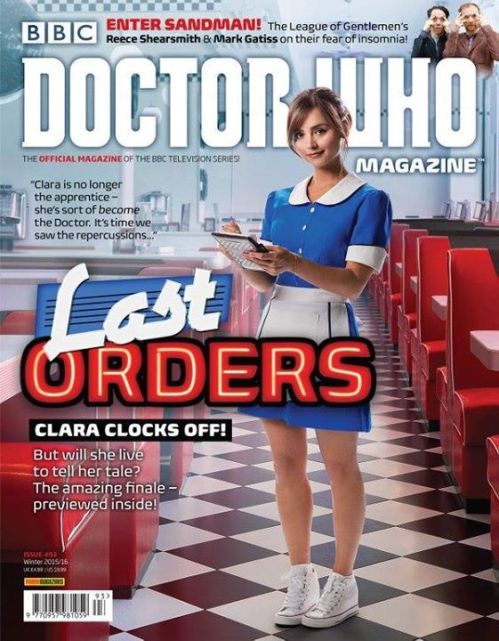
clara-doctor-who


What are LEAs?

In our public school system, we have school districts, with elected officials who are publicly accountable. And we have state education departments, with an elected school superintendent who is publicly accountable. Money that goes to these entities is, at least in theory, transparently spent.

But there’s this other thing we don’t hear too much about. It’s kind of in between the school district and the state. It’s a “local education agency” or LEA. Here are two examples.

The Puget Sound Educational Service District includes King and Pierce Counties, plus Bainbridge Island.

Educational Service District 112 includes counties in southwest Washington.

According to ESD 112, State lawmakers created ESDs in 1969 for these purposes:

  1. To help districts pool their resources to maximize education dollars and realize cost savings;
  2. To create equal educational opportunities for all children of Washington, whether they live in districts large or small, rich or poor, urban or rural.
  3. To bring greater efficiency to school district operations through creative program development and partnerships

So it sounds like they do some pretty awesome work.

But there are some things I wonder about. I checked out ESD 112 because a Seattle Public Schools “Friday Memo” referred to them as a source of information for how to align curriculum to the Common Core, while the district was in the process of creating a “scope and sequence” document. Here’s what the memo said:

It is our goal that whatever math assessments are used in Seattle Public Schools that they provide insight for teachers into how well their students are progressing toward learning the key work of the grade. To define the key work of each grade, the central math program is using guidance from OSPI on the major focus of the grade and guidance from the Common Core State Standards on fluencies at each grade.

Here are the links to these major emphases from OSPI: http://web3.esd112.org/docs/default-source/smerc/ospi-ccss-major-focus-k-2.pdf?sfvrsn=0

http://web3.esd112.org/docs/default-source/smerc/ospi-ccss-major-focus-3-5.pdf?sfvrsn=0

http://web3.esd112.org/docs/default-source/smerc/ospi-ccss-major-focus-6-8.pdf?sfvrsn=0

Here is a link to a document containing the Common Core “Required Fluencies” per course: http://achievethecore.org/content/upload/Focus%20in%20Math_091013_FINAL.pdf

A team of centrally based math curriculum specialists and math teachers from across the district are working diligently this spring to be sure that the math Scope and Sequence is aligned to these major emphases. The central math team will then align mClass Beacon assessments to the Scope and Sequence and therefore to the key learning for each grade.

I find it really depressing that the school district decided to mandate this “Scope and Sequence” before the assessments were finished and without having the least idea what curriculum would be used, but that’s not what I got curious about.

I got curious about what this “ESD112.org” thing might be and why a school district memo would say it was OSPI (the state department of education). So that’s why I started looking at it.

What I don’t like is that it is a public/private hybrid. I am opposed to school privatization, and by that I don’t mean charter schools, I mean a collection of practices that are intended to remake our schools into an image of the “free market.” There’s a really thorough treatment of what that means and why it’s a problem in the document “Hidden Privatisation in Public Education” from the Education International 5th World Congress, 2007.

I’m not opposed to privatization in a knee-jerk fashion. I really like the thought that the League of Women Voters has put into its position paper on privatization. They suggest:

The League believes that some government provided services could be delivered more efficiently by private entities; however, privatization is not appropriate in all circumstances. . . The decision to privatize a public service should be made after an informed, transparent planning process and thorough analysis of the implications of privatizing service delivery.

They go on to list a number of specific criteria that should be followed. Check it out. Good stuff!

Going back to ESD 112, the reason I would say it’s a public/private hybrid is the amount of money that seems to be coming from private grants. That money always comes with strings. And then there’s the stated philosophy:

In addition to acting as a liaison between local districts and the State Office of the Superintendent of Public Instruction to deliver programs mandated by the state, Washington’s ESDs are public entities, which operate in a highly entrepreneurial fashion. We blend the benevolence of the public sector with the spirit and ingenuity of the private sector.

Not necessarily bad, but worth keeping an eye on.