Category Archives: books, movies, tv, music

A book, a movie, a show, a song. Was it amazing? Fun? Did I hate it? Am I now thinking deep thoughts about it? Come along for the ride.

Hmm, something’s missing here . . .

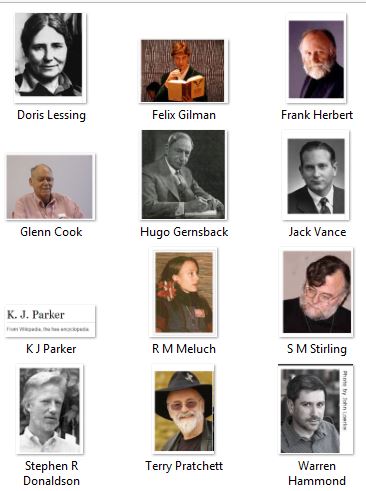
I was at the library today browsing the science fiction / fantasy section. I noticed that somebody had put tags under books of note, giving a “teaser” sentence or two. But something seemed to be missing. I googled the authors’ names, snipped the first photos I could find for each author, and collected them in this image. I have two questions here: 

1) What is missing; and 

2) How would somebody go about bringing this to a library’s attention? 

(One of the authors is not pictured because they use a pseudonym.) 

authors whose books are tagged

Last night’s reading by Charlie Jane Anders

Wow!

Every year, the Clarion West writing workshop hosts six readings, one per week for the duration of the workshop. I attend as many as I can manage. My mom is in town, so I asked her to come along. In the car, she asked the entirely reasonable question, “Who’s reading?”

The week was especially busy so I hadn’t actually checked. I only knew that I’ve liked every single Clarion West reading I’ve gone to. So I shrugged and said, “I don’t know!”

I hit the bathroom on my way in, and was really surprised to see a woman in a TARDIS dress. Clearly, this was someone who was at least as much of a Doctor Who fan as me. I gasped or made some kind of squee noise — I don’t remember which — and she looked really taken aback, and I realized I had just been terribly gauche, so I said, “I love your TARDIS!!!”

And she said, “Oh, thanks. Are you coming to the reading?” Which of course I was. I had a sneaking suspicion she was the person reading . . . which of course she was.

She was pretty amazing. Her story was hilarious, a post-apocalyptic comedy with a theater critic as the “genie in the bottle” ready to grant three wishes. But her delivery was fantastic as well. And she radiated curiosity and energy. I think I know what the term “reader crush” means now.

Per the flow chart on her website (http://charliejane.com/) I see that she does podcasts, which means that I really and truly need to figure out how to make podcasts work on my Ipod. (Been listening to them on my Kindle, which is just . . . ridiculous.)

I’ll also have to keep my eye out for the publication of her story. She read the first half, leaving the fate of the postapocalyptic world in the hands of a failed screenwriter. Talk about cliffhangers!

– Kristin

Ophelia, misread

Ophelia’s fate in Hamlet, one of my favorite Shakespeare plays, bothers me. A whole lot. So I’ve read and reread the play, and watched it and re-watched it. My conclusion: a whole lot of really smart people have missed some important aspects in her characterization.

I can’t say I understand her any better than anybody else. But I don’t understand her any worse, either. I notice things. I ask questions.

For a long time, scholars saw her as a virtuous woman cruelly wronged and driven to madness. That’s certainly the version we got in high school, where all the lewd comments and innuendo stay hidden. But that was just an interpretation based on our cultural prudishness. Modern interpretations and performances make the innuendo quite clear, from the very beginning, when Laertes points out that Hamlet has offered her “private audiences,” to the end, when she uses folk songs to reveal to the king and queen that she lost her virginity to Hamlet. And if that’s not enough, she responds teasingly to Hamlet’s lewd banter when they watch the play. (Why she does that after he’s already scorned him, I don’t understand.)

With that new understanding of Ophelia comes a second vision: a poor maiden tricked by Hamlet into losing her virginity, who then descends into a sad madness and commits suicide.

But there’s something else going on as well. You know how Hamlet’s madness is always in question? At times, he uses it to conceal treasonous speech. The other characters make this clear when they say things like, “Though this be madness, yet there is method in’t.” He also uses it politically, to undermine the king’s authority as part of a revenge plot.

Ophelia does the same thing. She’s one of the four characters out for revenge against a murdered father: young Fortinbras, whose father was killed by Hamlet’s; Hamlet, whose father was killed by his uncle; Laertes, whose father was killed by Hamlet; and Ophelia, whose father was also killed by Hamlet and his reputation sullied by the king and queen. Her revenge is more circumscribed, because as a woman she could hardly take a rapier and slay anybody. Here’s how she does it: 

1) By using her madness to spread rumors against the king and queen. In Act 4, Scene 5, line 5, a gentleman tells the queen, “She speaks much of her father, says she hears / There’s tricks i’ the’ world, and hems, and beats her heart, / Spurns enviously at straws, speaks things in doubt . . .” Horatio follows up by warning that she might strew “dangerous conjectures in ill-bred minds.”

2) By threatening to set Laertes on the king and queen. In Act 4, Scene 5, line 75, she warns, “My brother will know of it.” And then he shows up — not alone, but backed by an army of commoners who are so fed up with the royalty that they want to install him as king. Dangerous things, words.

3) By using songs about her dead father to spur Laertes to revenge. (Act 4, Scene 5, line 190.)

4) By using flowers to accuse Hamlet, the king, and the queen. Here’s an interesting interpretation, based on the meanings her flowers had in Elizabethan times: “Ophelia’s Flowers and Their Symbolic Meaning” by Katarina Eriksson. “Rue” was used for abortions, so when Ophelia says (to the queen?) “O, you must wear your rue with a difference,” she is implying that the queen’s rue was for adultery, and hers for pregnancy. The columbine she gave out was a symbol for male adultery and foolishness, so she’s insulting the king too — in front of witnesses.

Is Ophelia’s madness partly feigned, like Hamlet’s? I think so.

That’s a third vision of Ophelia: a wronged woman who takes what little power she does have in a patriarchal society and wields it with a vengeance. 

If she has some measure of political cunning later in the play, what about earlier? Maybe so. It’s clear that she understands the ways of the world when, after Laertes lectures her about the dangers of hanging out with Hamlet, she tells him not to be hypocritical the way some pastors are, lecturing her while himself treading the “primrose path of dalliance.”

But perhaps there’s a little more to it. In Act 3, Scene 1, the king orders Ophelia to speak with Hamlet while he and Polonius spy on their conversation. Hamlet is very cruel to her. He asserts that all woman are unfaithful and therefore she is, too — or will be. It’s impossible to know what he’s really thinking. At some point in their conversation, he figures out that he’s being spied on and that Ophelia is being used as a pawn. So he could be faking it, or he could be angry because of the queen, or he could be angry because he believes that Ophelia, like everybody else in Elsinore, is lying for personal gain.

Is she? It’s impossible to say. But let’s think about her financial situation for a minute. As a noblewoman, she is supposed to marry somebody, who will then support her. Hamlet, at first, seems like a possible catch — although, as Laertes points out to her, Hamlet will be expected to make a political marriage instead. But then he goes mad. And he has ruined her reputation. (Polonius heard about the “private audiences” by way of rumor.) If there’s any chance she can get Hamlet back, she’ll probably take it.

And, as it turns out, there is a sort of change. The king and queen would have forbidden the marriage if Hamlet had towed the line and supported their marriage. But in his madness, he’s spreading all kinds of rumors. Who knows what else he’ll do? The king has already tried to bribe Hamlet’s affections by explaining that he is still in line for the throne. (Act 1, Scene 2, line 113.) If he could just get Hamlet married off, he’d have to behave himself. Unless Ophelia is a fool, she’d know all that when she obeys the king’s orders to be a political pawn.

So there is, possibly, a fourth vision of Ophelia: as a Jane Austen hopeful, who understands her financial situation and takes steps to improve it through marriage.

Which of these visions of Ophelia is the true one? Who knows. You’d really have to be an Elizabethan, watching the play, to understand all the political intrigues and innuendo — and even then, her character might be ambiguous. Maybe it isn’t possible to do anything other than misread Ophelia. 

Still, I have to say, I like some of the readings more than others. I like the readings where Ophelia has power. And the ones where she connives politically, instead of being a passive victim destroyed by her own sexuality. Maybe, after time and reflection, I’ll decide that these possible readings redeem the play for me.

In the meantime, off to something more fun. Measure for Measure, here I come.

Scrambled Hamlet

Oh, Shakespeare, Shakespeare,
With a play so fine, 
Wherefore dids’t thou make of Hamlet
Such a misogyne?


In plain speech: Hamlet is my favorite Shakespeare play, but the misogyny rankles. It’s true that Hamlet’s scornful judgement falls on men and women alike, and it’s true that Shakespeare is quite clear on the sexual double standard between men and women, but at the same time, there’s way too much “Frailty, they name is woman.” I wish the play did more to redeem both Ophelia and the queen.

In any case, the play can perhaps be improved (or utterly destroyed) by a bit of reshuffling. With no further ado . . .

Ophelia’s conversation with Hamlet

(In which Hamlet sensibly takes accountability for his own actions.)

OPHELIA

My lord, I have rememberances of yours

That I have longed long to redeliver.

I pray you now receive them.

Take these again, for to the noble mind

Rich gifts wax poor when givers prove unkind.

Take them, my lord.

HAMLET

I did love you once.

OPHELIA

Indeed, my lord, you made me believe so.

HAMLET

You should not have believed me, for virtue cannot so inoculate our old stock but we shall relish of it. We are arrant knaves all; believe none of us. Go thy ways to a nunnery.

Hamlet’s conversation with the king and queen

(In which Hamlet decides to stay out of the whole affair, or maybe leaves Elsinore plotting a coup.)

KING

For your intent in going back to school in Wittenberg

It is most retrograde to our desire,

And we beseech you, bend you to remain

Here in the cheer and comfort of our eye

Our chiefest courtier, cousin, and our son.

HAMLET

Denmark’s a prison.

QUEEN

Let not thy mother lose her prayers, Hamlet.

I pray thee, stay not with us. Go to Wittenberg.

HAMLET

I shall in all my best obey you, madam.

Opehlia’s conversation with the king and queen

(In which the king and queen hold Hamlet accountable for his behavior toward Ophelia.)

OPHELIA

By Gis and by Saint Charity,

Alack and fie for shame,

Young men will do ‘t, if they come to ‘t;

By Cock, they are to blame.

Quoth she “Before you tumbled me,

You promised me to wed.”

He answers:

“So would I ‘a done, by yonder sun, An thou hadst not come to my bed.”

QUEEN

Alas, sweet lady, what imports this song?

OPHELIA

He hath, my lady, of late made many tenders

Of his affection to me.

POLONIUS

‘Tis most true,

And he beseeched me to entreat your Majesties

To hear and see the matter.

QUEEN

And for your part, Ophelia, I do wish

That your good beauties be the happy cause

Of Hamlet’s wildness,

and will bring him to his wonted way again.

OPHELIA

Madam, I wish it may.

Laertes’ conversation with Ophelia

(In which Ophelia dodges the whole affair in a clever role reversal, leaving the rest of Elsinore to its fate.)

OPHELIA

My necessaries are embarked. Farewell.

And, brother, as the winds give benefit

And convey is assistant, do not sleep,

But let me hear from you.

LAERTES

Do you doubt that?

OPHELIA

For Hamlet, and the trifling of his favor,

Hold it a a fashion and a toy in blood,

A violet in the youth of primy nature,

Forward, not permanent, sweet, not lasting,

The perfume and suppliance of a minute,

No more.

LAERTES

No more but so?

OPHELIA

Think it no more.


Hamlet, a universal story???

I’m still digesting the “Inclusive Reviewing” trio of articles that ran on Strange Horizons on March 24th. Once again, they are:

In the third, Samuel R. Delany mentioned a text I’d never read before, Shakespeare in the Bush. Delany wrote:

I would hope here, however, all of us have read anthropologist Laura Bohanan’s essay “Shakespeare in the Bush,” which is her account of several West African tribal elders critiquing—and correcting—her account of Hamlet over a rainy summer. It’s widely available on the Internet and very funny. It’s insight grows out of our ethnocentric cultural relativism that lets most readers see what we become as soon as we attempt to interpret works from any other culture—even works from different parts of our own. Regularly I have used it as a teaching text, and my graduate students who are unfamiliar with it up till then often take it on for use in their own classes.

In this text, an anthropologist begins with the ethnocentric assumption that the story of Hamlet would be universal, and that despite minor cultural differences, she could tell it and have its essence understood. Here’s where she started:

I protested that human nature is pretty much the same the whole world over; at least the general plot and motivation of the greater tragedies would always be clear—everywhere—although some details of custom might have to be explained and difficulties of translation might produce other slight changes. To end an argument we could not conclude, my friend gave me a copy of Hamlet to study in the African bush: it would, he hoped, lift my mind above its primitive surroundings, and possibly I might, by prolonged meditation, achieve the grace of correct interpretation.

The rest of the story proves her to be massively wrong — and hilariously so.

But I was amused by the very first assumption: that the plot and motivation of great tragedies like Hamlet are clear even to us.

Hamlet is completely mystifying!!!

First, it isn’t possible to say definitively whether Hamlet was insane, or simply a brilliant actor.

Second, so much of the language is inaccessible to us today that we miss key aspects of the play, such as its considerable lewdness.

Third, the world we live in now is nothing like Shakespeare’s England. Politics, money, and love all have different rules. We might think we know what those rules are, but all we’re really doing is taking our current morals and ethics and applying them to a past that used different ones.

I love Hamlet (despite Ophelia’s sucky fate). It’s my favorite Shakespeare play, even more so than his fabulous comedies. It’s partly because I watched the Mel Gibson version in 1990, and Mel Gibson was hot. It’s also partly because insanity fascinates me. It’s also because every time I watch it, the story is different.

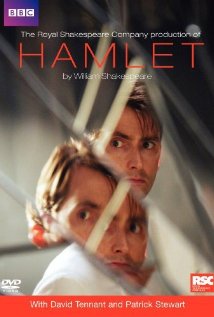
The Mel Gibson version was especially exciting at the time, because it reinterpreted the character. So imagine my delight when the Royal Shakespeare Company came out with a version of Hamlet in 2009 starring the guy who played the Doctor in Doctor Who. David Tennant is hot. I was expecting stage magic. I was expecting it to be as fun as Mel Gibson was to my twenty-year-old self, because obviously, from my recollection, Mel Gibson must have played the definitive Hamlet.

Stage magic I got, but this Hamlet was a different guy. Not at all romantic. The story was a different story altogether. There are only twenty years between Mel Gibson and David Tennant, but our society has changed considerably, and so has Hamlet. All the pompous earnestness is out, and all the sexuality is in. For instance, the fair Ophelia (Mariah Gail) holds up a pack of condoms as she complains to Laertes about the unfairness of the sexual double standard.

As for Hamlet’s righteous anger at his mother for marrying his uncle? It goes from justified to creepy in the flash of an eye. Here are two short youtube videos, showing Mel Gibson and David Tennant, respectively.

“A Bloody Deed,” with Mel Gibson.

“A Bloody Deed,” with David Tennant. TRIGGER WARNING.

Hamlet is not a universal story. But it is, perhaps, a mirror — an opening for us to view our own ethnocentric assumptions.

Hamlet

Signal-boost on Inclusive Book Reviewing

Strange Horizons magazine ran not one but three articles on inclusive reviewing of books. I tried to read and digest them all, but it feels rather like a boa constrictor eating a mouse whole. (We once fostered a boa constrictor who did that.)

I have some thinky thoughts about these articles but nothing fleshed out enough to make into a proper blog post. In the meantime, all these things are worth reading. Plus, Shakespeare in the Bush.

Anyhow, I’ll keep at it.

On reading three books at once

I’m in the middle of three books. This is kind of a problem, actually, because when I read books like that I have trouble finishing them, which would be a shame, because they are all wonderful.

Orientation by Daniel Orozco

Everybody who has ever had a job in an office needs to read the title story. Here’s a link! I just finished the second story, which is sad. I’m not prepared for sad right now, which is why I picked up . . .

Creating a Life by Corbin Lewars

Wit, comedy, and heartwrenching honesty. I first read Corbin Lewars’ work when she was putting out the Reality Mom zine. I found it on the newsstand at my local bookstore and fell in love because it exactly described what I was going through with my own kids, who were the same age. What it’s like: your brain takes a bit of a vacation, and you have to sell your angel wings to the pawn shop. In Reality Mom, she shamelessly details all her mistakes, and nobody else has ever told the story of early motherhood with quite the same honesty and humor! Well, Creating a Life is the story of how she came to be a mom in the first place. Just started it, and am much enjoying.

 But then I went to a reading and heard Eileen Gunn read about Love Sasquatches in . . .

Questionable Practices by Eileen Gunn

From the blurb:

Good intentions aren’t everything. Sometimes things don’t quite go the way you planned. And sometimes you don’t plan. . . .

The Love Sasquatch was a hoot, and the ending (which she didn’t get to in the reading) was even better.

I just finished the story about Christmas and the elves, and I’m going — wait, what? It’s the kind of story you keep on thinking about and thinking about.

Oh yes, and the Spock and Kirk one, oh my . . .

Ancient Sumer and the Stars

I’m researching Sumer for my next writing project, and I just came across a fascinating and highly problematic book, The Shiny Herd: Ancient Secrets Hidden in the Sky by Charles M. Houck. Here’s my Goodreads review:

I gave this book a low rating because it shamelessly mixes religion, history, and science, which makes it impossible to tell fact from belief. But I’m going to recommend it for three audiences: 1) people who are into the concept that “Each individual point of consciousness — the self — destines itself to repeat its pilgrimage through this plane of matter until that lesson is learned” and are less concerned about provable facts; 2) people who are interested in ancient astrology and don’t mind doing their own fact-checking; 3) Sci fi authors looking for a story idea. For all that, it’s pretty interesting.

For all its problems, though, this book is totally worth a mention, because it opened my eyes to something that would be completely obvious to anybody who lived in a world without light pollution. Here’s the first part of the cover text:

Long before the Roman Empire, the Egyptians, and even the ancient Akkadians, there existed a society in southern Mesopatamia known as “The Watchers.” Perhaps the greatest legacy left to the world by the Watchers was a teaching tool that drew its lessons from the stars. The Sumerians called this gift from the ancients ‘The Shiny Herd’; in modern times, we refer to it as the Zodiac.

The way the author talks, these Watchers are apparently beings from some higher plane that brought us refinements of civilization and higher truths, etc. etc. If these Watchers existed, though (it’s hard to tell from this book), they could just have been people whose job it was to watch the stars and tell everybody what they meant. Whatever further spiritual meaning there might have been or not been, I would not be qualified to say.

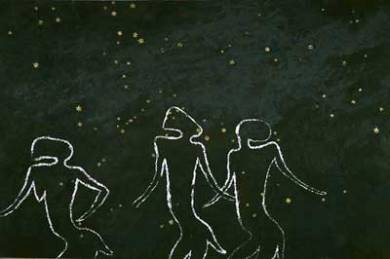
Either way, here’s my realization: the ancient Mesopotamians could go to the movies every night, for free. Without light pollution, stars are much grander and more imposing. And they move, even though it’s slow. Comets and astrological events must have had quite an impact. Furthermore, because it is human nature to assign meaning to what we see, it’s likely they incorporated what they saw into their world view, which means their understanding of the gods.

So I’m off to find out more about astronomy and the zodiac.

Meanwhile, I do hope somebody will write a scifi book about space aliens who bring civilization to Mesopotamia. I would be all over it.

Image

From the online collection African Cosmos: Steller Arts at the African Art Museum

Readers are like cats

I like being a reader and I like being an author and I think the relationship between the two is a little strange.

Readers, like cats, are an ungrateful bunch. We lap up books like a dish of milk, which we fully expect to appear every day. Then we lick our fur self-righteously, as if we have done a good deed by lapping up that milk. We wander off. If we found the milk a bit sour, we wander off in a huff. Occasionally we purr as a note of thanks, but we know it isn’t expected. We pick and choose as we wish.

Authors, meanwhile, put out the milk. We watch the cats and enjoy cuddling up to them, petting them, and hearing them purr. We expect things from our cats, even though we know we won’t get it unless they want to give it.

Cats wander off when they get bored. And so I will wander off from this blog post. Look for a book. I might like it.

Image

My reaction to the Doctor Who Christmas special

The first Doctor Who regeneration I ever saw came as a huge shock. I was watching the Patrick Troughton episodes on Saturday night reruns with my family, and as far as I knew, there was one, and only one, Doctor. I loved him and his panicky nature and his musical voice and his companions Zoe and Jamie. He was like no hero I’d ever seen before, defeating the bad guys with his brain instead of his guns, holding power while still sharing it with his companions, and keeping a delicate balance between authority and childishness. And then the Time Lords got hold of him and changed him into this whole new face and body. He was going to change back, right? Wasn’t he?

I held out hope, and the next week, when the show was on, I grabbed on to the TV for dear life. (I mean literally. It was the only TV in our house, and my dad wanted to watch something on a different channel, and I physically blocked him from doing it. He brought in my mom for backup, and she suggested I videotape it to watch later. So I set up the VCR to record and then kept watching, just in case.) I watched the first twenty minutes of the Jon Pertwee Doctor for hints that he might just change back. And no, he never did.

Unfortunately for me, this was the very first time I had ever videotaped Doctor Who. You know what that meant? I didn’t have any copies of the Patrick Troughton Doctor Who to watch. And no, they didn’t have any DVDs or videotapes or youtube videos. This was the olden times, remember. The kind of times where we had to walk to school uphill both ways. I had to wait until our local PBS station played through all the Doctors and then rolled back through the beginning. I waited patiently but with longing for my first Doctor — the one who, for me, epitomized the character. And yes, absence makes the heart grow stronger.

Unfortunately for me, after the time the PBS station got through its run, it skipped the first two Doctors and went straight back to Jon Pertwee. What was a girl to do? I took extreme measures. To make a long story short, in order to get my hands on those episodes, I had to become the president of the local Doctor Who club for a while. And that led to storing a full-size replica of the TARDIS in our family shed.

So that was my first experience with a Doctor Who regeneration. Traumatic.

I’ve coped well with all the regenerations since then, to the point that I was nearly shouting at the screen for David Tennant to stop crying, for heaven’s sake, and just get on with it! But this Matt Smith regeneration hit me hard. He’s the closest to Patrick Troughton so far, even more than Sylvester McCoy. Also, and some people are going to look at me quite strangely for this, I find him the sexiest. I’ve been mourning him for months. So, knowing that the Christmas special was going to be the regeneration one as well, I knew I wasn’t going to be happy with it.

But when the regeneration actually came around, I was touched. The Doctor got to live his “happily ever after” life and grow old. He took out a Dalek fleet with one part regeneration energy and one part pure, unadulterated joy. And then he went, without fear or sorrow, like the last fizz of sparkly champagne or the last spoonful of a delicious custard. A good send-off for him.

It’s sad, but I am a grown-up now. (Technically.) I can handle it. I have the Verity podcast episode, which I have a feeling I will be listening to more than once. Most importantly, I have the DVDs. Matt Smith is not leaving my house.

Forward to the next Doctor, Peter Capaldi! I was really apprehensive about this one. In the back of my mind, I’m always worried that somebody will come along and destroy the Who-ishness of Doctor Who, as defined by me, with Patrick Troughton as the touchstone. I like my Doctor to save us from the monsters without omnipotence. I like him to panic and get into trouble he doesn’t know how to get out of, and then, despite all the odds, to win. Using jelly babies and jammy dodgers, and with the help of Daleks who make souffles out of imaginary milk and eggs.

Why do I like that so much? Because we’re all in quite a bit of trouble we don’t know how to get out of. Global warming, nuclear meltdowns, austerity, endless war, you name it. I like to imagine someone crashing down from the sky, as confused as we are, to save us from our own monstrosities.

Luckily, the Christmas special got it right. Matt Smith regenerates, Peter Capaldi appears, gives Clara a long intense look that could mean anything (aggression, fascination, confusion, nearsightedness), makes a comment about not liking the color of his kidneys (eww, gross!), and then says,

“Do you happen to know how to fly this thing?”

Sigh of relief! It’s my Doctor, all right.