Category Archives: books, movies, tv, music

A book, a movie, a show, a song. Was it amazing? Fun? Did I hate it? Am I now thinking deep thoughts about it? Come along for the ride.

The Roman Mysteries

As a child, I read voraciously and ate almost anything put in front of me. But my kids are picky. Not sure why. Is it genes? Or did I make some fundamental parenting error? Will they grow out of it?

Anyway, a children’s librarian pointed us toward a series called The Roman Mysteries by Caroline Lawrence. We ended up reading it as a bedtime book, and we’re all the way through book three. It’s good stuff. The main character, Flavia Gemina, solves mysteries in first-century Rome with her friends Jonathan, Nubia, and Lupus. Flavia is a polytheistic Roman from a well-off family, Jonathan is a Christian Jew, Nubia is a slave whose family was killed in the slave raid, and Lupus is a beggar boy who has had his tongue cut out.

As you might imagine, this series does not shy away from the harsh realities of Roman life. In the second book, people die terribly in the Mount Vesuvius eruption. In the third book, which we just finished, children (including our heroes) get kidnapped to be sold into slavery. All the same, it’s not too scary for our eight-year-old. How does Lawrence manage that? I do not know.

I had some reservations during the first two books. Flavia’s dad helped her buy Nubia, to save her from an unspecified worse fate. But the third book was pure win. My daughter and I had some conversations about whether or not Nubia really was a slave, since Flavia was nice to her and didn’t order her around, and whether it would be right for Nubia to run away, if given the chance. Without giving too much of the plot away, it’s fair to say that everybody learned a lesson by the end of the book. And Nubia was freed.

Anyway, definitely worth a look!

Year’s Roundup: 2010

For the past several years, I’ve been contributing to the series Pleasures of Reading, Viewing, and Listening at the Aqueduct Press blog. What’s that? Well, it’s a bunch of blog posts written by Aqueduct Press authors showcasing shows, music, and what-have-you that we enjoyed. Want some fine recommendations from geeky, smart, creative, well-read feminists? Check it out. In the next few days, I’ll be reposting my essays on this blog.

The Pleasures of Reading, Viewing, and Listening in 2010

(originally posted here)

This year, I absorbed a lot of works that upset my understanding of the world around me. If I ever thought my identity – or anything else, for that matter – stood on solid ground, I was mistaken. On what does it rest, then? An abyss, the roll of a die, or a cantering horse? I’m really not sure.

 The Short Wondrous Life of Oscar Wao

by Junot Diaz

http://www.powells.com/biblio/9781594489587

Okay, so the author made up fukú – the deadly curse wrought by the dictator of the Dominican Republic, Rafael Trujillo, after the interference of Europe and America in the country’s affairs. It doesn’t matter if it’s made up, doesn’t matter if you believe in it. It’ll get you just the same.

But on the other hand, there’s also a counterspell: zafa. And Oscar Wao is zafa. He exists in the intersection of oppressions, at home nowhere. He is a Dominican immigrant / refugee in the U.S. and also a nerd and overweight. The Dominicans in his community won’t acknowledge him as their own because he is a nerd. The nerds are embarrassed because he’s overweight. And yet . . . he’s wondrous. In a small but important way, and with geeky panache, he resists a dictatorship.

Oscar Wao suffers. He suffers a lot. But when he takes damage, he takes it Dungeons and Dragons-style, with hit points from the funny-shaped dice. Roll that die. Ooh – maximum hit points.

I can relate.

The Hearts of Horses

by Molly Gloss

http://www.mollygloss.com/hearts.html

Meet Martha Lessen. She’s the Western hero that you’ll never see in a Louis L’Amour novel or a spaghetti Western – she’s unassuming and she doesn’t shoot people. Instead, she rides into town and gets a job “breaking” horses. She’s learned horsebreaking from a “horse whisperer,” winning a horse’s trust rather than forcing it into submission through violence and fear. She fits neither the stereotype of horsebreaker or woman, but she gradually finds a place in the community through her quiet competence and love of horses and people alike.

I read this book after hearing Molly Gloss give a profoundly thought-provoking talk on the myth of “Shane,” the gunslinger who rides into town, saves the townfolk by shooting the bad guys, and rides right out again. That’s our great the Western myth that has done incalculable damage to the world. But, as Gloss argues, it’s a total lie. The true story of the West was about ordinary people homesteading and ranching, making home and community.

Her essay on Shane, “Desperado,” appears in Serving House Journal. (http://servinghousejournal.com/GlossDesperado.aspx)

The Tao Te Ching

by Ursula Le Guin

http://www.ursulakleguin.com/Index-LaoTzu.html

Le Guin spent hours on end reading her father’s copy of the Tao Te Ching, and is grateful to have discovered it so young so she could live with it for her whole life. Most versions are written to emphasize masculinity and authority, but she makes this one “accessible to a present-day, unwise, and perhaps unmale reader . . . listening for a voice that speaks to the soul.” It’s practical and funny, and it will teach you to be like water. I get the biggest kick out of her commentary on Chapter 53, “Insight” – “So much for capitalism.”

Cheek by Jowl

by Ursula Le Guin

http://www.ursulakleguin.com/Index-CheekByJowl.html

This book surveys children’s chapter books with animals as characters. But not the kind of animals who are really humans prowling around in a lion suit – animals who genuinely act and feel like animals. It’s a reminder of what humans have lost as we’ve set ourselves apart from the rest of the natural world. After I put the book down, I couldn’t feel superior any more.

The Man Who Lost His Shadow and Nine Other German Fairy Tales

by Gertrude C. Schwebell

http://openlibrary.org/books/OL5069919M/The_man_who_lost_his_shadow_and_nine_other_German_fairy_tales

There’s nothing like going into a used bookstore and finding a great collection of fairy tales. What happens to a man who sells his shadow? Does a boy with no morals ever get a second chance? These are rich, meaty, and imaginative, and the characters all get their just desserts.

Pippi Longstocking

by Astrid Lindgren

http://www.powells.com/biblio/9780670062768

If my young daughter walks into my neighborhood independent bookstore and heads toward the children’s section, she’ll come across a couple of book spinners. They’ll be irresistible. Who cares that there are other books just a few steps away? Because these spinners have great books for girls, just the kind she craves, the kind you find at the school bookfairs and the Scholastic catalogs, the kind you even get as a prize for completing the library’s summer reading program. Yeah. Disney princesses and Barbie.

But soon . . . maybe one more year . . . she’ll be ready for Pippi. Strong, quick-witted, and owner of a large chest of pirate gold, Pippi could beat Walt Disney with one arm tied behind her back.

And then go back home, gobble up a bag of candy, and fall asleep with her head under a blanket and her feet on the pillow.

Logicomix

by Apostolos Doxiadis, Christos Papadimitriou, and Annie Di Donna

http://www.logicomix.com/en/

This graphic novel tells the story of the search for truth in the foundations of pure logic, intertwining the lives of famous mathematicians with the mathematical quests and political turmoil of the early- to mid-twentieth century.

Logicomix centers on the story of mathematician and philosopher Bertrand Russell. Russell had madness in his genes and parents nobody would talk about. Lacking stable foundations for his identity, he sought them in mathematics. Euclid’s geometry gave him “the promise of certainty in total rationality” and a “dream of a perfect cosmos.”

It was a lovely dream, the Enlightenment belief that mathematics pointed the way to a final and absolute truth.

Only thing was . . . Euclid’s geometry was based on axioms, which were unprovable. Russell set about trying to rectify it, spending ten years trying to prove the obvious, that 1 + 1 = 2.

He failed. And to the shock and horror of not only Russell but also mathematicians everywhere, his failure led to an even crazier mathematician, Goedel, mathematically proving that truth is not provable and that every system based on arithmetic is incomplete.

Who cares? What did this quest do to Russell? His wife? His son? And what does it have to do with World War II, the rise of Hitler, and anti-Semitism?

Usually, after you finish a book, you know more than when you began it. But if you dare to crack open this most remarkable book, you’ll know less.

Catching the Moon

by Myla Goldberg, illustrated by Chris Sheban.

http://www.carolhurst.com/titles/catchingthemoon.html

When an old fisherwoman casts her net all night long, the Man in the Moon is intrigued and decides to pay her a visit. But he accidentally lets in the tides and upsets her tea set.

“My heavens,” cried her guest. “I’m afraid I’ve caused a mess.”

This picture book is short, sweet, and lovely.

One Book that I Didn’t Read Because It Didn’t Exist

by nobody

Wouldn’t it be great if somebody wrote a book about Lily Potter? After all, it was her magic that defeated Voldemort – twice! Were they just magically bestowed on her because she is a Woman and a Mother, or did she get busy sneaking around in the invisibility cloak with her gang, reading ancient magical history, having conversations with Dumbledore about how to keep this Snape guy in line? Yeah. Somebody write that.

The Polymath, Or The Life And Opinions Of Samuel R. Delany, Gentleman

directed by Fred Barney Taylor

http://www.imdb.com/title/tt1014771/

This documentary grabbed my attention off the video shelf with the most basic of hooks – sex. Rent me, it said, and you’ll find out how novelist Samuel Delany managed to have 5,000 partners in his lifetime. Exciting? Extraordinary? No, to listen to him talk, that’s just what life was like for him in the seventies. “You felt like you were having a very ‑ a fairly interesting life,” he says matter‑of‑factly. And just as matter‑of‑factly, he shows us the world we live in, a world we think we know but don’t.

Here’s an excerpt:

“Were the porn theaters romantic? Not at all. But because of the people who used them, they were humane and functional, fulfilling needs that most of our society does not yet know how to acknowledge.

The easy argument already in place to catch up these anecdotes is that social institutions such as the porn movies take up, then, a certain social excess, are even perhaps socially beneficial to some small part of it, a margin outside the margin. But that is the same argument that allows them to be dismissed and physically smashed and flattened. They are relevant only to that margin; no one else cares.

Well, in a democracy, that is not an acceptable argument. People are not excess. It is the same argument that dismisses the needs of blacks, Jews, hispanics, asians, women, gays, the homeless, the poor, the worker, and all other margins, that, taken together ‑ people like you, people like me – are the country’s overwhelming majority ‑ those who, socioeconomically, are simply less powerful.”

I could listen to him for hours on end.

Doctor Who, Seasons 4 and 5

The tenth Doctor, a rather Shane-like figure, blows it toward the end of Season 5, turning into an anti-hero. (I loved this moment so much I wrote an essay on it for Strange Horizons: “The Fall of the Superhero: Doctor Who and the Waters of Mars” at http://strangehorizons.com/2010/20100301/king-a.shtml)

Fortunately, the Doctor can regenerate into a new body and personality – sort of reincarnating without having to go through childhood again. But at the beginning of Season 5, the eleventh Doctor takes a Tigger-ish moment to relive childhood. He turns up at the house of seven-year old Amelia Pond demands an apple, takes a bite, and spits it out. Yogurt, beans, bread and butter all go the same way – thrown or spat. Finally, just as Tigger finds his favorite food in Kanga’s Strengthening Medicine, the Doctor finds fish fingers dipped in custard. Perfect.

The eleventh Doctor’s companion, grown up Amy Pond, is the epitome of what the media requires out of girls and women in twenty-first century. She models empowerment by looking sexy, dressing in miniskirts, and having a voracious sexual appetite. Something about this is worse than, for example, the Wonder Woman who fought bad guys while satisfying the urges of the male gaze. I think it’s because Amy Pond has internalized her stereotype.

Still, Amy Pond has her moments, and my favorite is at the end of “The Beast Below” when she thwarts the Doctor, and forces the Queen of Starship Britain to abdicate.

And a Weekend of Revelations

In February I attended the Fishtrap Winter Gathering in Oregon, with a weekend of talks, readings, and workshops by Molly Gloss, Ursula Le Guin, and Tony Vogt. I wrote a little about it on the Aqueduct Press blog (http://aqueductpress.blogspot.com/2010/02/fishtrap‑winter‑gathering.html) but there’s a lot more to say and think about. I’ve been absorbing what I heard all year long. Just a few takeaways:

  • White people are largely unaware of the ways that white privilege shapes everyone’s day-to-day life. Go to the store and get a box of flesh-covered band-aids. You’ll see.
  • We need to dismantle the myth of Shane.
  • Human beings are animals who use technology. (Does this make my computer part of the natural world?)
  • Technology makes us human, and capitalism makes technology destructive by forcing it to be always bigger and better. (I have to wonder, though: isn’t capitalism just one of our technologies? And what does that mean?)
  • The words that we use matter. It’s time to ditch the war metaphors.
pencil and notebook3


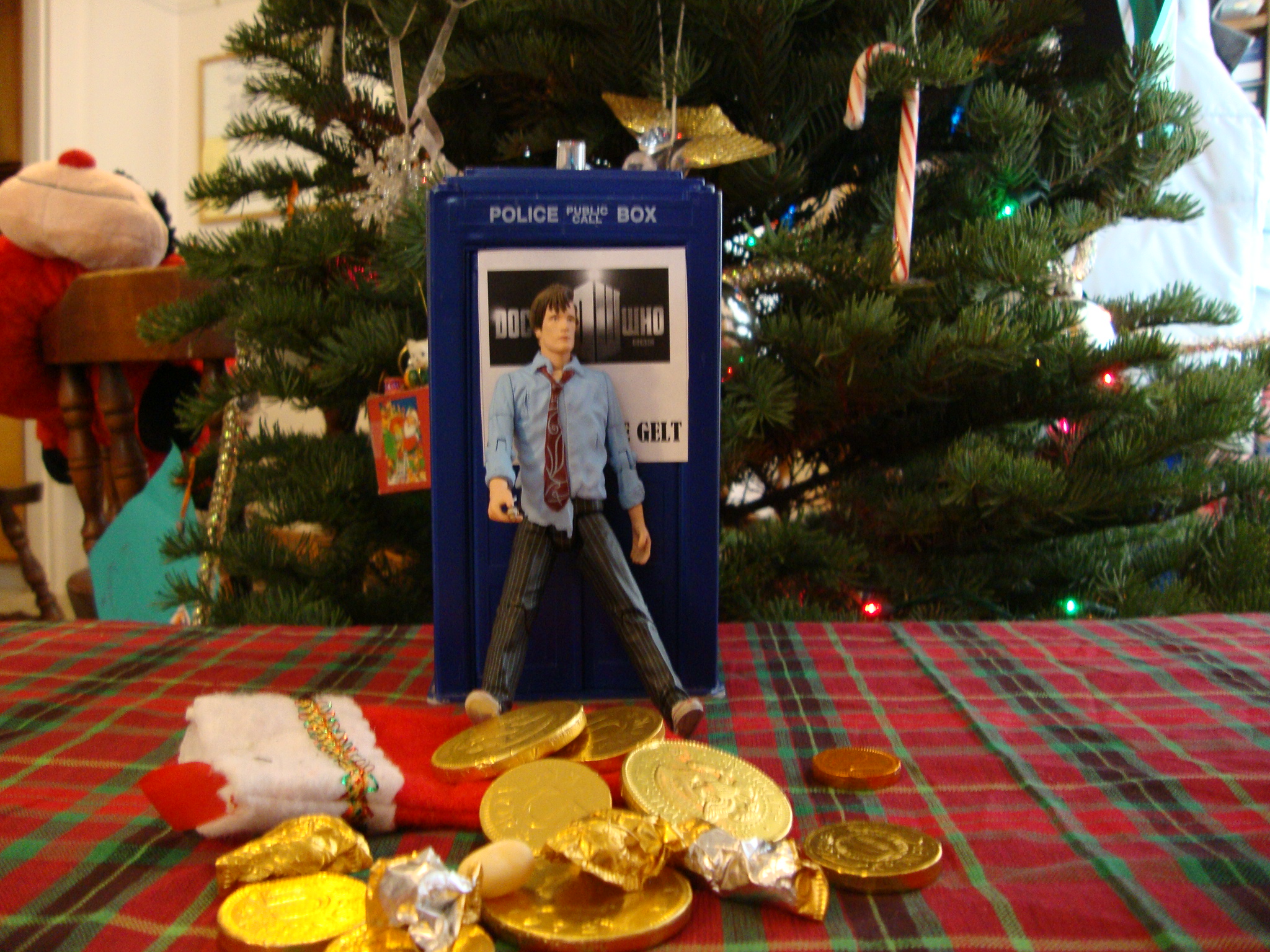
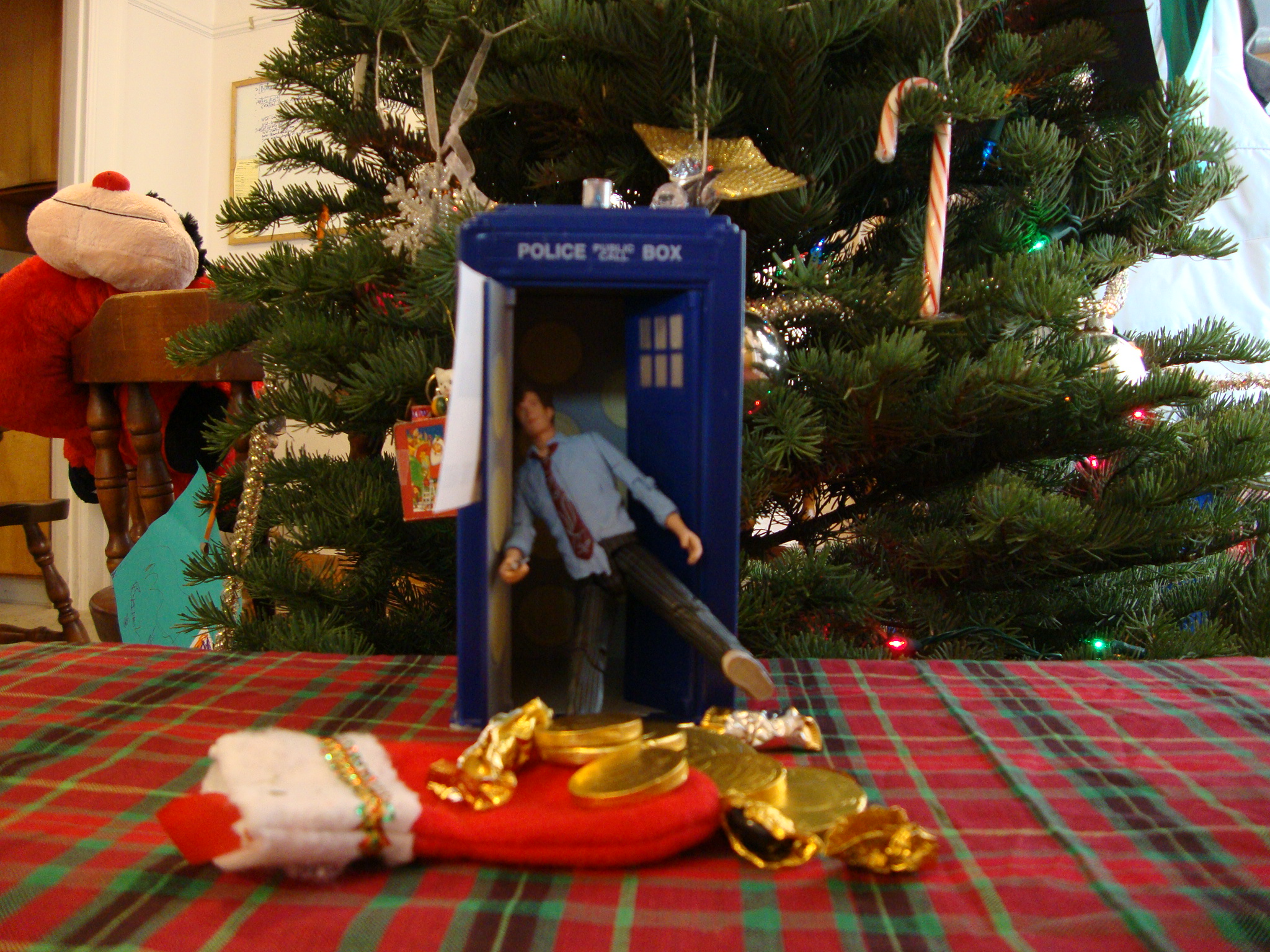
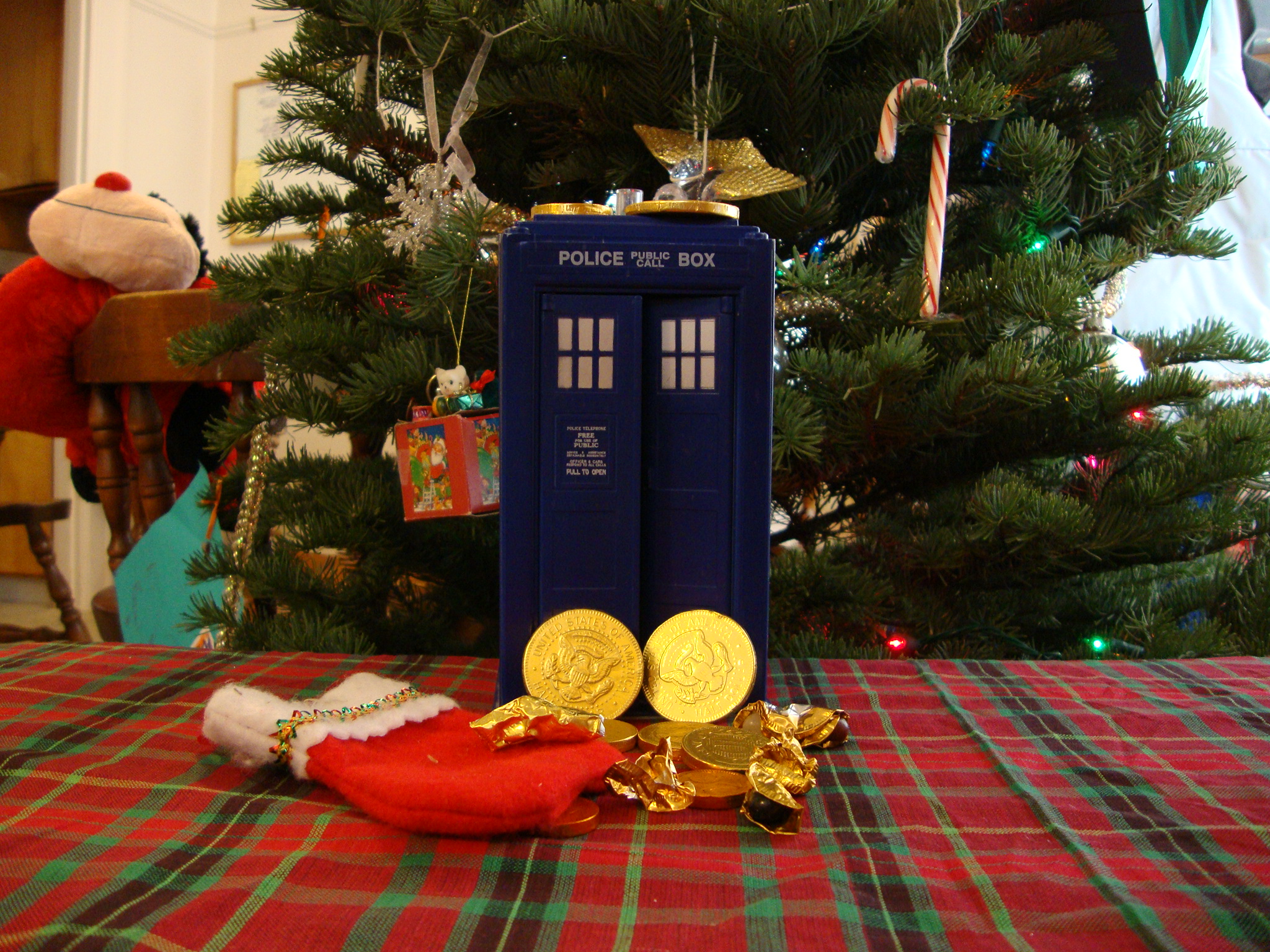
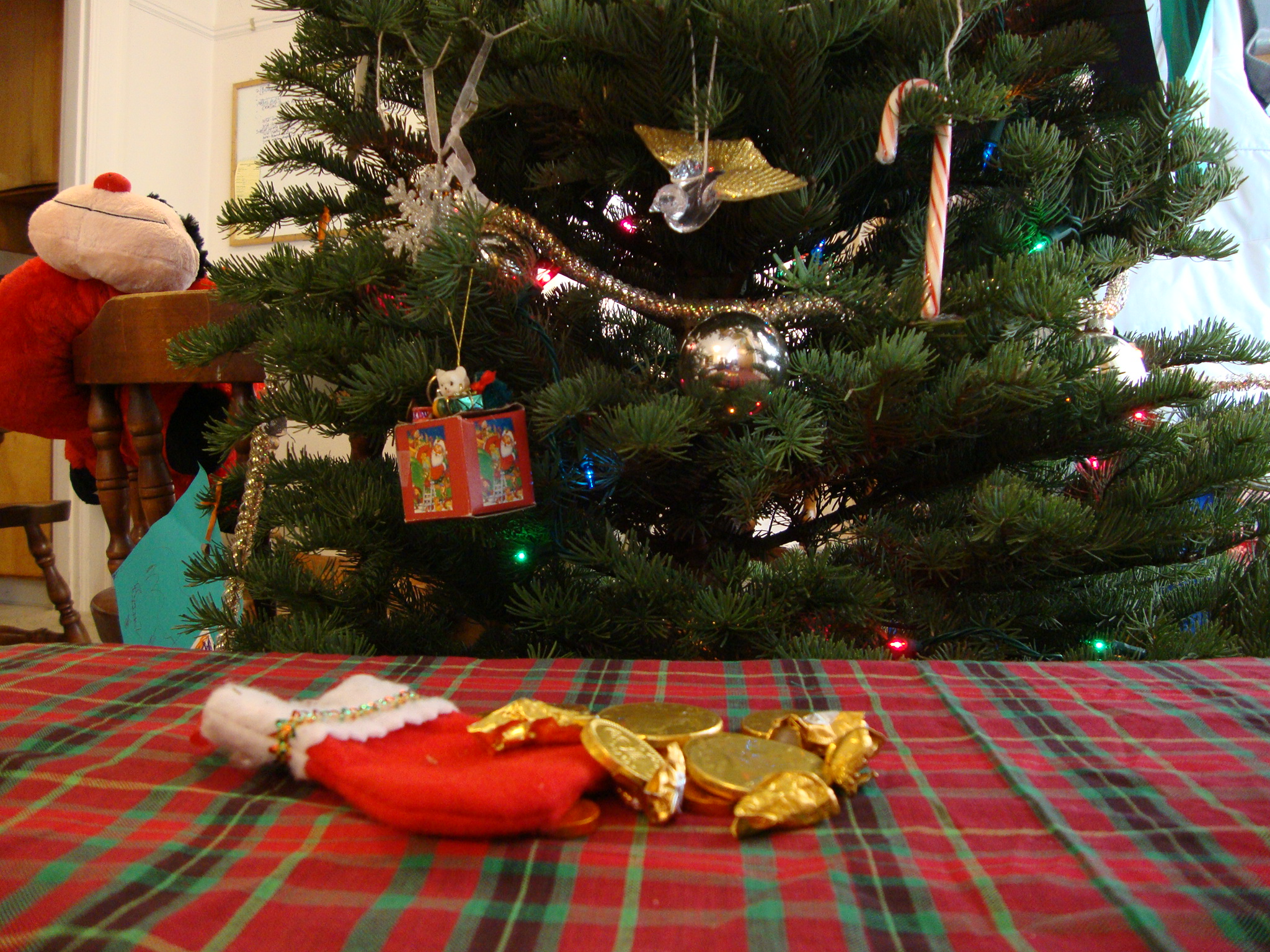
Doctor Who: Attack of the Gelt

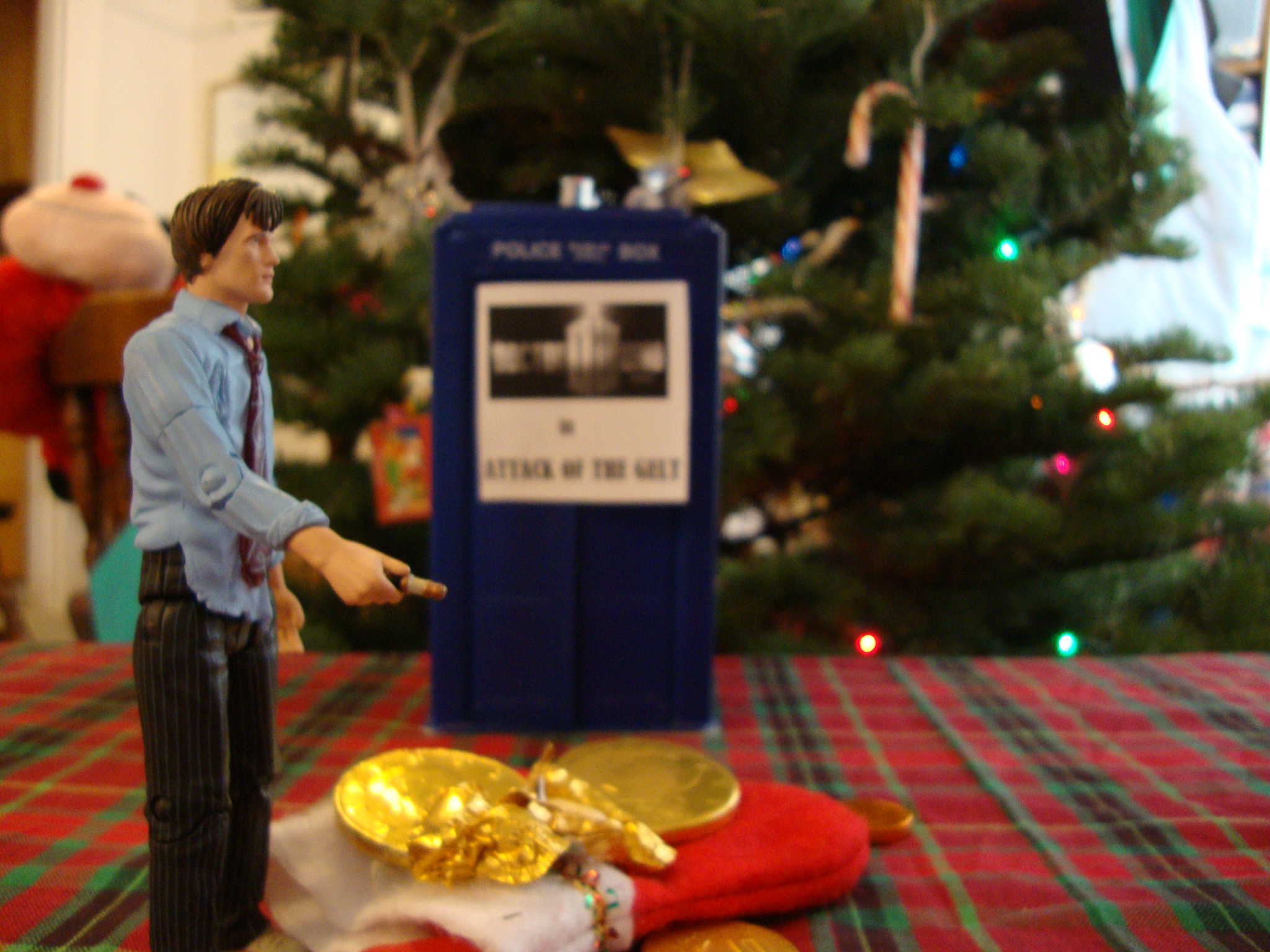
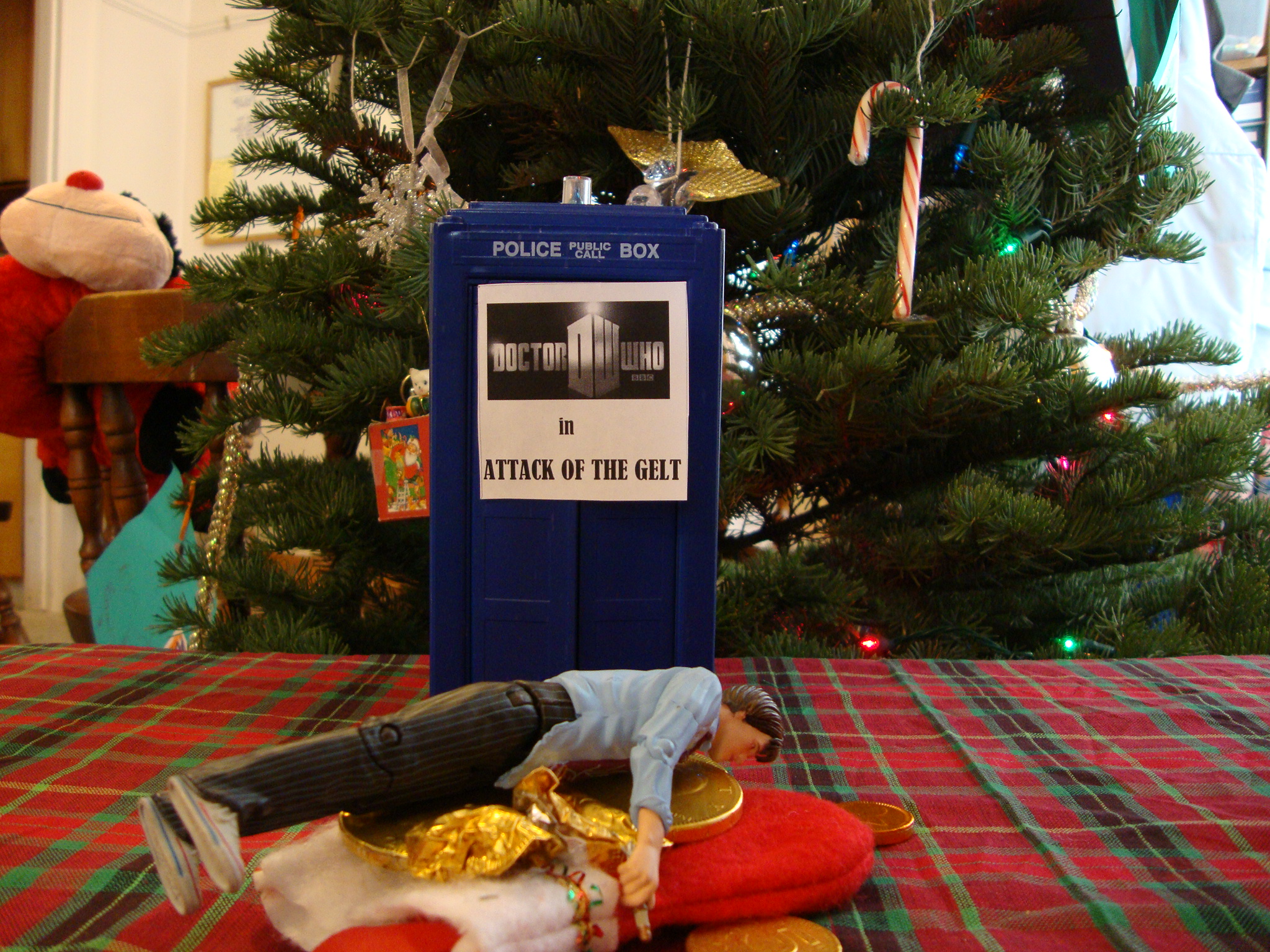
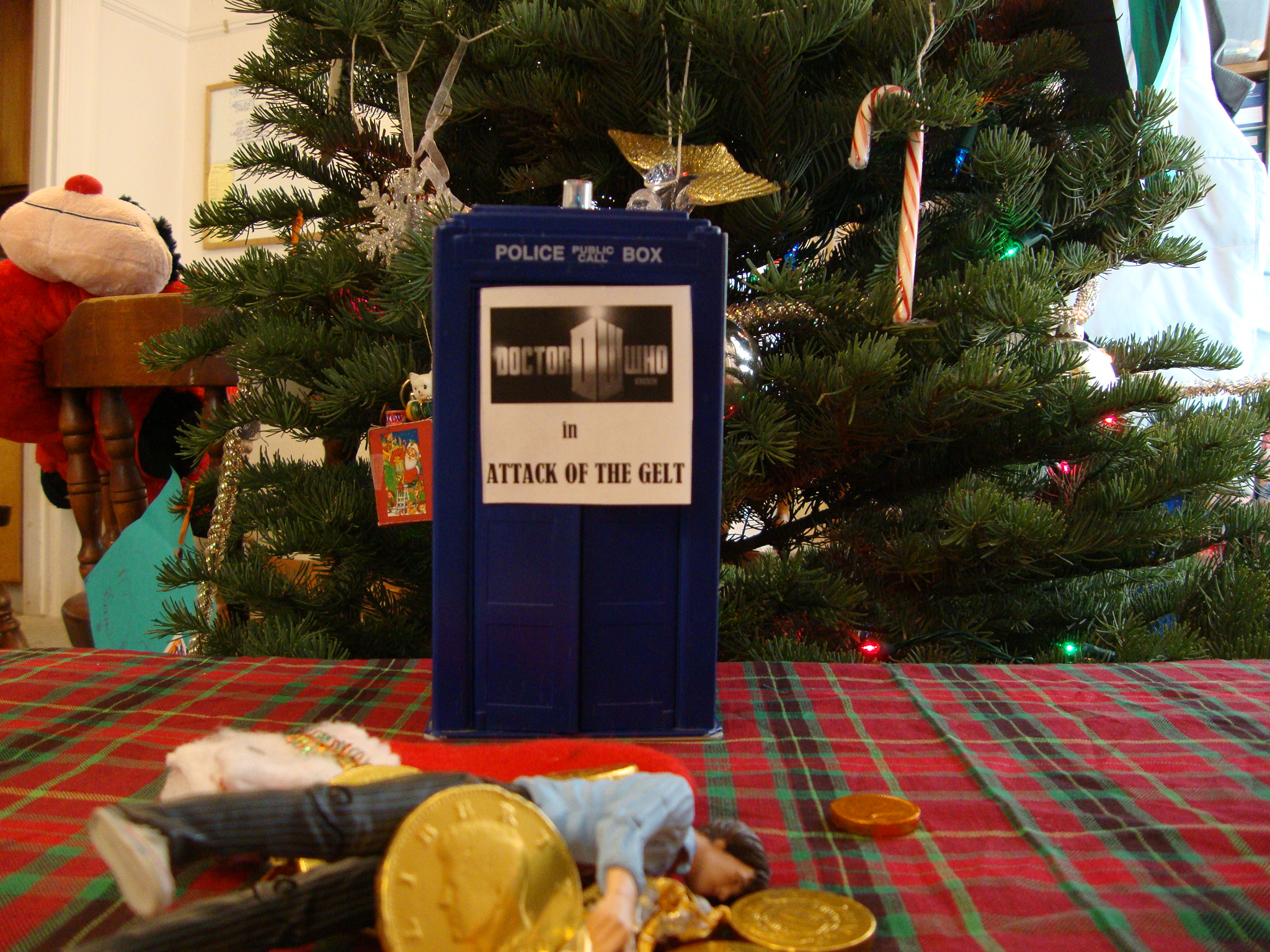
As a little girl, I enjoyed playing with dolls and my wonderful dollhouse my parents built for me when I was six. I still enjoy it, but in much geekier ways.

Here’s a stop motion animation I did a few years back, Doctor Who: Attack of the Gelt. The moment you link to it you’ll get an annoying video ad, but it seems to shut up if you move your mouse over it.

http://kristinking.livejournal.com/21819.html#cutid1

I don’t actually know where on my computer I put that, so I’ll just add a couple images here. Watch out, Doctor. Candy is dangerous!

DSC03115 DSC03116 DSC03119 DSC03122 DSC03136 DSC03140 DSC03142


– Kristin

Year’s Roundup: 2009

For the past several years, I’ve been contributing to the series Pleasures of Reading, Viewing, and Listening at the Aqueduct Press blog. What’s that? Well, it’s a bunch of blog posts written by Aqueduct Press authors showcasing shows, music, and what-have-you that we enjoyed. Want some fine recommendations from geeky, smart, creative, well-read feminists? Check it out. In the next few days, I’ll be reposting my essays.

Due to time constraints, I’m reposting without links or images, so I’ll also add links to the essays on the Aqueduct Press blog. Here’s the one from 2009.

A Sampling from 2009

Here is a small sampling of the books and shows I’ve enjoyed this year.

 Stories that Love Stories

In Ursula Le Guin’s The Telling, after the planet Aka joins the intergalactic community, all storytelling is forbidden. What happened? Suty comes as galactic observer and cultural anthropologist to find out. What follows is a quest of mystery and discovery that ends up on top of snowy mountains in a labyrinth of “books, thousands of books, in leather and cloth and wooden and paper bindings, unbound manuscripts in carved and painted boxes and jeweled caskets, fragments of ancient writing blazing with gold leaf . . .” Suty is trying to understand their banned religion, the Telling, which seems to come out of fragmented bits of unrelated stories, but finally comes to understand that the Telling is irreducible, that it is story itself.

Another book about the love of books is Italo Calvino’s If on a Winter’s Night a Traveler.

Italo Calvino learned about narrative from his experience of Italian cinema, where it was common practice to enter the theater in the middle of the movie, and maybe stick around to catch the beginning or maybe not, seeing the films all out of order. If on a Winter’s Night a Traveler has ten beginnings to novels, interspersed with the reader’s pursuit of the true story and of the woman Ludmilla. It is full of story, tales told in the darkness. As in the Telling, all the fragments of the story come together to make a grand narrative that defies rational explanation.

Doctor Who is a television show that has been an endless source of story since 1963. Like a book, the Doctor’s time machine, the Tardis, is bigger on the inside than the out. It can take you anyplace, to tell any story that can possibly be told. The Doctor defeats villains with his wits or, in the best of the stories (such as Hugo award-winning “The Doctor Dances”), through healing. The episode “Silence in the Library” is set on a planet that is a library, containing all the books that ever existed in the universe. It’s a treasure horde guarded by a dragon, the Vashta Nerada, devourers who live in the shadow – not every shadow, but any shadow. There, the Doctor meets one of the strongest female characters he’s ever encountered: River Song, an archaeologist who has her own adventures, knows his future, and in that future, has learned his true name.

 Stories About Borders and Bridges

A shy girl with glasses and a love of books, I learned in first grade that I didn’t fit. I’m white, and so I can “pass” as not-other, but only by lying, by holding back parts of myself that matter deeply. And so whenever I’ve become part of a community and realized I don’t quite belong, I’ve been quick to blame myself. But how I understand my identity and my part in the world has been changing, and it’s thanks to writers such as bell hooks and Gloria Anzaldúa, women I read back in 1995 and whose thoughts have been growing in my mind all these years. From Gloria Anzaldúa, I learned the concept of the border crosser, the nepantlera, who becomes a bridge between worlds, and the Borderlands, a transformational space that crosses a geographic, metaphorical, or spiritual border.

I recently picked up The Gloria Anzaldua Reader, ed. AnaLouise Keating and I’ve been slowly reabsorbing her ideas. In “La Prieta,” she writes about herself as a border person:

“Think of me as Shiva, a many-armed and -legged body with one foot on brown soil, one on white, one in straight society, one in the gay world, the man’s world, the women’s, one limb in the literary world, another in the working class, the socialist, and the occult worlds. A sort of spider woman hanging by one thin strand of thread.”

Hers was a painful life. As a child she labored as a farm worker near the Mexican border, had an adolescent’s body at the age of three and a hysterectomy at the age of five, and was so sensitive that the pain of others hurt her too. Too white, too brown, too gay . . . But, she asks, why? “Growing up,” she writes, “I felt that I was an alien from another planet dropped on my mother’s lap. But for what purpose?”

She has an answer to that question, which brings me to Adulthood Rites by Octavia Butler. The main character, Akin, is a half-human, half-alien hybrid. He fits in neither place, and he suffers for it. Not only do the human and alien (Oankali) worlds reject him, but he is also torn from an all-important sibling relationship; it’s a loss that can never be repaired.

But why? His suffering makes it possible for him to bridge the gaps between the human and Oankali worlds and bring possible salvation to humanity. The Oankali believe that humans suffer from a deadly genetic contradiction of intelligence plus hierarchy, and that it will necessarily lead the human race to destroy itself. And so, after humanity has all but wiped itself out, the Oankali are not prepared to save them. But at the end of the book, Akin is ready to take on the work, and it’s because he’s traveled between both worlds.

Like Akin and like Gloria Anzaldúa, Octavia Butler suffered greatly for her differences. She was too big, too black, too dyslexic. But for what purpose? Going back to Anzaldúa’s question, perhaps it is to build El Mundo Zurdo (the left-handed world), where “the queer groups, the people that don’t belong anywhere, not in the dominant world nor completely within our respective cultures . . . can live together and transform the planet.”

It is a tragedy that both Gloria Anzaldúa and Octavia Butler died much too soon. And so in the middle of an essay on pleasures I have to add a lament, for the troubles of their lives, for our loss of their imaginings.

 Stories About the Underworld

Perhaps it’s time to make a border crossing from our physical reality to the world of the soul, the underworld. So here are a few underworld stories.

“The Beads of Ku” by Nisi Shawl is an underworld story with humor and charm. The heroine, Fulla Fulla, has a head for business and the ability to move gracefully between our world and the Land of the Dead. When her husband grows jealous of her connection with the underworld, he breaks the rules, and it’s up to her to save him, using her wits and her skill at wrangling to outwit the king of the dead. It’s one of my favorites in her collection Filter House.

Humming The Blues by Cass Daglish is a translation of an underworld story written by the first person ever to sign her name to a text. Her name was Enheduanna, and in 2350 B.C., she wrote a poem about the goddess Ananna, who descended to the underworld and, with the help of her female friends, emerged triumphant. The exact meanings of the cuneiform text are impossible to know now, so Cass Daglish did her best by making a “jazz translation” of the text, delving into different possible meanings and using them to create a work of poetry.

 Stories in Picture and Chapter Books

Cheek by Jowl by Ursula Le Guin is a defense of animals, fantasy, and children’s literature. In “The Critics, the Monsters, and the Fantasists,” she writes, “To throw a book out of serious consideration because it was written for children . . . is in fact a monstrous act of anti-intellectualism. But it happens daily in academia.”

It’s all part of a general disrespect for children in our culture. It took being a mother for me to understand how seriously dysfunctional it is to marginalize and silence children. After all, a child is at the core of every one of us. Until you have paid serious attention to children, you can understand very little of the human soul. Children are alien, other, and so are we. So go ahead, find a children’s book you loved as a child, and enjoy it all over again. You know you want to.

Here are a few children’s books that will cheer you up in the dead of winter.

bell hooks’ Homemade Love is about Girlpie, a well-loved child. She breaks something special, and the break is devastating – has she lost the right to be loved? But her parents help her fix it. This is all about forgiveness and mending ruptures.

Shibumi and the Kitemaker by Mercer Mayer is a beautifully illustrated story about an emporer’s daughter who, on seeing the squalor of the city below her palace, goes aloft on a kite and refuses to come down until the city is as beautiful as the palace. The ending is exactly as ambiguous as it ought to be. In the beginning of the book is a poem about “authority without domination,” which I wrote down on a scrap of paper and then lost on my desk. So you’ll have to get the book if you want to read the poem.

Boo and Baa Get Wet, by Norwegian authors Olaf and Lena Landstrom, is part of a series about siblings named Boo and Baa, who have the innocence of children, the autonomy of adults, and a clearly loving relationship. They have little adventures that go wrong but always end up okay. Ants on a picnic, a cat stuck up in a tree, a cabbage that rolls down a snowy hill. In Boo and Baa Get Wet, they leave their croquet set outside and have to go get it in the middle of a thunderstorm. My favorite part is when there is a flash of lightning and the text says, “Now what? What happened?” In this silence, I can stop in my reading and talk to the children about what is going on. And the series is full of these little moments.

Pippi Longstocking by Astrid Lindgren is the anti-Bartleby. Bartleby’s refusal was passive and led only to his death, but Pippi’s “won’t” just means she has better things to do with her time. Luckily, she can back up her “won’t” with brawn, wits, and a pirate chest full of gold. While Bartleby let the police carry him off, Pippi led hers on a merry chase on her rooftop, letting them down only when they asked nicely. Hurrah, Pippi! Hurrah, humanity!

 And A Movie

My favorite movie from this year is Not One Less, about a thirteen-year-old girl who takes the job as substitute teacher in a remote Chinese province for an entire month. She has no qualifications and seemingly little to teach, but she’s the only one who volunteered. How could she possibly take charge of a class? When one of her students leaves the school to find work in the big city and then gets lost, she knows she has to find him. It’s impossible. But she is stubborn, determined, patient, and strong. Can she bring him back? This is a good counterpoint to the travesty of No Child Left Behind.

pencil and notebook3

Image

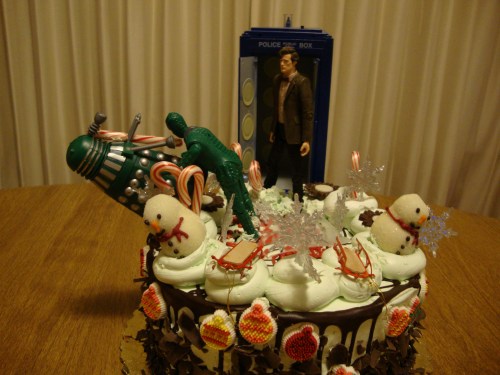
Doctor Who and the Cake Invasion

Doctor Who and the Cake Invasion

Don’t worry, the Ice Warrior is on the good guy side. She’s saving the snowmen by clocking a Dalek with a candy cane. The Doctor, as often happens, is about to take credit for the whole thing.

The book that broke my heart

Image

I read Green Mansions in high school, and it broke my heart. I don’t remember much about it, only Rima, the beautiful wild girl in the trees. I fell completely in love with her.

(Spoilers for the book coming up.)

She appears first in a tree in the jungle, playing a game of hide and seek with the narrator, running easily along branches that are high in the air. I don’t remember what else there was about her, but that alone was enough to capture my heart. People who live in the trees, oh yeah!

Okay, so here’s the spoiler. After I had fallen deeply and madly in love, she was killed by some men. Why? I don’t remember. I have a vague recollection that they set her tree on fire.

I cried for an hour, and even now I can barely pick up the book.

However, I decided the time was right to try the book again. I have a clever plan, the kind of plan that comes from being a writer. I read the book, just until before she gets chased by the men, and I write a happy future for her.

So far, I’ve finished the prologue and the first two chapters. Turns out it’s full of references to “savages.” That’s imperialism for you. Even so, the characters are well drawn, sympathetic, and full of life.

Wish me luck with the rest. But don’t tell me anything whatsoever about the book! I don’t want to know. I just want Rima to live.

Image


Doctor Who Series 7 for the Reluctant

I loved Series 7 of Doctor Who . . . mostly . . . but I have a friend who lost patience with it during the Stephen Moffat years, and hasn’t watched any of Series 7. So I offered to make a list of what I think are the best of the lot. And here it is:

Series 7 for the Reluctant

“The Doctor, the Widow and the Wardrobe” – skip it. I enjoyed it, but then, I am easy to please.

“Asylum of the Daleks” – watch it. Be forewarned that the scriptwriter doesn’t appear to understand marriage. Clara is a fabulous character and the Daleks were well done. It has depth.

“Dinosaurs on a Spaceship” – watch it because it is fun, especially if you like dinosaurs. Bonus points for showing a father/son relationship with Rory and his dad.

“A Town Called Mercy” – skip it. It has a weird analysis of war criminals.

“The Power of Three” – skip it. It is all angsty over the upcoming departure of Amy and Rory, and if you’re already reluctant, you won’t care.

“The Angels Take Manhatten” – skip it unless you really like the creepy Weeping Angels monsters. This episode was strictly to tug at the heartstrings of fans who love Amy and Rory. River Song was brilliant until she called the Doctor a demigod and told Amy not to grow old in front of him.

“The Snowmen” – watch it. The barmaid/governess character is well done, as is the Jenny/Vastra/Strax team that now has its own following of people who want it to be its own TV show.

“The Bells of Saint John” – watch it. Good comedy, social commentary, and the companion character is great.

“The Rings of Akhaten” – skip it. I enjoyed it, but again, I’m easy to please.

“Cold War” – watch it if you were born after 1975. Because you might not have been exposed to much about the Cold War. Otherwise, skip it.

“Hide” – skip it. Fails the Bechdel test even though more than one woman was present, and has annoying romance.

“Journey to the Centre of the TARDIS” – watch it, especially if you like the TARDIS or interesting explorations of time travel.

“The Crimson Horror” – watch it. It has Vastra, Jenny, and Strax, and it has Diana Rigg (from the Avengers) playing a delicious baddie.

“Nightmare in Silver” – watch it. Neil Gaiman wrote the script. The Doctor’s companion, awesomely, gets to do an important job.

“The Name of the Doctor” – skip it. Why? It is the culmination of a couple of mysteries that have been ongoing in Season 7, and if you’re a reluctant viewer, you won’t necessarily . . . care.

Rating the Winners:

Asylum of the Daleks * * * * *

Dinosaurs on a Spaceship * * *

The Snowmen * * *

The Bells of Saint John * * * * *

Cold War * * *

Journey to the Centre of the TARDIS * * * * *

Nightmare in Silver * * * * *

The Crimson Horror * * * *

What if I didn’t like it?

If you watched one of my three-starred choices and didn’t like it, no harm done. But if you watched one of my four-starred choices and didn’t like it, there’s a serious problem here. You know what it is? I’m the wrong reviewer for you. 🙂

screwdriver and book2

Orson Scott Card is creepy – and not in a good way. (Spoiler for The Treasure Box.)

I read every single one of the Orson Scott Card novels I could get my hands on, for years. Some are good, and some are excellent. Ender’s Game was excellent. Now they’re making a movie out of it. Which I will not see. Why? Because he crossed a line.

The first time I noticed this was in the novel Hart’s Hope. The hero, Palicrovol, marries and publicly rapes a twelve-year-old girl. He doesn’t want to, but he has to in order to cement his rule as king. She gets her revenge by making him like it.

At the time I didn’t think too much of it. But then I read “The Treasure Box.”

Spoiler alert for “The Treasure Box” (but don’t worry, because Orson Scott Card spoiled the ending first)

The main character in “The Treasure Box” is seduced by and marries a woman who later turns out to be an evil succubus. We find this out at the very end, and we also find out that she was an eleven or twelve year old girl. At the very end. When it is too late to not read it. And re-interpret all the romance scenes in an icky way.

There’s a message I’m getting here, and it’s icky. It has to do with adults being sexually taken advantage of by children. Hart’s Hope has the rather disgusting idea that rape is more okay if the perpetrator doesn’t enjoy it (what???) and the other that a child can intentionally arouse an adult during an act of rape. Meanwhile, “The Treasure Box” has the adult perpetrator being the victim.

So. Ender’s Game movie. I’m giving it a pass.

A Feminist Take on Doctor Who’s Zoe Heriot

This post is part of a series of feminist takes on Doctor Who companions. I ask these questions: Are they strong? Do they get to be the protagonists? To what extent are they the equal of the Doctor? Which stereotypes do they fit into, and which do they resist?

So far I’ve looked at Amy Pond, River Song, and Clara Oswin Oswald, all characters from New Who. Now it’s time for me to jump back in time to my favorite companion ever: Zoe Heriot.

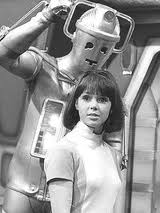
zoe in front of cyberman

If you’re looking for a critique of feminist aspects of her character, you won’t get any here. Somebody else can criticize this or that. Nope, it’s pure appreciation. I adore her. She was the first female companion I’d ever seen, and if it hadn’t been for her, I doubt I’d have even started watching Doctor Who.

Who was Zoe Heriot?

She appeared in Doctor Who alongside Patrick Troughton, the 2nd Doctor, and Frazer Hines, his companion Jamie.  She was one smart girl:

Zoe Heriot is the Wheel’s parapsychology librarian (which means that she’s received brainwashing-like training in logic and memory), an astrophysicist, an astrometricist first class, and a major in pure maths.

(From the TARDIS Data Core wiki entry on “The Wheel in Space.”)

She was emotionally underdeveloped at first. But after she met the Doctor and Jamie, who taught her the power of intuition and instinct, she decided to set out on a journey of personal growth by stowing away on the TARDIS and becoming an Adventure Hero.

She was an Adventure Hero par excellence. Brave, smart, thoughtful, full of initiative, curious, you name it. And she developed emotionally pretty darn fast, building warm relationships with Jamie and the Doctor. She was a bit of a screamer. That’s the 1960s for you. But honestly, faced with the horrors she saw, I’d scream too. And her screaming wasn’t at all out of place: her Doctor was the panickiest Doctor ever.

Zoe was also Jamie’s equal. Jamie was a Highland Scot from the 18th century. He’d left a war for independence to travel in the TARDIS, but he was ready any minute to jump back into the fight. They complemented each other nicely: Jamie fought with his hands, and Zoe with her mind. Both were young and depended on the Doctor at times, but took initiative whenever needed.

She was also a match for the Doctor, intellect-wise. In “The Krotons,” she beat the Doctor on a computer-based test. I think this was my very favorite moment. As a young woman myself, in school, I was so excited to see a woman be smarter than the Doctor. At other times, she conversed with him in scientific gobbledygook — something few of his companions have done since.

Her ending was not ideal. The Time Lords wiped her memory, just as the Tenth Doctor later did to Donna Noble. That was unfair! But at least she got to retain the memory of her first adventure with the Doctor. She resumed her life on the spaceship, and in my mind at least, her character development stuck and she led a full and happy life.

A taste of her character

Here’s a snippet of dialogue in which Zoe interrogates the Doctor:

Zoe: [to the Doctor] How did you pilot the rocket ship? You see, I’ve calculated its original course. It was a surface and supply station for Number Five Station, overdue and presumed lost nine weeks ago. Well the rocket couldn’t have drifted eighty seven million miles off course.
Dr. Who: So what’s your theory?
Zoe: Well, there is a record of the last contract with the Silver Carrier rocket. It had seven million miles to touchdown, and enough fuel for twenty million. Well, it couldn’t have drifted here off course in the time involved. It must have been driven and piloted.
Jamie: Och, you are a right wee space-detective!
Zoe: There’s only one solution. That rocket was re-fuelled in space. – Provided for at least with another twelve fuel rods.
Dr. Who: Well, it is an interesting theory…
Zoe: Oh, it isn’t a theory. You can’t disprove the facts. It’s pure logic.
Dr. Who: Logic, my dear Zoe, merely enables one to be wrong with authority. Supposing there was a faulty automatic pilot?
Zoe: To drive a rocket eighty seven million miles on fuel for twenty million?
Dr. Who: Well, it’s a possibility.
Zoe: That rocket was driven here somehow. I know it was.

Smug, isn’t she? She doesn’t back down if she thinks she’s right.

Oh, did I forget to mention?

Zoe is also a computer programmer. Here she is giving a computer an insoluble problem in ALGOL.

 How about the actress?

The actress who played Zoe, Wendy Padbury, went on to become a theatrical agent. In a bit of a quirk of fate, she was the one who discovered Matt Smith, the actor who plays the current Doctor. She tells the story in this Youtube video. She was also a theatrical agent for other actors who appeared in Doctor Who: Nicholas Courtney, Colin Baker, and Mark Strickson. Small world, eh? I wonder who her other clients were . . .

screwdriver and book2

Fan Reactions — What’s Sacrosanct About Doctor Who?

A friend of mine just complained that the latest Doctor Who episodes, “Journey to the Centre of the TARDIS” and “The Crimson Horror,” put her to sleep. She doesn’t like Clara, she doesn’t like the Matt Smith characterization of the Doctor, she doesn’t like the TARDIS being infinitely big, and she doesn’t like the kiss that the Doctor gave Jenny. It just doesn’t feel like Doctor Who to her any more.

She’s not the only one. A lot of people are unhappy. Here’s are some complaints from the Doctor Who community on LiveJournal. In the post “The contempt of the show-runner” by ed_rex, who wrote: “The whole of Steven Moffat’s Doctor Who has been a long series of insults dressed up as Big Ideas, punctuated by apologies from the likes of Richard Curtis and Neil Gaiman.” Commenters said things like:

  • “Worse, Moffat’s women issues have gone from a ‘hint and a wink’ to f* it, let’s just smear it on the wall. . . . the Doctor is totally acting like a stalker.”
  • “. . . sometimes he [the Doctor] seems like just not a very nice person at all. Very cold and cruel and calculating.”
  • “until recently I’ve viewed the show as being relatively progressive in terms of its view of women. I thought the female characters were strong and empowering . . . I think Clara has a chance at being another strong Companion, but if SM keeps letting his own issues get in the way, then I think the show is going to dive bomb pretty quick.”
  • “a part of Eleven’s personality is a prepubescent boy who has naive sexist views on girls.”
  • “I can’t watch ANY of the Eleventh Doctor without feeling completely sick to my stomach. I’ve been a Whovian since the Tom Baker series and wasn’t sure how I’d react to the the new takes…LOVED it until Moffat took over. He needs to reign in his overblown ego and stop ruining this show”

And here’s something from the post “The Crimson Horror and Sexual Assault” on the blog doctorher.com:

“I think some of us are in mourning.  The Doctor as an asexual character is officially dead. This is not my Doctor.  This is not the Doctor of the last 50 years. . . [this] is the most aggressive and only instance of predatory behavior on the part of the Doctor.”

I’m watching all these comments with great interest because none of the incidents mentioned “break” the Doctor for me, but I too have my breaking point. And it’s been reached at times. Here were my top five moments when something I found sacrosanct was broken.

  1. In “The Two Doctors,” the Doctor killed someone out of revenge / for fun.
  2. In “Mindwarp,” the Doctor betrayed a companion and then she died. We were later told (not shown) that she survived, and that just wasn’t enough for me.
  3. In the 1996 TV movie Doctor Who, the Doctor kissed a woman. I remember sitting on the couch with my friend watching it in great excitement and with high hopes that the movie would revive the series. We both yelled at the screen when that happened, because up until then the Doctor had been portrayed as asexual.
  4. In “Family of Blood,” the Doctor took revenge on four people in rather horrible ways that also made him out to be pretty darn omnipotent.
  5. At the end of “Flesh and Stone,” when the Doctor let Amy kiss him despite a clear power differential and “girl-women weirdness.” 

Why did these things “break” the Doctor for me? Because I started watching in the Patrick Troughton era, and all through the Peter Davison years the Doctor was a good guy, powerful but not a demigod, and he took on the role of mentor/teacher/father figure to women. I identified with the female companions and above all had the sense that they were safe traveling with him. They were safe from the Doctor, and they were safe from the other monsters too. I would have walked into the TARDIS with him in a heartbeat. I wouldn’t do it now.

To me those were some pretty serious lines that were crossed. (All but #3. I would be okay with a kiss between equals.) And yet I keep watching. Why do I keep watching? I guess I still believe in the guy. I guess I still believe that those breakages are the exception, not the rule. I guess that guy the Doctor used to be is still rattling around in my head.

But I am afraid that at some point the show will go too far even for me. That would be a sad day.

Readers, what about you? What do you find sacrosanct about the Doctor?