Category Archives: books, movies, tv, music

A book, a movie, a show, a song. Was it amazing? Fun? Did I hate it? Am I now thinking deep thoughts about it? Come along for the ride.

Update #2 to the Feminist Take on Doctor Who’s Clara Oswin Oswald

For the last few weeks I’ve been doing a feminist take on the character of Clara Oswin Oswald in Doctor Who (here and here). How well does her character measure up to expectations of twenty-first century feminists?

I must admit defeat. Her character is a mystery. She is “the woman twice dead.” The Clara we are seeing now (Modern Clara) is for all intents and purposes a normal young women. However, we’ve met her twice before in other times and places (Dalek Clara and Victorian Clara). Both times, she’s died. If you put all three Claras together, what you get is an incredibly rich characterization. If you take Modern Clara by herself, though, she looks to me like the cardboard cutout of a strong female character. Too clever, too perceptive, and too fearless to be believable as portrayed. (Please don’t misunderstand me. I’m not saying I don’t think a woman could be this clever, perceptive, and fearless. I believed Dalek Clara and Victorian Clara would be. Just not Modern Clara.)

This latest episode, “The Crimson Horror,” didn’t change my impressions of Modern Clara. It was a feminist masterpiece altogether. Bechdel wins all over the place, a fabulous critique of eugenics, a mixed-race lesbian couple, and eight strong female characters all in the space of a forty-eight(?) minute episode. The Doctor isn’t even the focus of the show: it begins with a chambermaid rescuing the Doctor and ends with a mixed-race girl confronting Clara with the results of a remarkable research project. Clara, though, stayed mainly the same.

So I give up. There’s no “Feminist Take” here. Clara’s character is clearly headed in some direction or other. I don’t know what it is. No more updates until I find out.

I do know, though, that this journey of discovery is going to be a lot of fun.

P.S. Update #3, from Series 8, is here


clara with ladder

Doctor Who: Where Should I Start?

So there’s this phenomenon: people are hearing about this Doctor Who thing and wondering where to start. It’s intimidating. The show’s had, what, 700 episodes? There have been 11 characters playing the main part. Should I watch them in order? How ever do you get all the backstory?

That part’s easy. There’s this guy. He has a time machine that also travels in space. He can’t control her. He almost always travels with one or more companions.

That’s all you really need to know.

screwdriver and book2

As for where to start, I recommend the middle. Any episode. The very first episode started in the middle.

Prepare for hokiness, even in the very best episodes, even in the Hugo award-winning ones. It’s supposed to be fun.

How do you know if you’re starting with a good episode? Well . . . maybe you shouldn’t. Maybe you should start with a so-so episode. And if you still like it, mission accomplished!

Update #1 to the Feminist Take on Doctor Who’s Clara Oswin Oswald

Last week I began a feminist take on the character of Clara Oswin Oswald in Doctor Who.  It was necessarily incomplete, because we are missing a great deal of information about the character, for purposes of plot. But I voiced two concerns:

1) She does not seem recognizably human. She doesn’t show the kinds of human emotions or reactions I would expect from anyone, male or female.

2) Clara asks a lot of questions, but they seem like they’re mostly to explore the character of the Doctor.

3) The show isn’t passing the Bechdel test. (See below)

After this latest episode, Journey to the Centre of the TARDIS, I’m going to argue that the show is batting two out of three.

Bad: Clara is still inhuman

Watch this conversation.

Clara says, “I think I’m more scared of you right now than anything else on the TARDIS.” (To give some perspective, she’s just seen her own future possible self as a zombie being horribly burned in a fire.)

The Doctor says something and hugs her.

Clara says, “Okay, I don’t know what this is all about, but the hug is really nice.”

A minute later he is asking her to jump off the edge of a cliff with her.

“Trust me just this one time, please . . .”

She gives him a skeptical look.

“Ready?”

She nods. They jump.

I’m not buying it.

Good: Her character is explored

Clara spends a lot of time in this episode exploring and running around the TARDIS, while the Doctor is not present. She’s got initiative, curiosity, and is overly willing to take risks.

Arguably good: I think it passes the Bechdel test

This deserves a whole blog post, which maybe I’ll do someday, but in short, I think it passes. To pass the Bechdel Test, a movie or show must:

1. Have at least two [named] women in it
2. Who talk to each other
3. About something besides a man

It has two named women, Clara and the TARDIS. Clara talks to the TARDIS about something besides a man. The sticking point, though, is whether they “talk to each other.” The trouble is that the TARDIS is completely silent. A reason for this was given in an earlier episode, “The Doctor’s Wife,” when she entered a human body and spoke — because she has an existence across time, she can’t speak in any one moment. I buy it. She had all sorts of trouble even in a human body, because she kept referring to events that hadn’t happened yet. She has so much intelligence that she can’t be comprehended by regular humans. (For more on this sci fi concept, see the Wikipedia entry on technological singularity.)

Still, I’m going to argue that they do indeed talk to one another. Here’s Clara’s side of the conversation, followed by my translation of the TARDIS’ side.

Clara’s side of the conversation

Clara says, “It’s an appliance. It does a job.” (She knows full well that this is not true, because the two of them have already spoken in the previous episode. She is taunting the TARDIS.)

Later, as she is running along the corridors alone, she sees a spectacular telescope room and a fabulous swimming pool. Then she sees a library and says,

“Now, that’s just showing off.”

She opens a book and learns something about the Doctor, and a bottle tips over, leaking out more information.

Later she is routed into the console room, where she says, “Oh, thank you thank you thank you thank you thank you thank you,” and kisses the console.

But there’s no door, so she says, “No — the door, where’s the door gone, no. You can’t do this! Oh, why are you doing this?”

The TARDIS’s side of the conversation?

I would argue that the telescope, swimming pool, library, book, and bottle all qualify as conversation. It has already been established that the TARDIS is manipulating her architecture on purpose. And it has already been established that she’s a bit snarky with Clara.

So here is my translation:

“It’s an appliance. It does a job,” says Clara.

“Whatever,” says the TARDIS. “Look, I have a telescope room. Isn’t it awesome? You could use it if you wanted. One of the Doctor’s other stray pets liked it. Oh yes, and a swimming pool.”

(Later on)

“And yep, my library is at its architectural finest,” says the TARDIS.

“You’re just showing off,” says Clara.

“Clara, did you know that I have a history? It’s true. I used to have a lot of sister TARDISes, and they got wiped out. So I’ll tell you a big, big secret. Then you’re just going to forget it, which makes it kind of a funny joke. Still, you will try to remember, won’t you?”

(Later on)

“Clara, this concludes my rather hasty tour. Into the console room! You’ll be safe there.”

“Oh, thank you thank you thank you thank you thank you thank you,” says Clara, and kisses the console.

“You’re very welcome. Do you still think I’m an appliance?”

“No — the door, where’s the door gone, no!”

“This isn’t the console room, dear. This is just a copy, and I brought you here to keep you safe. Didn’t you notice my color coding? Red for dangerous, blue for safe.”

“You can’t do this!”

“That statement is clearly and obviously incorrect.”

“Oh, why are you doing this?”

“Well, DUH, to save your life. Please stay put, Clara. I know that in a few moments you’ll be running out the door only to be pursued by a horrific possible future, but really, could you please stay put? Oh, HUMANS.”

P.S.

Later updates to my feminist take on Clara are here and here.

The Doctor is scary (spoilers for Journey to the Centre of the TARDIS)

I love Doctor Who. I love the Doctor. If he was real I would want to hop into the TARDIS and go have wild adventures with him. I have always wanted to have a time machine, since I was a little girl.

But if he were to show up on my doorstep with his silly grin and his wonderfully ridiculous time machine, I would say no. That’s because the Doctor is scary.

In my opinion, he is genuinely a “good guy.” He’s wonderful. And he’s terrible. 

Most of the companions he travels with don’t see this. They only see him in his role of fun-loving guy, protector of the universe, and pinnacle of hotness. Many fans don’t see this – and I’m thinking particularly about fans who get excited about romances between the Doctor and his companions. But be careful, women. Look before you leap.

So here come spoilers for “Journey to the Centre of the TARDIS.” This is where you want to stop reading if you haven’t seen it. Really, truly, stop reading. It will destroy the surprise.

Catastrophe hits the TARDIS. She explodes and dies, with the Doctor, his companion Clara, and three men from a salvage ship. The future leaks through, including horrific time zombies. Three men die. This is seriously not good.

But the Doctor, who is our hero and protector, manages to save the day. He saves the life of Clara, the TARDIS, and the three men from the salvage ship. It’s fabulous. There’s kissing and hugging. You hear the standard “Doctor Who magic is working” music and you just can’t help being happy because he’s done it again, yes, done it again.

This is a wonderful, magical moment. The Doctor is a hero. He is a good guy. I love him to pieces.

And . . . something else.

Okay, if you are still reading so far and have ignored my spoiler warnings, this is where I spill the beans.

How does he do it?

By burning letters into the skin of Clara’s hand.

The magic music starts when he understands that this is what he has done / is going to do.

“Oh, Clara, oh!” He laughs. “You are beautiful!” He touches her face tenderly. “Beautiful, fragile human skin.” He kisses her hand. “Parchment.” Then he burns letters onto a device and throws it into the past, where she catches it and saves the day.

That’s what I mean.

This Chick Digs “Chicks Unravel Time”

I dig it. Chicks Unravel Time, ed. Deborah Stanish and L.M. Myles, brings in a mad collection of feminists – fans, authors, artists – to take a look at every season of Doctor Who. And what a look! They give close examinations to everything from the use of stock music in Season 5 in Classic Who to David Tennant’s bum in Series 2 of New Who. (We women like every aspect of the Doctor, apparently.)

Here are a few shout-outs to essays that ringed a bell for me.

In “Guten Tag, Hitler,” Rachel Swirsky asks some pointed questions about the Doctor. As a child, Swirsky asked her mom if her family was safe from such persecution because they did not practice the Jewish religion. No, said her mother. So this episode takes on highly personal significance for Swirsky. She asks the very reasonable question of why the Doctor didn’t try to save the Jews from Hitler. “The Doctor,” she writes, “doesn’t save people from the all-too-real horrors of trenches and machetes. He rescues them from malfunctioning robots.”

In “Identity Crisis,” L.M. Myles writes, “[Patrick] Troughton’s not merely good as the Doctor, he’s the best.” Thank you, L.M. Myles. I’ve never heard anybody say that before, but I absolutely agree. She writes: “His performance combines humor, compassion, intelligence and mystery in a way that’s still unmatched by any other actor to take on the role” and “[his] whimsy and apparent uncertainty in his own abilities makes him a very different sort of hero.” Yes, and yes. Troughton is panicky as often as he is triumphant and out of control as often as he is successful. I love it. Who wants a hero who has everything handled?

In “The Women We Don’t See,” K. Tempest Bradford looks at Season Thirteen, companion Sarah Jane Smith, and all the other women . . . who weren’t there. “For most of this season, the Doctor travels alone with Sarah Jane – and in half the stories, she’s the only women we see, with the exception of extras and background people. This erasure is as glaring as the stereotypes we get when women do eventually show up.” I remember watching this season for the first time. And the second. And the third. And not noticing that omission.

In “No Competition,” Una McCormack argues that Season 26, with Sylvester McCoy as the Doctor, is the best season ever. She writes, “Season Twenty-Six contains a magic combination of complex storytelling and satisfactory realization that, to my mind, is never quite matched before or since.” I agree it’s pretty darn awesome. Sylvester McCoy and his companion Ace are some of my favorite characters. McCormack writes: “Ace grows up, and Doctor Who grows up with her. Again and again, the season imagines women as heroes of their own narratives, as authors of their own stories.” Yeah. What she said.

In “Ace Through the Looking-Glass,” Elisabeth Bolton-Gabrielsen covers that story arc that Ace should have had, if the show hadn’t been cancelled. I didn’t know this, but Ace was supposed to train to become a Time Lord.

I’ve saved my favorite for last. In “Maids and Masters: The Distribution of Power in Doctor Who Series Three,” Courtney Stoker takes on the power dynamics between the Doctor and his companions. She writes: “Power impacts every relationship the Doctor has, but it’s not something Who fans talk about often. We like to pretend, I think, that the Doctor’s extraordinary power isn’t important. We like to think that it doesn’t affect him or his relationships with others. We like to think that if companions are ‘strong’ enough, sassy enough, smart enough, they are his equals. But no matter how many times a companion saves the Doctor, or how many times a companion stands up to him, they don’t have his power.” The rest of the essay is a frank assessment of power dynamics in Series Three. (Can I just add, on a related note, how disturbing and gratuitous I found the maid/Master dynamic in the tenure of Martha Jones?) I loved this essay because I am always analyzing power dynamics in Doctor Who relationships. I relish every last little bit of power the companions wrest from the Doctor or that the Doctor yields to the companions. And I love all the moments when the power dynamics between the Doctor and his companions shift one way or another. Stoker asks: “Are we fans as attracted to the Doctor’s power as his companions are?” Um, yes.

I’ve picked out these essays in particular, but the others are just as stunning. Go get it! It’s available as part of a box set on the Mad Norwegian Press website.

A Feminist Take on Doctor Who’s Clara Oswin Oswald

Updated 4/26/2013

For the last few years I’ve been writing feminist takes on women in Doctor Who, starting with River Song (here and here) and Amy Pond. I usually do them right away, partly to see if I can predict the direction that Steven Moffat will go with the characters. So I wanted to do a take on Clara Oswin Oswald, but I’m not altogether sure what I think of her. Yet.

What she isn’t

She’s not a screamer, she’s not clingy, she’s not a femme Rambo. She’s smart, she’s brave, and she has goals for her life, or at least her immediate future. So far so good. Is she perhaps a feminist’s dream come true?

What she is (what is she?)

But there’s something not quite right about her. In a recent Salon.com article, author Phil Sandifer says, “I feel like the mystery of her character is kind of eating the actual character.” He suggests that she might just be a Generic Character.

I strongly disagree. She is a young woman who has a definite goal of exploring the world, which she is postponing in order to help a family in need. She is often frightened but rarely lets it stop her from pursuing adventure. She is forthright with her thoughts, keenly perceptive, and always asking questions. She is wicked smart and delights in it. She sees through evasions. How could you possibly call her Generic? Meanwhile, if you include her other incarnations, she is the kind of person who would make a souffle and then, when it burns, throw souffle and pan together into the trash. She is a storyteller who enjoys fantasy. She is a master of disguise and crosses smoothly from one class to another.

But Sandifer is onto something. She is missing something. To me, she does not seem recognizably human. She doesn’t show the kinds of human emotions or reactions I would expect from anyone, male or female.

Why? Maybe it’s part of the plot, and there’s a mystery to be revealed later.

Or maybe Moffat looked at feminist fan critiques of Doctor Who companions (hey, it’s plausible) and then took too many human weaknesses out of the character.

Or maybe she’s a pastiche instead of a person. Imagine what would happen if you took Alice in Wonderland, Wendy Darling, and Mary Poppins and mashed them all together.

Or maybe she’s written to appeal to children rather than adults. She takes surprises in stride the same way children often do, and faces scary situations with the same kind of reliance on the Doctor that children have on their parents. Plus, she finds it easy to mix the fantasy world and the real world. And which little girl would not want to be Clara Oswin Oswald and go on fantastical adventures?

Or maybe she’s a victim of the highly compressed storytelling. Her character has to appear in broad brush strokes. And it does. The writer in me is impressed. But the compressed storytelling means taht in a moment-to-moment level, her reactions are off. Something terrifying happens, for example, and instead of showing an emotional response, she asks an insightful question and then makes a quick decision and acts.

Or maybe . . . listen closely, folks . . . maybe she is a mirror image of the Doctor. Leaves family to rush off in Type 40 TARDIS. Check. Does not behave in recognizably human ways. Check. When faced with facts that are scary or upsetting, looks at them analytically. Check. Appears to like children more than adults. Check.

It is perhaps a bad sign that her character could be read in so many different ways. Or a sign of brilliant writing. Or both. I’m not sure.

What does she get to do and say?

To sum up, I can’t decide how feminist Clara’s character is until I decide what is going on with her character development. But there’s another angle I can take: to look at what she gets to do, what she gets to say, who she gets to interact with, and whether she is master of her own narrative.

She deserves cred for having her own life goal and chasing them, in all three of her incarnations. Modern Clara was planning to travel, and the Doctor just happened into her narrative and provided her with the best vehicle ever. Victorian Clara was busy juggling careers and telling improbable stories, when the Doctor showed up and provided entertainment in the form of a Sontaaran and a memory worm. Dalek Clara was in the middle of some highly successful Dalek resistance, when the Doctor showed up and needed saving.

But here’s my concern with Modern Clara. By and large, the only person she’s talking to is the Doctor. She’s asking lots and lots of questions, which reveal her as more perceptive than maybe any other Doctor Who companion. But the end result of those questions is to reveal details about the Doctor’s character. The focus is on him, which means there’s less time to explore her.

I’m thinking particularly about a wonderful scene in “Hide,” which I discuss at more length here. After taking a trip in the TARDIS from the birth of life on Earth to its death, she starts asking lots and lots of questions. You can see her mind turning and later, when she talks to another woman, you can see what she is feeling as well. But her character reveals pale in significance to the Doctor’s. What was that conversation for? Her, or him?

In fact, who is Clara’s life for? Is it for her, or for him? The Doctor’s been awfully needy ever since David Tennant lost Rose Tyler. We are shown again and again that he loses it when he travels without a companion. So he needs one. And that outweighs whatever it is she needs (if, that is, we ever find out).

Pleeaze pass the Bechdel test

I think all my concerns could be settled if the writers of Doctor Who could only pass the Bechdel test. To pass it, a movie or show must:

1. Have at least two [named] women in it
2. Who talk to each other
3. About something besides a man
More than anything else, that would tell me who she was.

The Jury’s Out

So what do I think? The feminist in me is cautiously optimistic, while the writer in me is unconvinced. I’ll be posting updates as the season progresses and linking to them below.

Updates to the Take

Update #1 after viewing “Journey to the Centre of the TARDIS” is here.

Update #2 after viewing “The Crimson Horror” is here.

Update #3 in the middle of Series 8 is here

More About Clara!

Nancy Pearl, Guest of Honor at Foolscap 2013

Okay, everybody know what a con is? Short for convention, but a fun one, and often related to science fiction and fantasy. There’s a ComicCon (features comics), a NorwesCon (takes place in the Northwest), WisCon (feminist SF/F, takes place in Wisconsin), and so on.

In February, I went to a con called Potlatch / Foolscap. What was that? Imagine a weekend-long speculative fiction book group with conversation, food, and chocolate. Much fun was had. My biggest disappointment was when I tried to eat a chocolate-covered strawberry but my injured jaw couldn’t open wide enough to get it in one bite.

The Guest of Honor for the Foolscap portion of the con was Nancy Pearl, celebrity librarian. She used to be the city librarian for Seattle and is the author of Book Lust, a guide to good books.

Now, the tradition with some cons is that the Guest of Honor is the Big Important Person who stands up front and lectures. That’s not what happens in Potlatch and Foolscap. It’s all about conversation, and all about people who have a shared interest in books getting together and enjoying themselves. Nancy Pearl fit right in. She was more interested in asking questions than answering them, and the panels ended up to be very thought-provoking. Here are a couple of highlights of what was said, both by her and by others.

The Future of Libraries

Will libraries always have a physical presence? Do they need one? Will paper books always be an essential component of libraries? What is the function of a library? Is it only about information, or is it about something else? And a more concrete question faced by librarians today: How can they justify spending large amounts of money buying and storing large quantities of books, when digital books are readily available?

We had a bit of a debate on this. Get a lot of SF geeks in a room, and invariably you will find somebody who thinks the Internet can do everything books can do, and better. But many of us disagreed. Together, we listed rather an enormous number of things a library is and does:

  • Community meeting space
  • Location for flyers and tax information
  • A home for a librarian
  • Home for books
  • Haven for a child
  • Place to get information
  • A “people’s university”
  • A place to learn English
  • And lots of other things

What Is The Role of a Library?

While we were debating the role of the library, people started talking about missions for different library systems. Nancy Pearl stepped in and gave an example that she liked and that puts reading at the center of the library:

“Cuyahoga County Public Library will be at the center of community life by providing an environment where reading, lifelong learning and civic engagement thrive.”

I like that definition too. It is much more articulate than the “libraries are for books!” protest I used to make when my young children wanted to log on to the library computers and play video games.

What is the Role of a Librarian?

Nancy Pearl also talked about the role of the librarian. Someone said she made recommendations, and she said, no, she makes suggestions. When someone comes to her asking for a suggestions, she asks the person what a book was that they liked and why they liked it. She asked about dimensions such as subject, plot, character, and language. And then she listened. The way they talked about the book they liked gave her a lot of clues about what else they might like to read.

Outside of the panel, I got into a conversation with someone whose wife had been a librarian at a library I had patronized at the age of twelve. He asked me if I had perhaps known her, and I said, “Definitely not.” To me at the age of twelve, librarians were always “the people who check out your books” and it really would never have occurred to me at the age of twelve to talk to one of them. I still don’t go up to librarians and say, “Well, I’m looking for something to read . . . ” But I seek out librarians for suggestions in another way, by looking at the “staff picks.” I love staff picks. Thank you, librarians.

Can We Defend Reading for Pleasure?

Someone pointed out that library systems are having a hard time defending the need for libraries in the digital age. A lot of people said, “But we need libraries so we can read for pleasure!” The trouble, though, is that so few people read for pleasure, it’s hard to justify that as socially useful.

My contribution to this was, “But what about kids?”

Someone allowed that this was a good exception.

But then I thought about it a minute longer. If children didn’t read for pleasure, why on earth would they ever go to the trouble to read at all? And if parents didn’t read for pleasure, then how would their children learn to?

I am thinking that if nobody read for pleasure, civilization would collapse.

Boys as Readers

The audience, including librarians and teachers and parents, made some observations about boys as readers. It is a challenge to find books that boys like. They judge books by their covers and won’t read any book that looks like it’s for girls or has a girl on the cover. Somebody pointed out that on-demand printing can be of help here, because books can come out with different covers.

Someone said that there is now a trend of more girls graduating than boys.

A high school teacher said there was a need for middle-grade books that appeal to boys.

I brought up my concern about my third-grade boy only wanting Goosebumps, and somebody suggested Arthur Ransome as an author for boys his age. Thank you, whoever you were! He’s already moved on to a more varied reading diet, but our whole family enjoyed Ransome’s Pigeon Post as a book on CD.

Miscellaneous things somebody recommended

Here are some things people recommended and I wrote down. I forget why they recommended some of them them. Sorry, readers, but I’m adding this for my own convenience, so I can look back at it later. That is one of the greatest and best things about Potlatch panels: all the book recommendations that come up in conversation.

Booklamp.com – analyzes books, book genome projects

Slysoft – any DVD

And finally . . . when asked to recommend just one book in all the books coming up, Nancy Pearl gave the appropriate qualifiers but then mentioned Ghana Must Go by Taiye Selasi. She said the writing was stunning and reminded her of The God of Small Things.

Unnerving moment in Doctor Who: “Hide”

I just watched the latest episode of Doctor Who, “Hide.” Here’s a conversation between the Doctor and his newest companion, Clara. She is rather a remarkable character. The Doctor has traveled with dozens and dozens of different companions, most of whom take him at face value as a time-traveling hero. Not Clara. She is no wide-eyed innocent, and she definitely grasps the kind of trouble she took on when she decided to hang out with a time traveler. The Doctor, meanwhile, is concerned about Clara because she is “the woman twice dead” and therefore can’t be taken at face value. It makes for a rather unnerving dynamic.

Here is a snippet of their conversation:

Clara: “Have we just watched the entire life cycle of Earth, birth to death?”

Doctor: “Yes.”

Clara: “And you’re okay with that?”

Doctor: “Yes.”

Clara: “How can you be?”

Doctor: “The TARDIS, she’s time . . . we . . . wibbley vortex . . . and so on.”

Clara: “That’s not what I mean.”

Doctor: “Okay, some help, context . . . cheat sheet . . . something . . .”

Clara: “I mean, one minute you’re in 1974 looking for ghosts but all you have to do is open your eyes and talk to whoever’s standing there. To you I haven’t been born yet and to you I’ve been dead 100 billion years. Is my body out there somewhere in the ground?”

Doctor: “Yes, I suppose it is.”

Clara: “But here we are, talking, so I am a ghost. To you I’m a ghost. We’re all ghosts, to you. We must be nothing.”

Doctor: “No – no. You’re not that.”

Clara: “Then what are we? What can we possibly be?”

Doctor: “You’re the only mystery worth solving.”

He gives her a tentative little grin, but she just looks back at him, not reassured, and he finally looks down.

This is unnerving because it is so very out of character. He usually has something touchy-feely to say. He expresses his love and admiration for the human race. Maybe he talks about how important it is to live in the moment. But here, he offers no comfort.

Why wouldn’t he? My favorite interpretation is that Clara is so perceptive he feels he can be honest with her. Although . . . if so, he should have explained to her that traveling with him might leave her dead or stranded.

Another possibility is that something is going wrong with him. In the same episode, an empath tells Clara that the Doctor has a sliver of ice in his heart. Maybe this is meant literally, as I speculate in the Doctor Who livejournal community. Maybe that’s a plot point.

Another possibility is that the scene is exploring another side of his personality. One of the fabulous things about the Matt Smith Doctor is that he plays his “darkest moments” with light dialogue and acting. It’s like fizzy champagne that packs a hard punch. And this scene has a strong “darkest moment” subtext, in the form of visual references to the episode Waters of Mars. That’s the episode in which the 10th Doctor decides to pursue ultimate power, choosing evil over good.

And here he is, wearing the same astronaut suit and striking the same pose:

waters of mars


And looking out on the same red and fiery landscape:

waters of mars lanscape


It’s subtle, but unnverving.

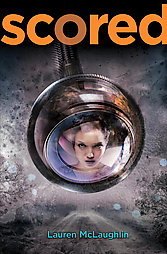
Scored by Lauren McLaughlin: Some Thoughts

Note: This is an expansion of a book I reviewed on the blog post “Pleasures of Reading, Viewing, and Listening in 2012” on aqueductpress.blogspot.com.

Scored by Lauren McLaughlin
(http://www.powells.com/biblio/62-9780375867910-0)

This YA novel is the dystopia for our time. What happens when you put together No Child Left Behind high-stakes standardized testing with surveillance measures like spy-cams and GPS monitoring of cell phones, and then introduce a company whose product is a single score for every child, which colleges and corporations will then use to sort people?

That is the reality for Imani LeMonde, a high school student whose scores put her on track for a college scholarship — something that is otherwise out of reach for all but the very rich. The scores are supposed to establish a meritocracy to replace our system of inequalities, but something else is going on. Scores update minute-to-minute, and they depend not only on school performance but also day-to-day activities and peer group associations.

Imani’s troubles begin when her score drops precipitously because her friend Cady is kicked out of her house and moves in with a boy. This takes her off the college track, and if her scores drop farther, her only options will be welfare or the military. She has a choice to make — but it’s not the simple moral dilemma of whether or not to denounce Cady to regain her score, because that option is not open to her. Instead, she has to look deeply into the scoring system to understand how it works — and what matters to her.

The society pictured here is not far off the mark. Our teens and children will be subject to more surveillance than we ever imagined. Case in point: school records are kept in “longitudinal databases” where they can be tracked over long periods of time and across school district and state lines. And by school records I mean test scores, tardies, absences, ethnicity, dental records – you name it. (For a sneak peek of the hundreds of items that can be collected, visit http://nces.sifinfo.org/datamodel/eiebrowser/techview.aspx?instance=studentElementarySecondary.)

This information is being provided to the private sector without public comment or scrutiny. For example, the Seattle Public School district signed a Memorandum of Understanding with an organization called the Community Center for Education Results, indicating that the district would be sharing its database of student information with CCER. This database excludes “personally identifiable” information about the students according to the federal FERPA law, but because it is so specific, it is potentially identifiable information, particularly if you are nonwhite, use special education services, and so forth. Also, private sector organizations could easily combine this information with other databases.

(Thanks to the mirmac1 for her comment on Feb 21, 2013 on the blog saveseattleschools.blogspot.com.)

Just as one example among many, yesterday I went to the Pacific Science Center and visited an exhibit called “Professor Wellbody’s Academy of Health and Wellness.” This is a grant and foundation-funded exhibit. As part of the exhibit, children can join the “Academy” by entering information about themselves – first name, school attended, and health habits such as diet and sleep. So now there’s a database about kids per school, and a certain lack of clarity about who will get that information.

Ten years from now, could a prospective employer check the database for these types of information about my children? I bet. Could they get a score? I bet.

“The Feminine Mistake”

My spouse and I have been watching Laverne and Shirley. It’s a great show – accomplished actors, who can also sing and dance and take pratfalls like nobody’s business, with a feminist agenda snuck in so cleverly I completely missed it when I first watched it. I’m seeing it now, and what’s more, I’m seeing how much today’s television hasn’t got it. It has something else that today’s television is also missing: at their core, the characters are respectful of each other.

Last night we watched “The Feminine Mistake.” The title is a reference to Betty Friedan’s The Feminine Mystique, instrumental in sparking the U.S. feminist movement of the 1960s and 1970s. In it, Laverne, who is the more butch of the two, is having a great time playing baseball and fishing with her love interest (played by Jay Leno). She expects him to ask her to a dance. Unfortunately for her, he thinks of her as “just a guy” and tells her that no guy would ever want to go out with her. So she enlists Shirley’s help in being feminine. Together, they devise a frou-frou persona for Laverne. Like the rest of their escapades, it’s hilarious.

So does it work? Does he take her to the dance? Watch the episode.

Another good stealth-feminist episode was “The Bully Show.” In it, Laverne is nearly raped. The word “rape” is never used and the danger she’s in is portrayed slapstick-style, but nonetheless, it deals with the topic seriously. Best of all, instead of blaming the victim or focusing narrowly on the scary rapist, it goes straight to the heart of “rape culture” and confronts the people and attitudes who set the stage for the rape being considered acceptable.